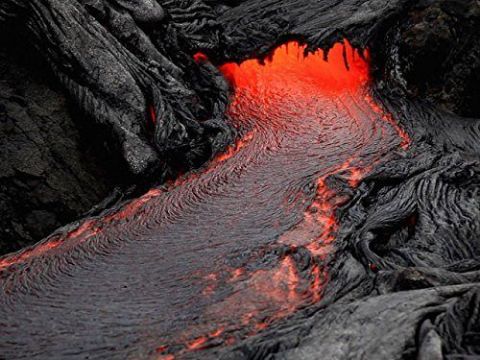
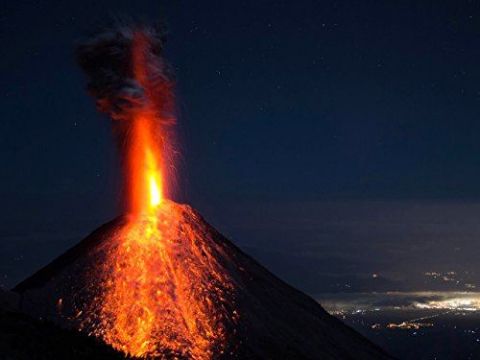
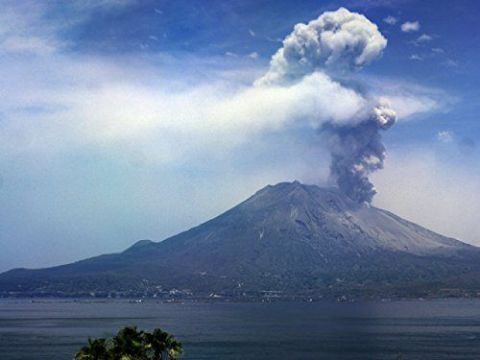
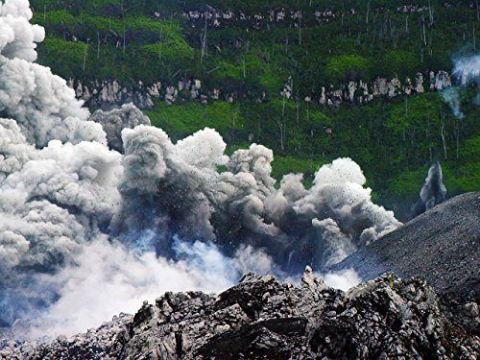
Volcanologist Tom Pfeiffer and his team are embarking on their most daring adventure yet--visiting and photographing two remote Indonesian volcanoes, among the 20 most active in the world. Join a tense journey into the heart of one of nature's most dramatic and unpredictable natural phenomena, one that will test this experienced crew of scientists and native guides.
Hope you're finding these documentaries fascinating and eye-opening. It's just me, working hard behind the scenes to bring you this enriching content.
Running and maintaining a website like this takes time and resources. That's why I'm reaching out to you. If you appreciate what I do and would like to support my efforts, would you consider "buying me a coffee"?
BTC: bc1q8ldskxh4x9qnddhcrgcun8rtvddeldm2a07r2v
ETH: 0x5CCAAA1afc5c5D814129d99277dDb5A979672116
With your donation through , you can show your appreciation and help me keep this project going. Every contribution, no matter how small, makes a significant impact. It goes directly towards covering server costs.
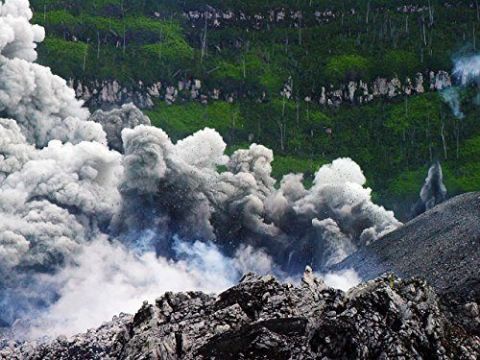
Volcanologist Tom Pfeiffer and his team are embarking on their most daring adventure yet--visiting and photographing two remote Indonesian volcanoes, among the 20 most active in the world. Join a tense journey into the heart of one of nature's most dramatic and unpredictable natural phenomena, one that will test this experienced crew of scientists and native guides.
2016 • Environment
As part of the connecting landmass between North and South America, Mexico has long been at the center of a tectonic tug of war spanning millennia. The result is two of the world's largest, most active volcanoes--the rumbling Popocatepetl and the menacing Volcano De Colima--whose vengeful displays of wrath are increasing in frequency. Could a cataclysmic eruption be just around the corner?
2016 • Environment
Indonesia is one of the most volcanically active countries in the world--the island of Java alone has 45 active volcanoes, which could erupt at any time. Descend into some of the world's most volatile craters with scientist Tom Pfeiffer, who is hell-bent on photographing rare volcanic phenomenon.
2016 • Economics
Japan has more than 100 active volcanoes--two in particular may be on the verge of unleashing a devastating sequence of deadly eruptions and secondary earthquake activity. Join intrepid volcanologist Tom Pfeiffer's dangerous and exhilarating journey to the foot of these angry giants.
2016 • Environment
Venture into the danger zone of two volcanic craters posing widely divergent threats. Hawaii's Kilauea is a shield volcano that threatens communities with its slow-but-relentless lava flow, while the Sumatran Sinabung is a stratovolcano delivering carnage via a sudden and explosive surge of superheated gas and rock.
2016 • Environment
A look at how the eternal quest for water brings huge challenges and ingenious solutions.
S1E2 • Human Planet • Environment
Welcome to the Collision Zone – the fiery unpredictability of Indonesia’s volcanoes at one end, the massive Himalayas at the other and millions of years of tectonic tension in between. The collision zone of the old world is about to be the hub of the new. India, the Himalayas and the island arc of Indonesia - these lands will form the centre of the world’s next supercontinent. A story unfolds—a tale of where the earth has been and what the earth shall be: a whole new world that we’ll barely recognize.
S50E08 • The Nature of Things • 2010 • Environment
The unique geological conditions that make Krakatoa and its successor, Anak Krakatau, extraordinarily explosive and, despite its remoteness, dangerous are explained.
S1E3 • How the Earth Was Made • 2009 • Environment
Earthquakes have always been a terrifying phenomenon, and they’ve become more deadly as our cities have grown — with collapsing buildings posing one of the largest risks. But why do buildings collapse in an earthquake? And how can it be prevented? Vicki V. May explains the physics of why it is not the sturdiest buildings, but the smartest, that will remain standing.
Liz Bonnin works with some of the world's leading marine biologists and campaigners to discover the true dangers of plastic in our oceans and what it means for the future of all life on our planet, including us. Trillions of pieces of plastic are choking the very lifeblood of our earth, and every marine animal, from the smallest plankton to the largest mammals, is being affected. Can we turn back this growing plastic tide before it is too late?
2018 • Environment
Prince William, Sir David Attenborough and astronaut Naoko Yamazaki hear the personal stories of people who are directly affected by air pollution and look at possible solutions.
S1E3 • The Earthshot Prize Repairing Our Planet • 2021 • Environment