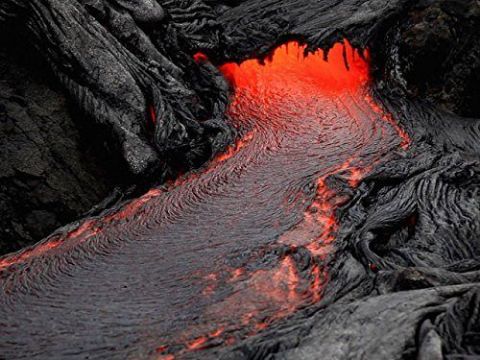
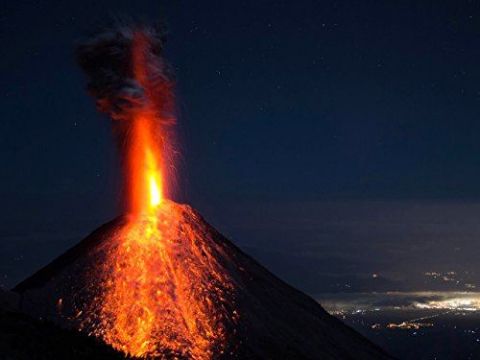
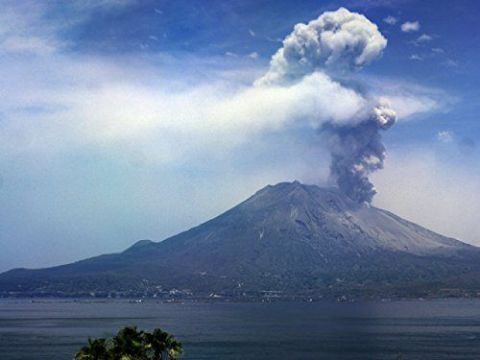
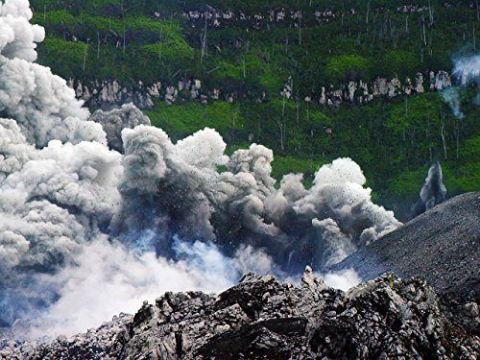
As part of the connecting landmass between North and South America, Mexico has long been at the center of a tectonic tug of war spanning millennia. The result is two of the world's largest, most active volcanoes--the rumbling Popocatepetl and the menacing Volcano De Colima--whose vengeful displays of wrath are increasing in frequency. Could a cataclysmic eruption be just around the corner?
Hope you're finding these documentaries fascinating and eye-opening. It's just me, working hard behind the scenes to bring you this enriching content.
Running and maintaining a website like this takes time and resources. That's why I'm reaching out to you. If you appreciate what I do and would like to support my efforts, would you consider "buying me a coffee"?
BTC: bc1q8ldskxh4x9qnddhcrgcun8rtvddeldm2a07r2v
ETH: 0x5CCAAA1afc5c5D814129d99277dDb5A979672116
With your donation through , you can show your appreciation and help me keep this project going. Every contribution, no matter how small, makes a significant impact. It goes directly towards covering server costs.
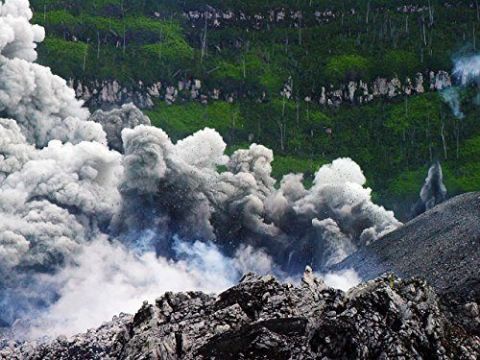
Volcanologist Tom Pfeiffer and his team are embarking on their most daring adventure yet--visiting and photographing two remote Indonesian volcanoes, among the 20 most active in the world. Join a tense journey into the heart of one of nature's most dramatic and unpredictable natural phenomena, one that will test this experienced crew of scientists and native guides.
2016 • Environment
As part of the connecting landmass between North and South America, Mexico has long been at the center of a tectonic tug of war spanning millennia. The result is two of the world's largest, most active volcanoes--the rumbling Popocatepetl and the menacing Volcano De Colima--whose vengeful displays of wrath are increasing in frequency. Could a cataclysmic eruption be just around the corner?
2016 • Environment
Indonesia is one of the most volcanically active countries in the world--the island of Java alone has 45 active volcanoes, which could erupt at any time. Descend into some of the world's most volatile craters with scientist Tom Pfeiffer, who is hell-bent on photographing rare volcanic phenomenon.
2016 • Economics
Japan has more than 100 active volcanoes--two in particular may be on the verge of unleashing a devastating sequence of deadly eruptions and secondary earthquake activity. Join intrepid volcanologist Tom Pfeiffer's dangerous and exhilarating journey to the foot of these angry giants.
2016 • Environment
Venture into the danger zone of two volcanic craters posing widely divergent threats. Hawaii's Kilauea is a shield volcano that threatens communities with its slow-but-relentless lava flow, while the Sumatran Sinabung is a stratovolcano delivering carnage via a sudden and explosive surge of superheated gas and rock.
2016 • Environment
Ocean currents control the climate around the world. When they suddenly stop, it unleashes an endless cascade of weather disasters including blizzards, superstorms, drought and rapid sea level rise.
S1E10 • Doomsday: 10 Ways the World Will End • 2016 • Environment
In a Horizon special, naturalist Sir David Attenborough investigates whether the world is heading for a population crisis.
Horizon • 2009 • Environment
Prince William, Sir David Attenborough and astronaut Naoko Yamazaki hear the personal stories of people who are directly affected by air pollution and look at possible solutions.
S1E3 • The Earthshot Prize Repairing Our Planet • 2021 • Environment
We explore the meaning of 'homo sapiens' (meaning 'wise being') and hear what experts say about the importance of using wisdom as a guiding value to address climate change, income inequality, discrimination, and more. This short film features Dr. Jane Goodall, Vandana Shiva, Chris Hedges, Clayton Thomas-Muller, Dacher Keltner, Ernest Callenbach, and John Perkins.
Thought Café • 2021 • Environment
Renowned marine biologist Dr. Sylvia Earle reveals why the dual threats of ocean pollution and overfishing could have a devastating impact on mankind.
2017 • Environment
We are all seeing rather less of the Sun. Scientists looking at five decades of sunlight measurements have reached the disturbing conclusion that the amount of solar energy reaching the Earth's surface has been gradually falling. Paradoxically, the decline in sunlight may mean that global warming is a far greater threat to society than previously thought.