Clever Monkeys • 2008

Category: Nature | Download:

David Attenborough's entertaining romp through the world of monkeys has a serious side: for when we look at monkeys, we can see ourselves. From memory to morality, from 'crying wolf' to politics, monkeys are our basic blueprint. Pygmy marmosets 'farm' tree sap; bearded capuchins in Brazil develop a production line for extracting palm nuts; white-faced capuchins in Costa Rica tenderly nurse the victims of battle; and in the Ethiopian highlands, a deposed gelada baboon has got the blues. Cheating, lying and bare-faced murder are all there too. These revelations of simian science, combined with captivating photography, make this film about monkey business our business.

Make a donation

Buy a brother a hot coffee? Or a cold beer?

Hope you're finding these documentaries fascinating and eye-opening. It's just me, working hard behind the scenes to bring you this enriching content.

Running and maintaining a website like this takes time and resources. That's why I'm reaching out to you. If you appreciate what I do and would like to support my efforts, would you consider "buying me a coffee"?

Donation addresses

Buy Me a Coffee at ko-fi.com

patreon.com

BTC: bc1q8ldskxh4x9qnddhcrgcun8rtvddeldm2a07r2v

ETH: 0x5CCAAA1afc5c5D814129d99277dDb5A979672116

With your donation through , you can show your appreciation and help me keep this project going. Every contribution, no matter how small, makes a significant impact. It goes directly towards covering server costs.
You might also like

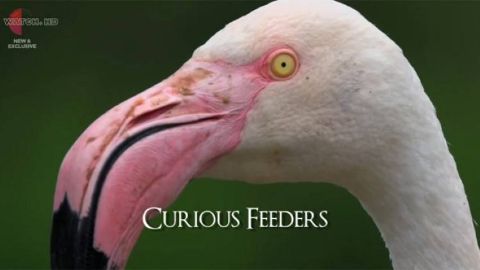
Curious Feeders

David Attenborough examines creatures that have fascinated us for centuries. A look at some species with unusual styles of consuming food.

S3E4 • Natural Curiosities • Nature

Curious Minds

David Attenborough examines creatures that have baffled us for centuries. This episode looks at two animals that use tools, orangutans and crows.

S3E2 • Natural Curiosities • Nature

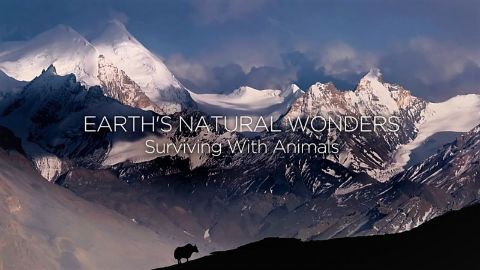
Surviving with Animals

In many of the earth's natural wonders there is an abundance of animals. These can be a devastating threat to the people who live there, or they can provide a means of survival, but often at a high price. In the coastal salt marshes of northern Australia's Arnhem Land, Indigenous Australians still go hunting for the eggs of one of the world's most aggressive predators - the saltwater crocodile. Vanuatu is an island paradise in the south Pacific, but life here isn't perhaps as idyllic as it appears. Overfishing has reduced fish stocks, making food harder to come by for the indigenous islanders like 45-year-old Nigasau.

S1E2 • Earth's Natural Wonders: Series 2 • 2018 • Nature

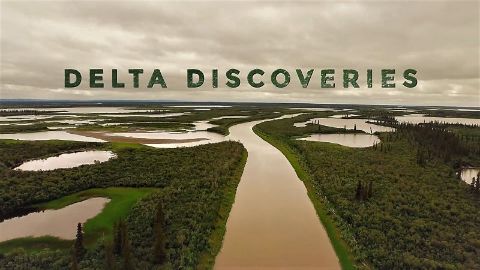
Delta Discoveries

The Mackenzie Delta is an Arctic network of channels and islands at the mouth of Canada's largest river. It's home to the ancient Inuit, as well as a variety of highly specialized wildlife, including the sonorous sandhill and majestic peregrine falcon. Follow them as they contend with a rapidly changing climate.

S1E3 • Arctic Secrets • 2015 • Nature

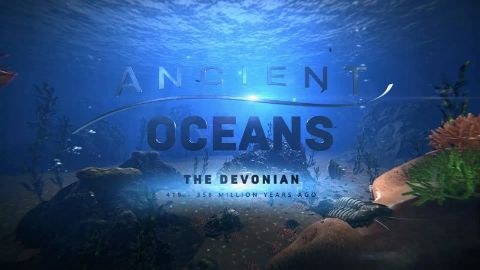
The Devonian

Life in the sea rebounded with a vengeance in the Devonian. Dozens of monstrous predators emerged, like the 40-foot long Dunkleosteus. Nearly everything was wiped out in Earth’s second mass extinction. But the stage was set for an explosion of life on land.

S1E2 • Ancient Oceans • 2019 • Nature

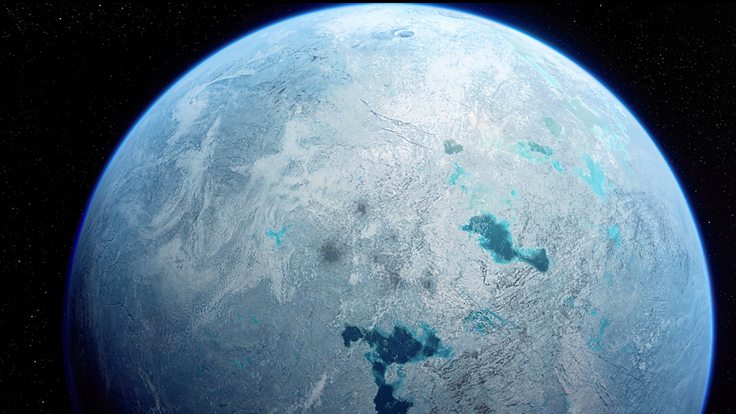
Snowball

In Snowball, Chris Packham tells the story of the astonishing moment in Earth’s distant past, when almost the entire planet froze – a glistening ‘Snowball Earth’ in the dark void of space. With ice wrapped around the planet to the equator, the chances of life surviving hang in the balance. Earth’s terrifying journey into the deep freeze started with fire, not ice. 800 million years ago, long before the age of the dinosaurs, before there was even animal life, the giant supercontinent Rodinia broke up. Earth’s vast powerful tectonic forces ripped the land apart, kicking off a series of events that resulted in huge amounts of carbon dioxide being sucked from the atmosphere and sending global temperatures plummeting. This plunge into the deep freeze couldn’t have come at a worse time. The very first forms of complex life - the ancestors to the amazing life we see around us today - were evolving but, as the planet froze to the equator, it looked like their days were numbered. Happily, Chris discovers that after 50 million years locked in ice, volcanic eruptions drove a great thaw. Life broke free from the ice and soon made a giant leap, from the microscopic, to the first animals big enough to see and touch.

S1E2 • Earth: One Planet, Many Lives • 2023 • Nature