From the stealthy tarantula to the prehistoric Komodo dragon to the deceptive mosquito--one of the more prolific modern predators--killers come in all shapes and sizes. Join us as we examine the deadly adaptations of these cold-blooded culprits.
Hope you're finding these documentaries fascinating and eye-opening. It's just me, working hard behind the scenes to bring you this enriching content.
Running and maintaining a website like this takes time and resources. That's why I'm reaching out to you. If you appreciate what I do and would like to support my efforts, would you consider "buying me a coffee"?
BTC: bc1q8ldskxh4x9qnddhcrgcun8rtvddeldm2a07r2v
ETH: 0x5CCAAA1afc5c5D814129d99277dDb5A979672116
With your donation through , you can show your appreciation and help me keep this project going. Every contribution, no matter how small, makes a significant impact. It goes directly towards covering server costs.
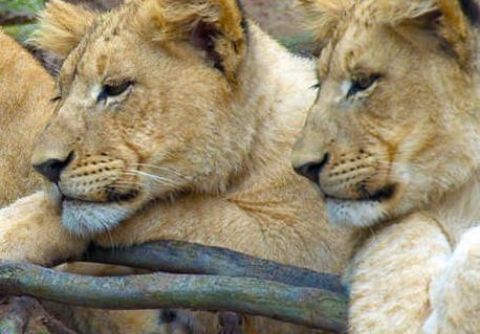
Lions, hyenas, cheetahs, and the highly intelligent African painted dog all have different, but brutally efficient, hunting instincts. Meet these intimidating rulers of the African plains and learn the secrets of their secure reign at the top of the natural food chain.
2016 • Nature
Aerial predators like owls, falcons, and eagles have keen senses that allow them to see and hear things that would normally go unnoticed by other species. Fly alongside these magnificent raptors at the Canadian Raptor Conservancy in Ontario as they showcase the full range of their hunting abilities.
2016 • Nature
Some of the most skilled, efficient predators on the planet target an often-overlooked food source: insects. Get a closer look at the sophisticated hunting techniques of dragonflies, scorpions, Venus flytraps, and other cunning bug eaters.
2016 • Nature
From the stealthy tarantula to the prehistoric Komodo dragon to the deceptive mosquito--one of the more prolific modern predators--killers come in all shapes and sizes. Join us as we examine the deadly adaptations of these cold-blooded culprits.
2016 • Nature
Staying alive is the first priority for all creatures--and with clever adaptations like poison and mimicry, some species defy the odds to outwit predators. From the hoverfly to the scarlet kingsnake, join us on a fascinating rundown of some uniquely successful survivors.
2016 • Nature
From powerful sharks to mysterious fish shoals, the underwater dynamic between predator and prey is a never-ending one. Join these amazing creatures as they employ both offensive and defensive evolutionary adaptations, such as sharp senses and swarm intelligence, in their bid for survival.
2016 • Nature
This new age of discovery is revealing there is still so much to learn about the cat family. Using high-tech collars, Professor Alan Wilson has discovered it is not straight-line speed that is a cheetah's greatest weapon but their ability to break, change direction and accelerate. His research is rewriting what we understand about the fastest animal on land. This is also a crucial time for cat conservation - most are threatened, facing extreme habitat loss and conflict with humans. Yet there are many positive stories of cats bouncing back from the brink,
Visits the world's deepest valley: the Kali Gandaki river in the Himalayas. Its temperatures range from those of the tropics in its lower reaches to that of the poles higher up. It therefore shows how creatures become adapted to living in certain environments.
1/12 • The Living Planet • 1984 • Nature
With the help of some surprising creatures from around the world, this series sets out to discover how animals take to the air, defying the force all airborne animals must conquer, gravity. Part 1: Defying Gravity In Africa, a caracal's 'rocket-propelled' launch enables it to catch birds in flight. In the Australian outback, a kangaroo's hop is key to finding water in a desert of over a million square kilometres. On an English farm, an insect's ultimate ejector seat accelerates it to 700G with help from a clutch in its crotch. And high above the jungles of Borneo, a leaping snake's unique shape allows it to glide, even without wings.
S1E1 • Life in the Air • 2016 • Nature
Bat populations are plummeting from a seemingly unstoppable fungal infection. Meanwhile, northern flying squirrels are being crowded out by their southern cousins. Learn about the life-or-death challenges faced by key wildlife in two of the Great Lakes region's most delicate ecosystems.
S1E7 • Great Lakes Wild • 2017 • Nature
The Namaqua rock fig is known as the rock splitter. It's not just a testament to its ability to withstand the dry conditions, but a literal tribute to its powerful root system, which extends 200 feet into the Earth in search of water. Besides the army of wildlife who rely on it for survival, the rock splitter has a unique relationship with its own species of miniature wasp that help pollinate its tiny flowers. As temperatures soar each passing year, this ultimate survivor reaches deeper to squeeze every drop of water from the parched land.
During the rainy season, the Blue Nile tributary is more powerful than the main river. Follow it from the Ethiopian highlands to the delta.