Go into the physical heart of the Internet and learn about the very first message sent by UCLA professor Leonard Kleinrock.
Hope you're finding these documentaries fascinating and eye-opening. It's just me, working hard behind the scenes to bring you this enriching content.
Running and maintaining a website like this takes time and resources. That's why I'm reaching out to you. If you appreciate what I do and would like to support my efforts, would you consider "buying me a coffee"?
BTC: bc1q8ldskxh4x9qnddhcrgcun8rtvddeldm2a07r2v
ETH: 0x5CCAAA1afc5c5D814129d99277dDb5A979672116
With your donation through , you can show your appreciation and help me keep this project going. Every contribution, no matter how small, makes a significant impact. It goes directly towards covering server costs.
Go into the physical heart of the Internet and learn about the very first message sent by UCLA professor Leonard Kleinrock.
2017 • Technology
Learn how web advertising, search engines and 24/7 surveillance have transformed our lives.
2017 • Technology
In the final episode of the series, learn about "white hat" hackers, the U.S. Secret Service's cyber crime division working to protect us from the risks associated with persistent connectivity.
2017 • Technology
Learn the explosive history of the rocket, from its origin in ancient China, to its use as a weapon of war, to how adding hydrogen allowed it to carry astronauts all the way to the moon. Narrated by Patrick Stewart. With guest Jim Al-Khalili
Breakthrough the Ideas that Changed the World • 2019 • Technology
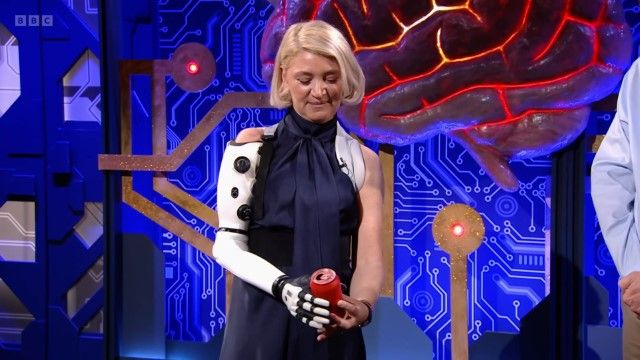
Mike Wooldridge grapples with the future of AI in the third and final Christmas lecture. Mike takes a ride in a driverless car. Autonomous vehicles, once a science fiction dream, are now a reality. Many AI researchers believe removing human drivers will eventually make our streets much safer. Mike explores how the car ‘sees' and perceives the world – and how with the help of AI, it gets better the more it drives. Although AI will create many exciting opportunities, advances in AI have raised fears – some justified, others not. With the help of expert guests, Mike talks us through some of the risks AI poses. He unpacks the very real danger of bias in AI, asking how we avoid creating AI that favours those who resemble its creators, and he explores the dangers of 'fake news' and how AI algorithms can lead to dangerous online 'echo chambers', helping to foment extreme views. Mike also demonstrates deepfake technology and asks if AI means we simply can't trust our eyes any more? The prospect of super-intelligent AI means that in the future we may be able to mobilise AI to uncover radical large-scale solutions to the biggest problems facing humanity, such as climate change. But we need to think carefully about what we want to let AI control. Could AI in charge of weapons accidentally begin wars – and present a risk to our survival? And, as AI gets ever more intelligent, how should we treat it? How does our audience feel about kicking an AI robot dog? This lecture addresses the big question of AI: can it ever truly be like us, or are humans unique? As AI advances, it seems these ethical questions are destined to get ever more complex… The Christmas Lectures are the most prestigious event in the Royal Institution calendar, dating from 1825 when Michael Faraday founded the series. They are the world's longest running science television series, and always promise to inspire and amaze each year through explosive demonstrations and interactive experiments with the live theatre audience.
S1E3 • BBC Royal Institution Christmas Lectures: The Truth about AI • 2023 • Technology
Imagine a world without the power to capture or transmit sound. Journey with Steven Johnson to the Arcy sur Cure caves in northern France, where he finds the first traces of the desire to record sound — 30,000 years ago. He also learns about the difference that radio made in the civil rights movement and reveals the Hollywood star who designed a WW2 weapon that would make possible the modern cell phone network. During an ultrasound on a pregnant dolphin, he realizes just how big a role sound has played in medicine. The unsung heroes of sound have had an impact on our working lives, race relations, saving lives and the radical alteration of cities.
S1E6 • How We Got to Now • 2014 • Technology
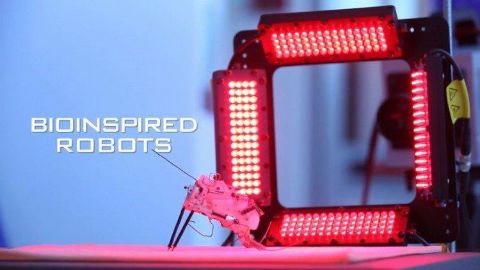
Mankind has always looked at nature to solve problems, taking a cue from the solutions that biological systems have refined through natural selection. In this episode we look at a robotic plant that mimics the mechanics of plant roots, and dive underwater to see robots inspired by fish.
S1E2 • The Age of Robots • 2016 • Technology
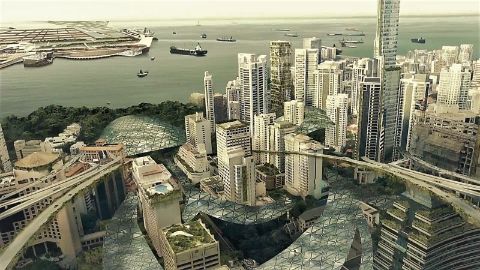
With its survival challenged by a rapidly growing and aging population and by accelerating climate change, where can land-poor Singapore expand? The futurists offer a radical solution: a massive vertical city. What will it be like living high up in the sky?
S1E1 • Futuropolis: Mapping the City of Tomorrow • 2018 • Technology
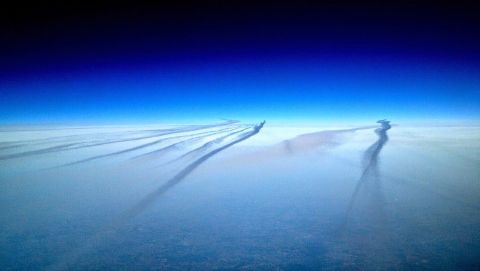
Airlines began to spring up everywhere, catering to the demands of passengers wanting to go just about anywhere, but the flights were only domestic at the time. Pre-war travel was sold as a luxury experience afforded only by the rich, but post war, the emphasis was on comfort and customer service for both the rich and middle class.
7/13 • The Amazing World Of Aviation • 2009 • Technology