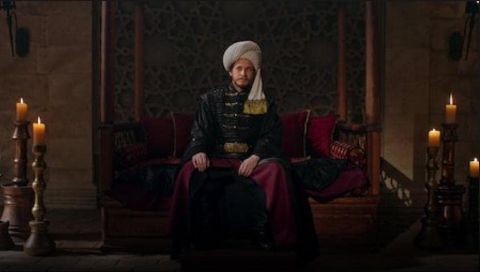
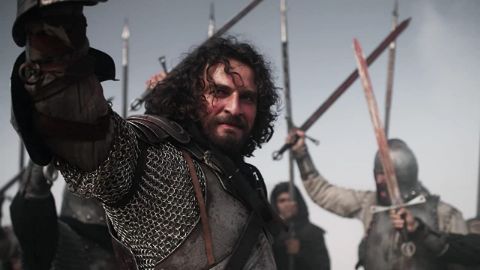
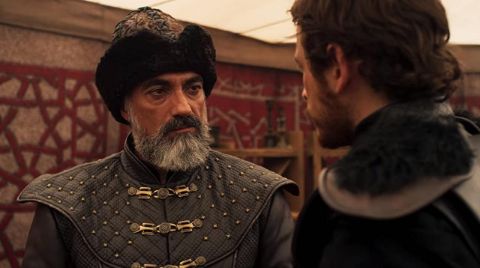
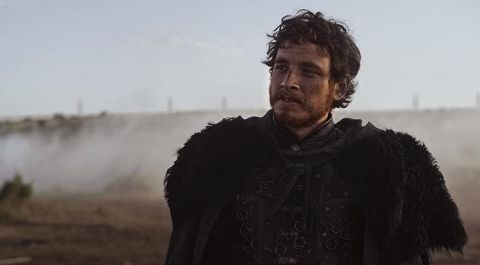
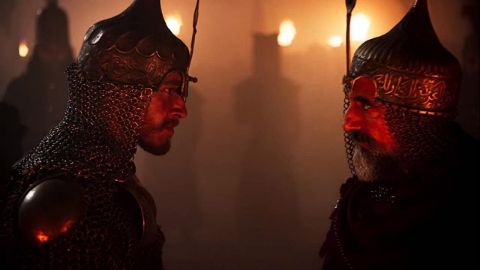
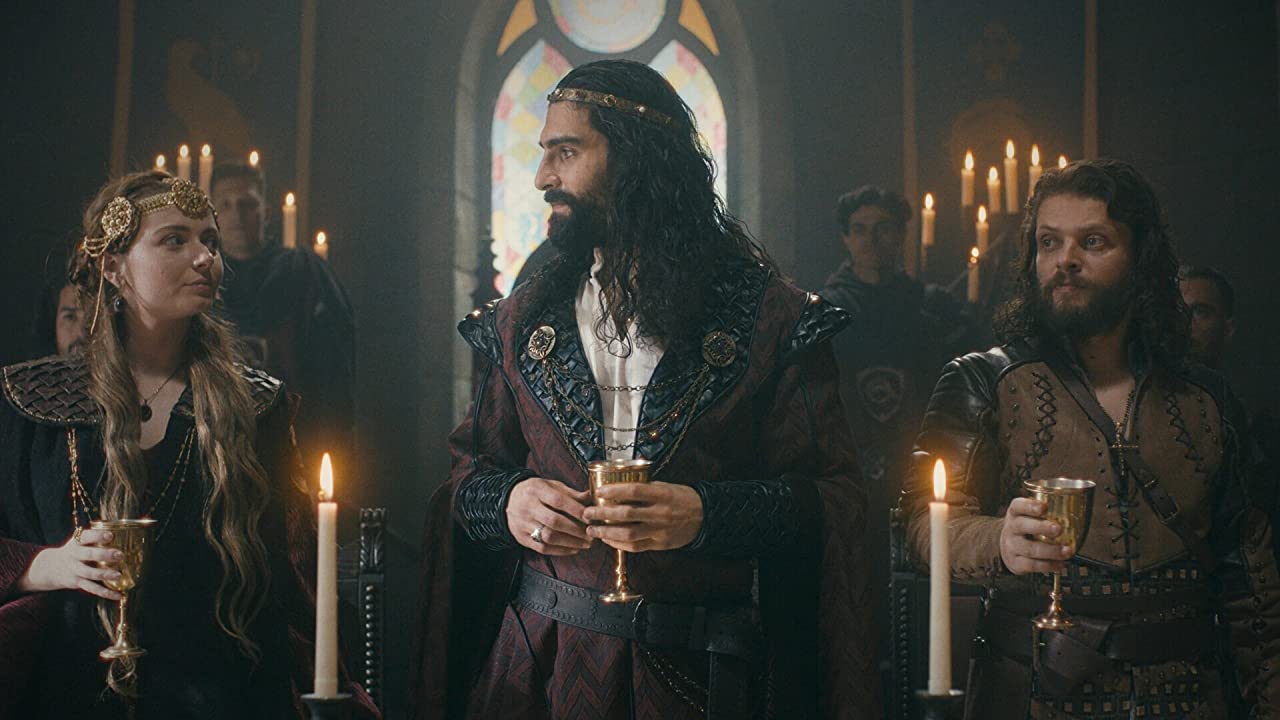
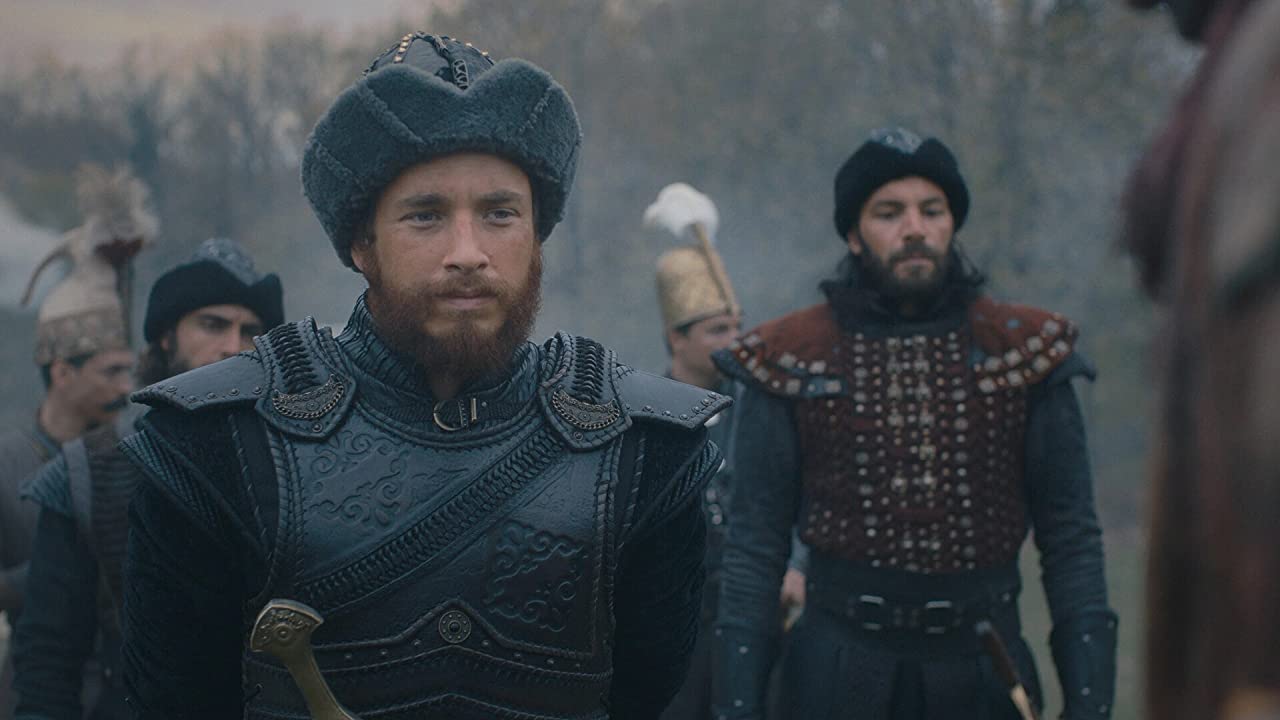
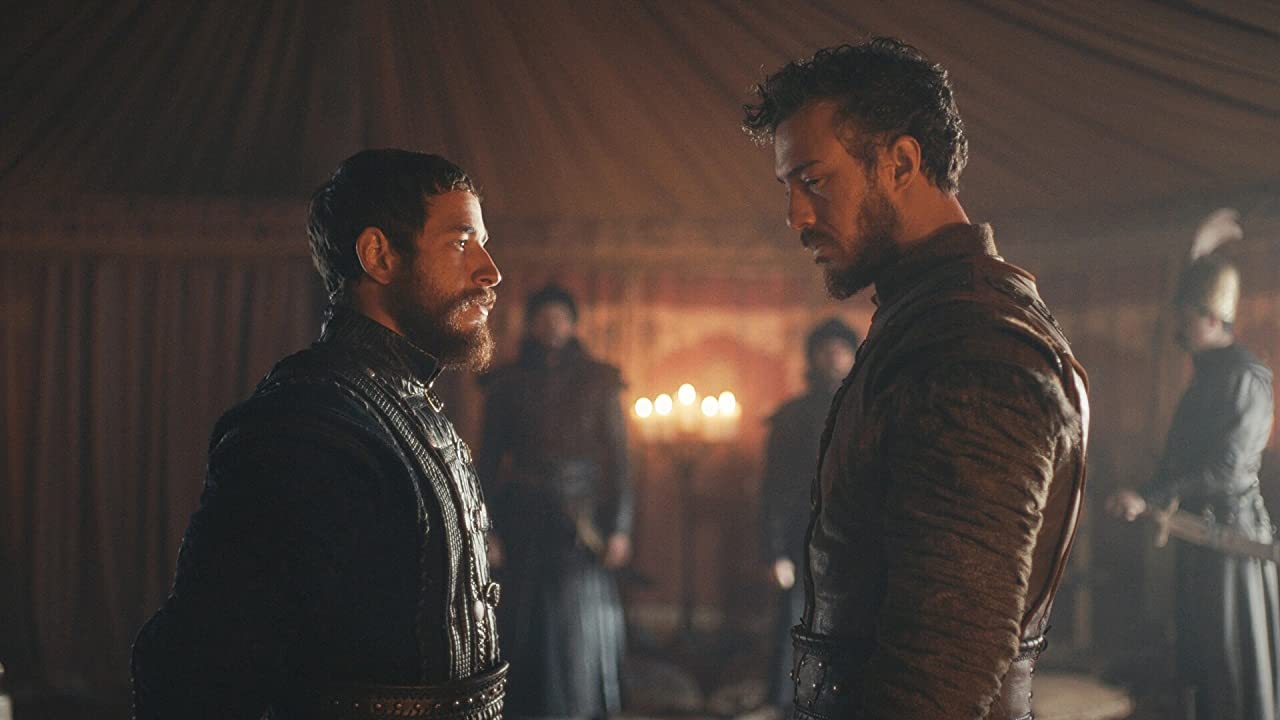
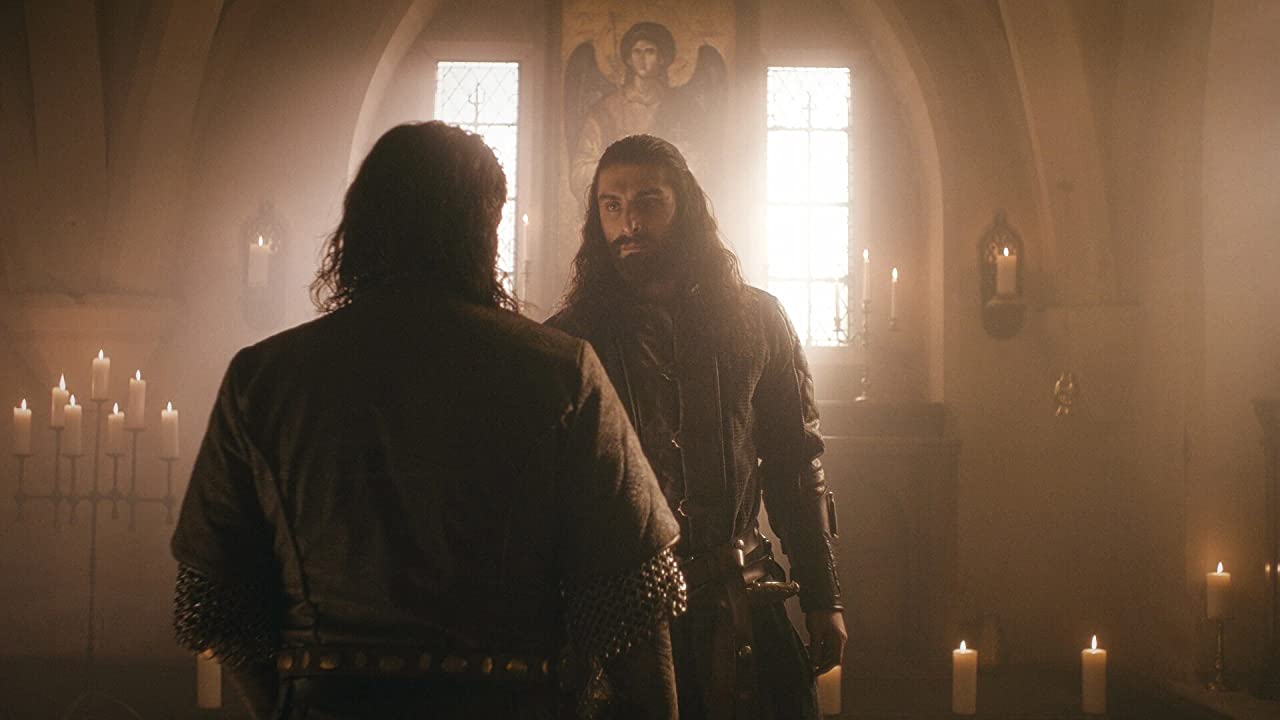
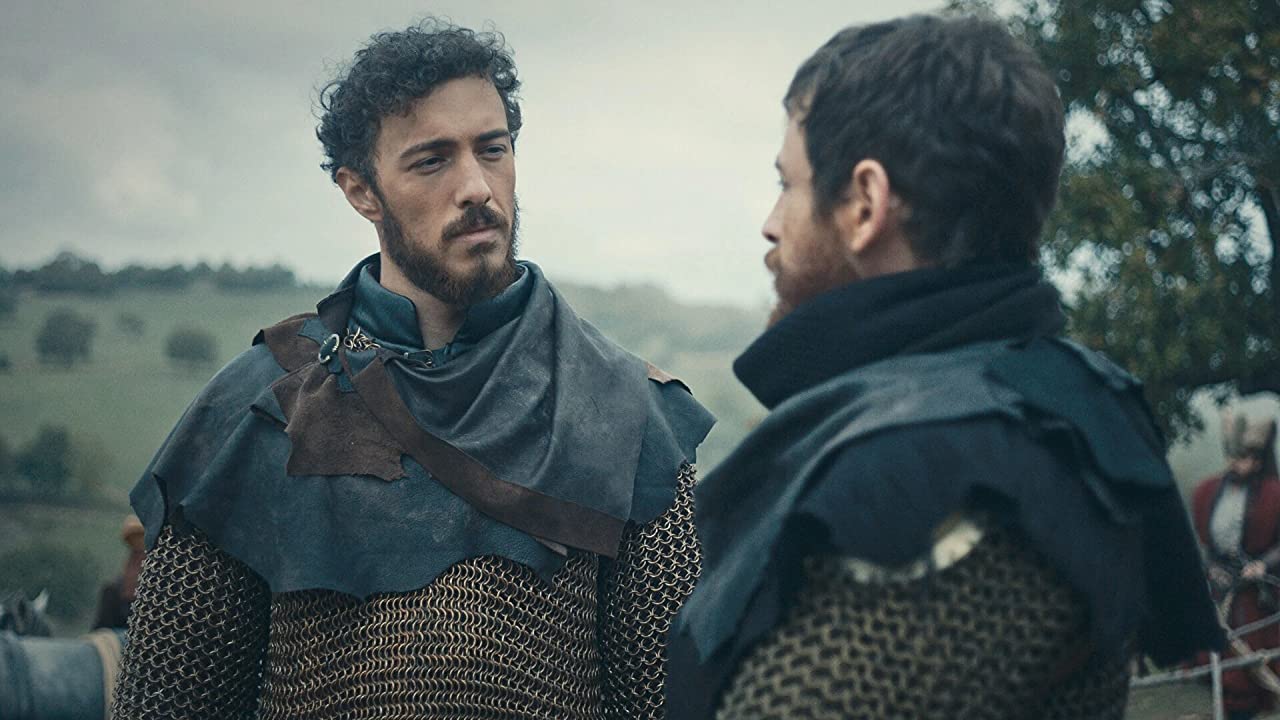
Vlad and Mehmed face off. Maria and Gülbahar foil the Wallachian plot. Ottoman troops march into an abandoned Târgoviste and face a gruesome sight.
Hope you're finding these documentaries fascinating and eye-opening. It's just me, working hard behind the scenes to bring you this enriching content.
Running and maintaining a website like this takes time and resources. That's why I'm reaching out to you. If you appreciate what I do and would like to support my efforts, would you consider "buying me a coffee"?
BTC: bc1q8ldskxh4x9qnddhcrgcun8rtvddeldm2a07r2v
ETH: 0x5CCAAA1afc5c5D814129d99277dDb5A979672116
With your donation through , you can show your appreciation and help me keep this project going. Every contribution, no matter how small, makes a significant impact. It goes directly towards covering server costs.
After claiming the Ottoman throne, Mehmed II sends an unmistakable signal to Byzantine emperor Constantine XI. Enter Genoese mercenaries.
2020 • History
Mehmed launches an ambitious siege to break through the walls of Constantinople, but Giustiniani's mercenaries manage to forestall the Janissaries.
2020 • History
Mehmed's men dig underground tunnels in an attempt to shatter city walls. The tides turn against the Ottomans when a naval blockade founders.
2020 • History
Mehmed moves his ships overland to the Golden Horn in a daring, visionary feat. In the shadow of betrayal, Giustiniani attacks the Ottoman fleet.
2020 • History
Amid a spiral of brutality and low morale, Mehmed makes Giustiniani an enticing offer. The grand vizier urges Mehmed to seek a truce with his rival.
2020 • History
Ottoman cannons reduce the city walls to rubble, and Venetian reinforcements arrive too late. Mehmed ushers in a new era for the Ottoman Empire.
2020 • History
Mehmed the Conquerer must defend his empire and protect his plans for western expansion against a new challenger...Vlad the Impaler of Wallachia.
2022 • History
Mehmed sends Maria to coax Hungarian King Matthias Corvinus into an alliance. An epic battle along the Danube River looms, and Vlad has the upper hand.
2022 • History
Mehmed's troops advance into Wallachia, and Vlad employs guerrilla tactics to weaken his rival. A threat lurks in the imperial palace.
2022 • History
As the war drags on and resources dwindle, Vlad wages biological warfare on Mehmed's army. Radu closes in on Vlad's castle to take Anastasia hostage.
2022 • History
Mehmed prepares to strike a fatal blow to Vlad's army. A spy is found in Mehmed's camp. Vlad launches a nighttime attack, but a surprise awaits.
2022 • History
At the start of the 20th century, everything seemed to be plain sailing in the best possible of libertarian worlds, because anarchism had rid itself of its former demons. And thanks to the major waves of migration that carried the movement to the remotest areas of the world, it was able to rally a major part of the peasantry around to its cause. But to ensure their ideal triumphed, before the imminence of a world conflict, libertarians could no longer afford merely to indulge in wishful thinking and think up generous practices. They must take up arms and go on the offensive once again. And so, from the two shores of Mexico to the vast steppes of the Ukraine, in an era full of sound and fury, Nestor Makhno and the Flores Magon brothers found themselves at the forefront of the first major revolutions of the 20th century as they tried, once and for all, to change the world.
S1E2 • No Gods, No Masters: A History of Anarchism • 2016 • History
Andrew Marr sets off on an epic journey through 70,000 years of human history. Using dramatic reconstructions, documentary filming around the world and cutting-edge computer graphics, he reveals the decisive moments that shaped the world we live in today, telling stories we thought we knew and others we were never told. (Part 1: Survival) Starting with our earliest beginnings in Africa, Marr traces the story of our nomadic ancestors as they spread out around the world and settled down to become the first farmers and townspeople. He uncovers extraordinary hand-prints left in European caves nearly 30,000 years ago and shows how human ingenuity led to inventions which are still with us today. He also discovers how the first civilisations were driven to extremes to try to overcome the forces of nature, adapting and surviving against the odds, and reveals how everyday life in ancient Egypt had more in common with today's soap operas than might be imagined.
S1E1 • Andrew Marr's History of the World • 2012 • History
The little-known story of the American effort to relieve starvation in the new Soviet Russia in 1921, The Great Famine is a documentary about the worst natural disaster in Europe since the Black Plague in the Middle Ages. Five million Russians died. Half a world away, Americans responded with a massive two-year relief campaign, championed by Herbert Hoover, director of the American Relief Administration known as the ARA. In July of 1921, Herbert Hoover, received a plea for international aid by Russian novelist Maxim Gorky. "Gloomy days have come for the country of Tolstoy, Dostoyevsky, Mendeleyev," Gorky warned. He made a similar request to other Western nations, but it was Hoover who responded immediately with a promise of support. The first American relief ships arrived in Petrograd in September 1921, as the embers of the 1917 Russian revolution still smoldered. American relief workers were among the first outsiders to break through Russia's isolation and to witness and record the impact of the Bolshevik Revolution. They would be tested by a railroad system in disarray, a forbidding climate, a ruthless government suspicious of their motives, and the enormous scale of death and starvation. The initial plan called for feeding one million children by delivering bread, rice, grits, sugar, corn and milk to the most hard hit regions. Almost immediately, Hoover encountered formidable obstacles. Vladimir Lenin's new communist government was skeptical of American aid and sabotaged the relief effort by planting spies in local American Relief Administration offices. When trains stuck on the tracks prevented food from being transported, Russian officials were uncooperative, resulting in delays that contributed to an estimated 50,000 deaths. New estimates in the fall of 1921 revealed that at least 16 million Russians would be impacted by the famine. Hoover's initial plan to feed just the children would not be sufficient. That winter, cannibalism became widespread across Russia as the people continued to starve. In the U.S., Hoover managed to double the project's funding, arguing that by providing food famine relief, Americans could demonstrate the strength, kindness and efficiency of American society to a Communist culture. After a spring thaw, hundreds of American relief workers — nicknamed "Hoover's boys" — were finally able to deliver food. In August 1922, a full five months after the initial shipments of corn were sent to Russia, American Relief Administration officials were still feeding almost 11 million Soviet citizens each day in 19,000 kitchens. By the end of the famine that fall, five million Russians had starved to death, but the toll would have been significantly higher without Hoover's unprecedented humanitarian commitment. Known as "the Great Humanitarian" for his relief work during and after World War I, Hoover is said to have saved more lives than any person in history. "Lenin's government never recognized America's humanitarian motives," says producer Austin Hoyt (George H. W. Bush, Victory in the Pacific, Reagan). The Soviets always saw the relief workers as exploiters and spies." The Cheka, Lenin's secret police, kept a watchful eye on the Americans and especially on the 120,000 Russians the ARA hired to do the work. White Russians and aristocrats, the losers in Russia's brutal civil war, were hired because they were educated. The Bolsheviks feared the ARA was training them as counter-revolutionaries. The tensions the Americans experienced in the early 1920s would come to dominate U.S. Soviet relations for much of the century.
2011 • History
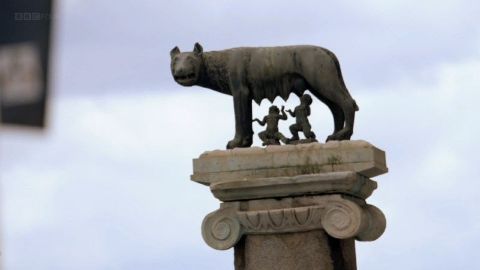
Simon Sebag Montefiore charts Rome's rise from the abandonment and neglect of the 14th century into the everlasting seat of the papacy recognised today. His story takes us through the debauchery and decadence of the Renaissance, the horrors of the Sack of Rome and the Catholic Reformation, through to the arrival of fascism and the creation of the Vatican State. By taking us inside Rome's most sensational palaces and churches and telling the stories behind some of the world's most beloved art, Sebag Montefiore's final instalment is a visual feast.
S1E3 • Rome: A History of the Eternal City • 2012 • History
In the dying days of World War II, a secret organisation of Holocaust survivors plans a terrible revenge. Six million Jews are dead but, by 1946, just a handful of Nazis face trial. Most of the guilty will never face justice. For many of Hitler's victims, this is not enough. Based on previously unheard recordings and exclusive interviews with those involved - all of whom are over 90 - this documentary tells the story of a remarkable secret group known as The Avengers, who decide to take matters into their own hands. Assembled by the warrior-poet Abba Kovner, their aim is 'an eye for an eye, a tooth for a tooth, a life for a life.' Their plan: to murder six million Germans by infiltrating German cities and poisoning the water supply.
Secret History • 2018 • History
More than 2,000 years after he conquered the known world, Alexander the Great continues to fascinate. Alexander the Great, a man of extremes and contradictions. A film about one of the most extraordinary military leaders of all time and who this man really was. Discover the astonishing truth in Beyond the Movie Alexander the Great. At the age of 30, he already ruled one of the most powerful empires in the world. It stretched from the olive groves of Greece to the magnificent palaces of India. Alexander brought East and West closer together for the first time and changed the ancient world forever. He was very wise and intelligent, but also a murderer. What personal demons fueled Alexander's unquenchable thirst for danger, fame and conquest. Who was this man of extremes and contradictions really? This National Geographic film attempts to unravel the myth and provides fascinating insights into the world of one of history's greatest military leaders. Impressive reconstructions and the detailed perspectives of scientists and experts reveal the secrets and myths surrounding the real Alexander. Discover how tactical battlefield savvy and reckless bravado made Alexander the most formidable warrior-leader of all time. Learn why his ferociously loyal men venerated Alexander, then finally, some say, conspired in his still controversial death. Brought stunningly to life with powerful re-creations and in-depth academic insights , it's a journey behind the mists and myths of history that reveals the real Alexander the Great as never before!
2004 • History