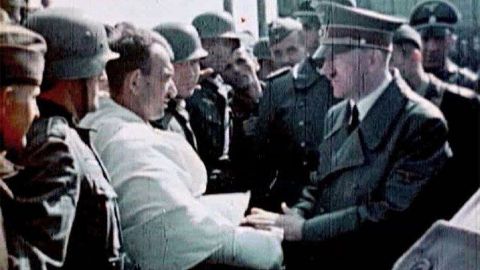
If this episode teaches us anything it’s that revolutionaries come in many different forms. All thirteen of our subjects have been pioneers and leaders in their fields and have changed everything, from the way we watch films to how we connect and work. For some the word revolutionary might only be a title but for others, such as Castro and Ghandi, it is far more real. This episode of heroes and villains features some of the most famous and infamous faces of the twentieth century.
Hope you're finding these documentaries fascinating and eye-opening. It's just me, working hard behind the scenes to bring you this enriching content.
Running and maintaining a website like this takes time and resources. That's why I'm reaching out to you. If you appreciate what I do and would like to support my efforts, would you consider "buying me a coffee"?
BTC: bc1q8ldskxh4x9qnddhcrgcun8rtvddeldm2a07r2v
ETH: 0x5CCAAA1afc5c5D814129d99277dDb5A979672116
With your donation through , you can show your appreciation and help me keep this project going. Every contribution, no matter how small, makes a significant impact. It goes directly towards covering server costs.
Counting down from 62 to 50 we list scientists, revolutionaries, Generals… and even “the king”. But Elvis Presley isn’t the only surprise in this episode as he stands shoulder to shoulder with Amelia Earhart, Edwin Hubble and more. This episode touches on some issues which remain vital today and choices that changed the world and the way we live.
2016 • People
If this episode teaches us anything it’s that revolutionaries come in many different forms. All thirteen of our subjects have been pioneers and leaders in their fields and have changed everything, from the way we watch films to how we connect and work. For some the word revolutionary might only be a title but for others, such as Castro and Ghandi, it is far more real. This episode of heroes and villains features some of the most famous and infamous faces of the twentieth century.
2016 • People
The Sixth Episode features some major players from war and peace, from east and west. From inventors who have changed the way we live and fight to artists who have given us reasons to do both, we count through 35 to 24 and cover some of the most influential and infamous people who made the twentieth century – a long reigning monarch, a murderous dictator and the “father of the Atom Bomb”. Quite a mixture!
2016 • People
From a painter who changed the face of modern art to the most recognised figure of WWII, this episode spans the century, highlighting people of such profound influence that they can reasonably be termed “iconic”. Whether they’re reshaping a nation or reinventing the tools that will forever change the way we live, no one could argue that the Top Twenty are all people who made the twentieth century.
2016 • People
What would the world we live in look like without our Top Ten? It is hard to imagine but one thing’s for sure, in making the twentieth century they have indelibly influenced the world we know today. In our final episode we reveal our picks for the most significant people “Who Made the Twentieth Century”. The results will surprise many. Some will disagree with the choices, everyone will remain gripped up to the final reveal.
2016 • People
Adolf Hitler is infamous today as a war criminal - arguably one of the worst war criminals in history. Yet during the 1930s he was loved by millions of Germans. How was this possible? In this fascinating series, award-winning historian and documentary maker Laurence Rees examines the background to Hitler's 'charismatic' rule.
S1E2 • The Dark Charisma of Adolf Hitler • 2012 • People
Many technologies have promised to revolutionize education, but so far none has. With that in mind, what could revolutionize education?
Alice Roberts explores the latest discoveries in the study of human origins, revealing the transformation that has been brought about in this field by genetics. Traditional paleo-anthropology, based on fossils, is being transformed by advanced genome sequencing techniques. We now know that there were at least four other distinct species of human on the planet at the same time as us - some of them identified from astonishingly well-preserved DNA extracted from 50,000-year-old bones, others hinted at by archaic sections of DNA hidden in our modern genome. What's more, we now know that our ancestors met and interacted with these other humans, in ways that still have ramifications today. Alice uses these revelations to update our picture of the human family tree.
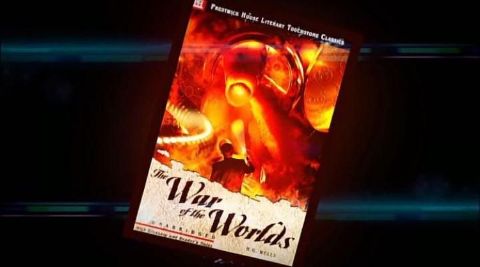
"I told you so..." H.G. Wells' self penned epitaph underscores a lifetime of grim yet uncanny prophecy. With stories like The Time Machine, The Invisible Man, The World Set Free, and The War of the Worlds, H.G. Wells established himself as a sci-fi writer of almost clairvoyant talent.
S1E3 • Prophets of Science Fiction • 2011 • People
70,000 years ago humans were insignificant animals. The most important thing to know about prehistoric humans is that they were unimportant. Their impact on the world was very small, less than that of jellyfish, woodpeckers or bumblebees.
In 1966, drought and an exploding population confronted India with the imminent threat of a severe famine that many scientists and intellectuals feared was a harbinger of global catastrophes to come, as the world's population outstripped its ability to produce food. India turned to Norman Borlaug, an unassuming plant breeder from Iowa whose combination of scientific knowledge and raw determination had made him a legend among a small handful of fellow specialists. The Man Who Tried to Feed the World recounts the story of the man who would not only solve India's famine problem, but would go on to lead a "Green Revolution" of worldwide agriculture programs, saving countless lives. He was awarded the 1970 Nobel Peace Prize for his work but spent the rest of his life watching his methods and achievements come under increasing fire.
2020 • People