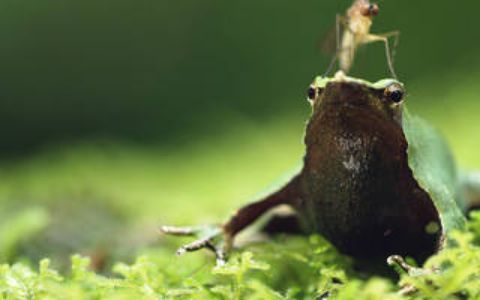
Meet the exceptional animals that have adapted to survive in the difficult conditions of the Andes' Altiplano plateau.
Hope you're finding these documentaries fascinating and eye-opening. It's just me, working hard behind the scenes to bring you this enriching content.
Running and maintaining a website like this takes time and resources. That's why I'm reaching out to you. If you appreciate what I do and would like to support my efforts, would you consider "buying me a coffee"?
BTC: bc1q8ldskxh4x9qnddhcrgcun8rtvddeldm2a07r2v
ETH: 0x5CCAAA1afc5c5D814129d99277dDb5A979672116
With your donation through , you can show your appreciation and help me keep this project going. Every contribution, no matter how small, makes a significant impact. It goes directly towards covering server costs.
See how life adapts to explosive change in the untamed Patagonian Andes.
2019 • Nature
Meet the exceptional animals that have adapted to survive in the difficult conditions of the Andes' Altiplano plateau.
2019 • Nature
An in-depth look at the northern Andes' active volcanoes, cloud forests, and wildly diverse collection of creatures.
2019 • Nature
The members of the Nsefu pride take a huge risk: they're leaving their home turf, and crossing the Luangwa River in search of prey. Navigating croc-infested waters is a challenge, especially for the pride's yearling, dubbed the Misfit. It's a foolhardy gamble, but hunger has forced their hand. If they're to succeed, they'll need the Misfit to come of age-their very survival depends on it.
Great Parks of Africa • 2018 • Nature
Shrouded in myth and legend, the forests of Germany are world famous, thanks to the fairy tales of the Brothers Grimm. This episode reveals the strange creatures that actually live there.
Part 3 • Wild Germany • 2012 • Nature
Across the world we are seeing the emergence of bacteria that have gone rogue. These are the superbugs, dangerous bacteria that are becoming resistant to our only defence: antibiotics. Horizon meets the scientists who are tracking the spread of these potential killers around the globe, and discovers the new techniques researchers are developing to help defeat these superbugs.
Gorillas, rhinos, and elephants, three of nature's largest animals, deliver enormous babies. But the immense size of these newborns stands in stark contrast to their vulnerability. Everything from feeding to protection against predators to learning essential life skills falls on one devoted parent: their mothers.
S1E1 • Baby Animals • 2016 • Nature
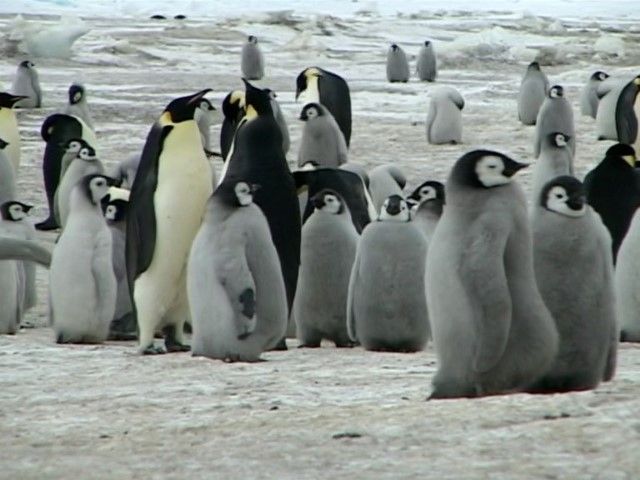
In the frozen wilderness of Antarctica, where oceans ice over and just staying alive is an achievement, one creature has perfected the art of survival - the emperor penguin. Eons of evolution have built an animal superbly adapted to the howling gales and sub-zero temperatures, but the emperor may have finally met its match. Parts of Antarctica are warming, giving birth to huge icebergs, and the consequences could be catastrophic for this majestic animal. In a place where all life is touched by the ice, it is a dramatic shift. Explore this region from its inhabitant's perspective, using state-of-the-art technology. By better understanding these amazing animals, researchers can help prepare for their future, as the balance of life in the Antarctic continues to change.
2006 • Nature
With a million species at risk of extinction, Sir David Attenborough explores how this crisis of biodiversity has consequences for us all, threatening food and water security, undermining our ability to control our climate and even putting us at greater risk of pandemic diseases. Extinction is now happening up to 100 times faster than the natural evolutionary rate, but the issue is about more than the loss of individual species. Everything in the natural world is connected in networks that support the whole of life on earth, including us, and we are losing many of the benefits that nature provides to us. The loss of insects is threatening the pollination of crops, while the loss of biodiversity in the soil also threatens plants growth. Plants underpin many of the things that we need, and yet one in four is now threatened with extinction. Last year, a UN report identified the key drivers of biodiversity loss, including overfishing, climate change and pollution. But the single biggest driver of biodiversity loss is the destruction of natural habitats. Seventy-five per cent of Earth's land surface (where not covered by ice) has been changed by humans, much of it for agriculture, and as consumers we may unwittingly be contributing towards the loss of species through what we buy in the supermarket. Our destructive relationship with the natural world isn’t just putting the ecosystems that we rely on at risk. Human activities like the trade in animals and the destruction of habitats drive the emergence of diseases. Disease ecologists believe that if we continue on this pathway, this year’s pandemic will not be a one-off event.
2020 • Nature