Hair Raising Science • 2022 • episode "S1E5" • Oops, I Changed the World

Category: Technology | Torrent: | Subtitle:

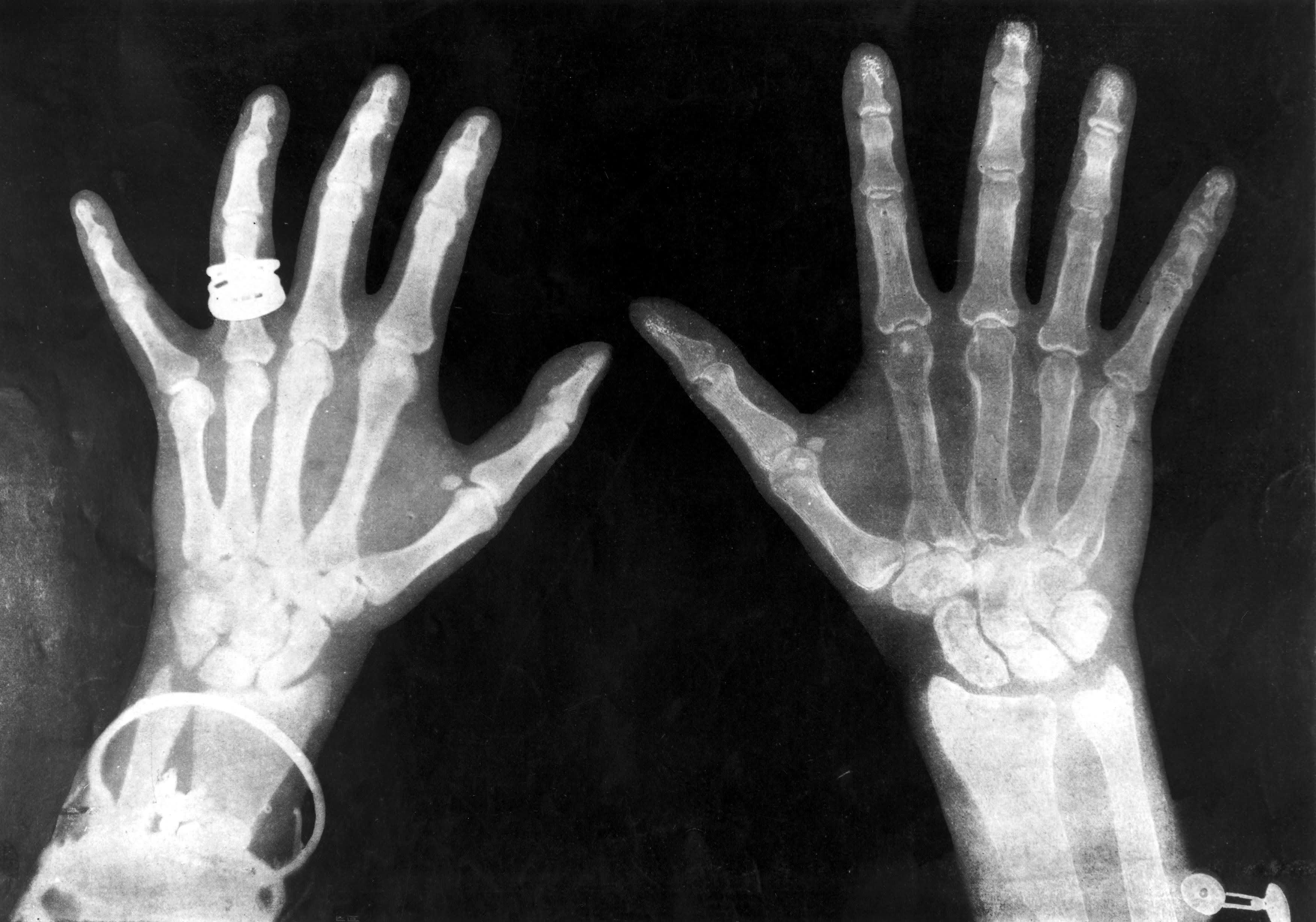
A failed blood pressure medicine and an unexpectedly hairy woman lead to a cure for baldness. How messing around with a scientific toy gave us the x-ray. An attempt to stop the paper curling in a newspaper printer becomes air conditioning. And why war is responsible for the slinky.

Make a donation

Buy a brother a hot coffee? Or a cold beer?

Hope you're finding these documentaries fascinating and eye-opening. It's just me, working hard behind the scenes to bring you this enriching content.

Running and maintaining a website like this takes time and resources. That's why I'm reaching out to you. If you appreciate what I do and would like to support my efforts, would you consider "buying me a coffee"?

Donation addresses

Buy Me a Coffee at ko-fi.com

patreon.com

BTC: bc1q8ldskxh4x9qnddhcrgcun8rtvddeldm2a07r2v

ETH: 0x5CCAAA1afc5c5D814129d99277dDb5A979672116

With your donation through , you can show your appreciation and help me keep this project going. Every contribution, no matter how small, makes a significant impact. It goes directly towards covering server costs.
Oops, I Changed the World • 2022 • 8 episodes •

Conditioned

Pavlov's investigations into dog digestion lead to phone addiction. A failed quest to find a safer refrigerant creates Teflon. A damaged delivery crate is instrumental in the invention of dynamite. And a chance encounter with a composer leads Hollywood star Hedy Lamarr to invent the basis for wifi.

2022 • Technology

Blue Genes

The failed experiment and the world's greatest crime-fighting tool. A clumsily dressed cut leads to the invention of plastics. How chance conversation and sausage poison changed the face of Hollywood. And a broken thermometer sets in motion a chain of events that frees a country from colonialism.

2022 • Technology

Sweet Success

A dirty laboratory and a vacation lead to the discovery of our first real weapon against bacteria: penicillin. A scientist's determination to test the ‘wrong' solution gives us Kevlar. Unwashed hands and some unexpectedly sweet bread is to thank for Saccharin. A failed laser becomes the LED light.

2022 • Technology

Acid Test

A swiss chemist's attempts to make a lung drug results in LSD. The son of enslaved parents tires to reverse the fortunes of sharecroppers and inadvertently gives rise to PB&J. A failed dye becomes TNT. And a prison camp doctor and a fridge full of urine lead to improve mental healthcare.

2022 • Technology

Hair Raising Science

A failed blood pressure medicine and an unexpectedly hairy woman lead to a cure for baldness. How messing around with a scientific toy gave us the x-ray. An attempt to stop the paper curling in a newspaper printer becomes air conditioning. And why war is responsible for the slinky.

2022 • Technology

Discovering Drink

A clumsy lab worker leads to the invention of superglue. And the accidents behind neuroscience, beer, and chemical hair relaxant.

2022 • Technology

Bigger Bang

A misguided attempt to make plastic wallpaper results in bubble wrap. The precursor to a blood clotting drug becomes rave favorite, MDMA. A mopped-up kitchen spill brings us smokeless explosive guncotton. A defective satellite lens leads to a new way to identify breast cancer.

2022 • Technology

Laxative Lunacy

The accidents behind the inventions of post-it notes, Ex-lax, Graphene and the way a walk in the snow almost leads to nuclear Armageddon.

2022 • Technology

You might also like

Quantum Computers Explained – Limits of Human Technology

Where are the limits of human technology? And can we somehow avoid them? This is where quantum computers become very interesting.

In a Nutshell • 2015 • Technology

Robots

What if our creations turn against us? The idea of creating life has fascinated society since the earliest days of science fiction. The first installment of the four-part series, Robots transports viewers from the first steps of Frankenstein’s monster to the threat provided by the Terminator and the world of Cyberspace. Find out how Rutger Hauer created one of the greatest speeches in all of science fiction for Blade Runner. Discover from Kenny Baker the challenge of acting in Star Wars while inside the body of R2D2, and learn how Anthony Daniels was drawn to the role of C-3PO by concept art modeled closely on the robot from the silent classic Metropolis. Douglas Trumbull (2001: A Space Odyssey, Blade Runner) discusses how he managed to create a whole new approach to robot design. The creators of the original Robocop describe how its hidden depths have given it enduring appeal and William Gibson reveals the origins of his seminal novel Neuromancer. From HAL in 2001: A Space Odyssey to the Cylons of the reimagined Battlestar Galactica and the world of The Matrix, this is a journey that asks – what does it mean to be human?

Part 1 • The Real History of Science Fiction • 2014 • Technology

Farnsworth vs Sarnoff

The invention of TV is born out of a David vs. Goliath competition between Sarnoff and Farnsworth.

S1E3 • American Genius • 2015 • Technology

737 MAX

Two air catastrophes within five months of each other, both involving the same plane: the Boeing 737 MAX. How could these brand-new passenger jets, built by one of aviation's most trusted companies, just fall out of the sky? Now, through newly uncovered records, plus interviews with experts who investigated the crashes, we reveal why this seemingly reliable aircraft was headed toward disaster from the very beginning, and list the series of miscalculations, mistakes, and fraudulent maneuvers that sent 346 people to their deaths in 2018 and 2019.

S1E3 • Ten Steps to Disaster • 2021 • Technology

International Space Station

Currently, the only destination for Astronauts and Cosmonauts is the orbiting research platform known as the International space station. This episode exposes the working life of people who spend months orbiting in microgravity.

S1E4 • Zenith: Advances in Space Exploration • 2021 • Technology

Ceramics

From the Stone Age to the Silicon Age, materials have helped drive forward our civilisation. By manipulating materials we have been able to transform our world and our lives - and never more so than in the past century when we have discovered and designed more materials than at any other time in human history. (Part 3: Ceramic) Professor Mark Miodownik traces the story of ceramics. He looks at how we started with simple clay, sand and rock and changed them into pottery, glass and concrete - materials that would allow us to build cities, transform the way we view our world and communicate at the speed of light. Deep within their inner structure Mark discovers some of ceramics' most intriguing secrets. He reveals why glass can be utterly transparent, why concrete continues to harden for hundreds of years and how cooling ceramics could transform the way we power cities of the future.

S1E3 • How It Works • 2012 • Technology