Help Me Adapt • 2015 • episode "S2E1" Redesign my brain

Category: Brain

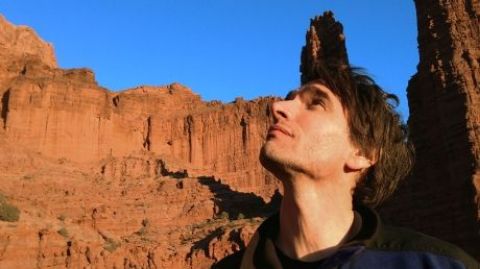
Todd uses the latest science to train his brain to become more adaptable. To prove that it's possible, he risks his life rock climbing blindfolded up a 120m rock face in Utah's Moab Desert.

Make a donation

Buy a brother a hot coffee? Or a cold beer?

Hope you're finding these documentaries fascinating and eye-opening. It's just me, working hard behind the scenes to bring you this enriching content.

Running and maintaining a website like this takes time and resources. That's why I'm reaching out to you. If you appreciate what I do and would like to support my efforts, would you consider "buying me a coffee"?

Donation addresses

Buy Me a Coffee at ko-fi.com

patreon.com

BTC: bc1q8ldskxh4x9qnddhcrgcun8rtvddeldm2a07r2v

ETH: 0x5CCAAA1afc5c5D814129d99277dDb5A979672116

With your donation through , you can show your appreciation and help me keep this project going. Every contribution, no matter how small, makes a significant impact. It goes directly towards covering server costs.
Redesign my brain • 2013 - 2015 • 6 episodes •

Make me smarter

Todd Sampson puts brain training to the test. A pioneer in the neuroplasticity revolution, Michael Merzenich, mentors Todd, showing him how to radically improve his cognition by turbocharging his thinking speed, attention and memory.

2013 • Brain

Make me creative

Todd puts brain training to the test in Make Me Creative, as he trains his brain to be more creative, innovative and to think more laterally, before attempting a creative art challenge.

2013 • Brain

Mind over matter

Todd trains hard to improve his body intelligence, visualization skills, and emotional intelligence before attempting a super-human feat. He faces his greatest fear - being chained, handcuffed and blindfolded underwater with only his radically improved brain to help him escape.

2013 • Nature

Help Me Adapt

Todd uses the latest science to train his brain to become more adaptable. To prove that it's possible, he risks his life rock climbing blindfolded up a 120m rock face in Utah's Moab Desert.

2015 • Brain

Sharpen My Senses

Todd pushes his senses to the limits to unleash his brain's full potential.

2015 • Brain

Make me Brave

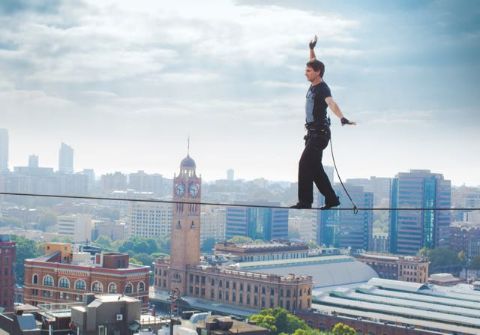
To prove that brain training can overcome fear, Todd uses all his previous brain training to face his fears and achieve the ultimate challenge - a skywalk between two buildings 21 floors high.

2015 • Brain

You might also like

Turning Point

Alzheimer's disease -- the most feared of all maladies, with no way to cure, stop or even slow its insidious progression. But now, after decades of perseverance in the lab, researchers are on the cusp of a scientific breakthrough that could be the first step toward making Alzheimer's itself a distant memory. In the gripping new documentary Turning Point, acclaimed filmmaker James Keach takes us inside the quest for the first medication that that could treat the underlying process of Alzheimer's disease, more than a century after Dr. Alois Alzheimer first described the brain disorder that slowly destroys memory and cognitive skills. Along the way, we meet the people behind these grand experiments, the scientists driven as much by personal conviction as professional innovation. And we discover why medical science is never easy, often unpredictable and potentially perilous.

2020 • Brain

The Creative Brain

Neuroscientist David Eagleman taps into the creative process of various innovators while exploring brain-bending, risk-taking ways to spark creativity.

2019 • Brain

David Harewood: Psychosis and Me

At the age of 23, David Harewood had a psychotic breakdown and was sectioned. Two years ago he opened up on Twitter about the experience - and now he wants to tell the full story. Travelling back to his home town of Birmingham, the actor lets viewers into the realities of experiencing a psychotic breakdown, and how much he blocked out at the time, meeting up with his mother and old friends who were with him at the time. But this isn't just his story. He also spends time with other young people living with psychosis and the NHS professionals who treat them.

2023 • Brain

Brains

In the final episode Dr Alice Roberts explores how our species, homo sapiens, developed our large brain; and asks why we are the only one of our kind left on the planet today?

S1E3Origins of UsBrain

Speechless

Imagine a world in which you can think but cannot speak. For many stroke survivors, like former football star Junior and landlord Barry, this nightmare is a reality. Inspired by the experience of his brother-in-law, filmmaker Richard Alwyn has made an intensely moving, personal film about language and its loss. Alwyn's brother-in-law, journalist Dennis Barker, had a stroke in 2011 which left him speaking a bizarre, fluent gibberish – just one manifestation of the condition ‘aphasia' in which people lose or have a severely impaired ability to use language. Speechless tells the powerful stories of two men who can no longer take language for granted. Much of the film is made on the Neuro Rehab Unit of the National Hospital for Neurology and Neurosurgery in London's Queen Square. There, Alwyn meets 55 year old Barry who has been in hospital for 4 months since a stroke left him barely able to speak. Courageous and determined, Barry's personality constantly triumphs where his language fails. And two years after his stroke when just 35 years-old, former Premier League and international footballer Junior Agogo is still visiting the Unit as he battles to find his way in the world with depleted language. “I had thoughts but I'm saying, where was my voice? I was baffled, man.” Speechless raises questions that straddle philosophy and science. Can we understand the world if we don't have language to name and describe it? Can we think without language? How much is our identity wrapped up in language? These questions are at the heart of conversations that Alwyn has with clinicians and therapists working to get Barry and Junior back into the world. Speechless is fascinating and moving, upsetting and uplifting in its depiction of the isolating and estranging condition, aphasia.

2017 • Brain

Does this look white to you?

When you mix red and green, what do you get? White light is all of the colors, right? So, how do computer screens show you every wavelength of light? Or do they?

Physics Girl • 2015 • Brain