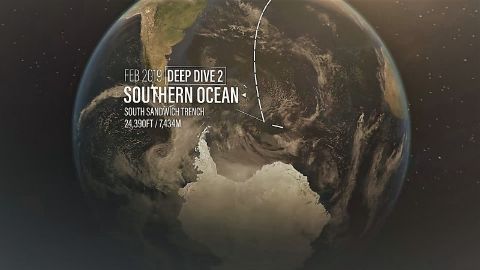
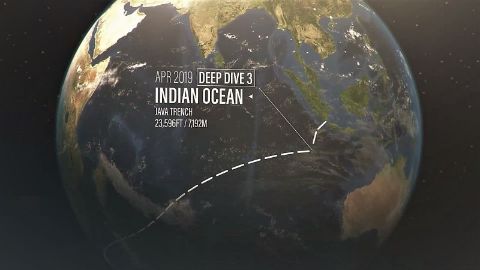
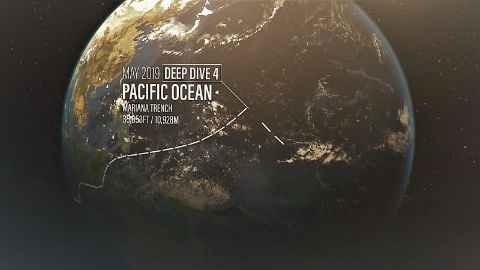
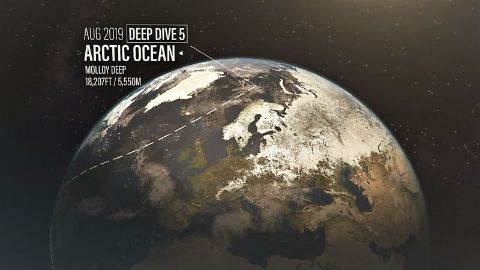
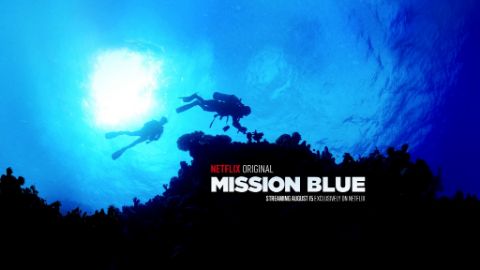
Explorer Victor Vescovo and his team head to the Indian Ocean.
Hope you're finding these documentaries fascinating and eye-opening. It's just me, working hard behind the scenes to bring you this enriching content.
Running and maintaining a website like this takes time and resources. That's why I'm reaching out to you. If you appreciate what I do and would like to support my efforts, would you consider "buying me a coffee"?
BTC: bc1q8ldskxh4x9qnddhcrgcun8rtvddeldm2a07r2v
ETH: 0x5CCAAA1afc5c5D814129d99277dDb5A979672116
With your donation through , you can show your appreciation and help me keep this project going. Every contribution, no matter how small, makes a significant impact. It goes directly towards covering server costs.
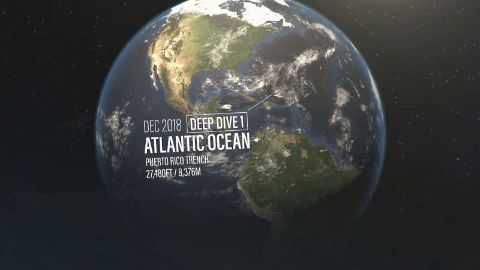
Victor Vescovo's team searches for the deepest point of the Atlantic Ocean.
2021 • Environment
Victor Vescovo's team searches for the deepest point of the Southern Ocean.
2021 • Environment
Victor Vescovo's team takes on the Mariana Trench in the Pacific Ocean.
2021 • Environment
Victor Vescovo's team concludes their mission in the Arctic Victor Vescovo's team concludes their mission in the Arctic Ocean..
2021 • Environment
One man has seen more of the natural world than any other. This unique feature documentary is his witness statement. Having spent decades traveling the globe and producing some of the most memorable documentaries of all time, few people know the natural world quite like David Attenborough. That’s why he’s so concerned about the issue of climate change, which will threaten humanity’s very survival unless urgent action is taken to halt the damage it has already caused. Attenborough’s latest offering, A Life On Our Planet, is a reflective piece, looking back on his 94 years on Earth and sending a desperate appeal for help in securing its future.
2020 • Environment
James May asks the big questions about the weather, including what is a cloud?
S1E3 • James May's Things You Need to Know • 2011 • Environment
By investigating the tell-tale signs of earthquakes and tsunamis written into the landscape over the last thousand years, Japanese scientists are rewriting the rule books for disaster prevention in the Pacific.
9/10 • Catalyst: Season 1 • 2015 • Environment
From space, Earth is a kaleidoscope. Turquoise plankton blooms trigger a feeding frenzy, China turns yellow with rapeseed flowers, and mysterious green lights appear in the ocean.
S1E3 • Earth from Space • 2019 • Environment
Victor Vescovo's team concludes their mission in the Arctic Victor Vescovo's team concludes their mission in the Arctic Ocean..
S1E5 • Expedition: Deep Ocean • 2021 • Environment
The launch of the BBC's ambitious seven-year natural history project, in which six presenters visit six of the planet's most threatened ecosystems to meet the people fighting to restore the Earth's delicate balance. Chapter 1: Steve Backshall travels to the Maldives, an area facing significant challenges because of climate change. Warming seas and the acidification of the oceans have led to coral bleaching on a massive scale, destroying the surrounding ecosystem. The biodiversity of the reefs provides food security, income and other benefits to the people of the Maldives, and Steve finds that they are working hard to try to stem the tide of destruction. He also goes diving off the reefs to check on a group of manta rays, whose presence offers a clear indication of the health of the reef. In Iceland, Chris Packham learns more about the effects of global warming. Temperatures in the Arctic are rising at more than twice the annual global average. Snow and ice are melting at an increasing rate, which contributes to rising sea levels and is likely to provoke extreme temperature events beyond the Arctic. As one of the eight Arctic States, Iceland is being dramatically affected by rising temperatures, with the lives and livelihoods of many islanders being threatened. Chris also discovers that melting sea ice is opening the Arctic to navigation. These seas are home to many species of whales, so Chris joins a team of young scientists monitoring the impact of increased commercial shipping on humpback whales. On the other side of the world, Ella Al-Shamahi visits Cambodia in Southeast Asia, an area experiencing increasing economic growth. However, growth is putting massive pressure on natural resources, with ever-expanding cities and devastating overexploitation of the natural world. The Mekong river is the lifeblood of this region, but whole sections of it are under pressure. Ella meets a fishing community living on the Tonle Sap lake. The lake used to offer rich fishing grounds for local communities, but the construction of many dams along the wider Mekong is now threatening to destroy the biodiversity of this once abundant lake. The building of new roads has given poachers easier access to forests, and the illegal wildlife trade is big international business. Ella visits a project in Cambodia that rescues and rehabilitates illegally trafficked wildlife, including pangolins, the most trafficked mammal on Earth. Chapter 2: Liz Bonnin travels to California to learn about the increasingly invasive wildfires hitting the headlines. Scientists can see clear links between the fires, climate change, raised temperatures and an extended drought season. There is one crucial element that is key to a sustainable future in California: biodiversity. Loss of keystone species and large carnivores is a threat to the state's ecosystems, and conservationists and scientists are mobilising to save wildlife from wildfires and to treat their burns. Liz also visits the Pacific coast of California, where warming seas have brought with them a new resident, great white sharks. With each shark consuming up to 18 kilos of prey at a time, the impact they could have on the marine ecosystem is being studied intently. Ade Adepitan travels to Kenya to look at the effects rising temperatures are having on the land. Hundreds of millions of Africans depend on rainfall to grow their food and keep livestock, and the capacity for adaptation is low. Ade also visits a project in Kenya that is going to extraordinary lengths to safeguard the future of its most charismatic creature, the African elephant. Over in Brazil, Gordon Buchanan discovers a pioneering project that is trying to save one of the Amazon's iconic predators, the jaguar. Brazil is the most biodiverse country in the world, and as well as the Amazon rainforest, it is home to one of the world's most important wetlands, the Pantanal. This area is home to high numbers of jaguars, but in 2020, wildfires destroyed 30 per cent of the Pantanal, killing an estimated 17 million animals. More than a quarter of the resident jaguars were directly impacted by these fires, through habitat loss, food shortages, injury and death.
2022 • Environment