Into Amazonia • 2012 • episode "S1E2" Brazil with Michael Palin

Category: Travel

The Python star continues his first visit to Brazil by travelling by river from the northern border with Venezuela to the capital of Brasilia. Along the way he visits indigenous tribe the Yanomami, learning about the threat to their hunter-gatherer way of life, before watching a rehearsal by the Amazon Philharmonic Orchestra and searching for the remains of Henry Ford's unsuccessful attempt to build a vast rubber plantation in the middle of the rainforest. In Belem, music producer Priscilla explains why Amazonian women are such powerful forces, then he moves southwards, meeting rock star and political activist Dinho Ouro Preto, who believes that despite its social and environmental problems, the country is on the brink of becoming a superpower.

Make a donation

Buy a brother a hot coffee? Or a cold beer?

Hope you're finding these documentaries fascinating and eye-opening. It's just me, working hard behind the scenes to bring you this enriching content.

Running and maintaining a website like this takes time and resources. That's why I'm reaching out to you. If you appreciate what I do and would like to support my efforts, would you consider "buying me a coffee"?

Donation addresses

Buy Me a Coffee at ko-fi.com

patreon.com

BTC: bc1q8ldskxh4x9qnddhcrgcun8rtvddeldm2a07r2v

ETH: 0x5CCAAA1afc5c5D814129d99277dDb5A979672116

With your donation through , you can show your appreciation and help me keep this project going. Every contribution, no matter how small, makes a significant impact. It goes directly towards covering server costs.

Brazil with Michael Palin • 2012 • 4 episodes •

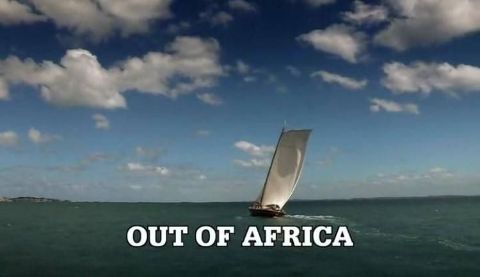
Out of Africa

The seasoned traveller explores the South American country, beginning in the north-east - where Europeans first landed and grew rich on the profits from sugar and tobacco plantations run with slave labour. In Sao Luis, Michael finds out about a ceremony based on a 200-year-old tale before heading to the coastal lagoons of the Lencois Maranhenses National Park. Journeying inland, he gets a glimpse of the fast-disappearing world of old-style cowboys known as vaqueiros, has his fortune read by a Candomble priest and learns to drum with the Olodum cultural collective.

2012 • Travel

Into Amazonia

The Python star continues his first visit to Brazil by travelling by river from the northern border with Venezuela to the capital of Brasilia. Along the way he visits indigenous tribe the Yanomami, learning about the threat to their hunter-gatherer way of life, before watching a rehearsal by the Amazon Philharmonic Orchestra and searching for the remains of Henry Ford's unsuccessful attempt to build a vast rubber plantation in the middle of the rainforest. In Belem, music producer Priscilla explains why Amazonian women are such powerful forces, then he moves southwards, meeting rock star and political activist Dinho Ouro Preto, who believes that despite its social and environmental problems, the country is on the brink of becoming a superpower.

2012 • Travel

The Road to Rio

Michael begins the third leg of his journey in the mineral-rich state of Minas Gerais, where he learns about the Brazilian mining industry and meets some of the people dedicated to overturning the environmental damage it causes. He then heads to Rio de Janeiro, focus of the next World Cup and Olympics, where the authorities are ridding the streets of violent drug gangs that have controlled the city's shanty towns. On a lighter note, the globe-trotting broadcaster also learns to celebrate a goal like a well-known radio commentator and visits a `love hotel'.

2012 • Travel

The Deep South

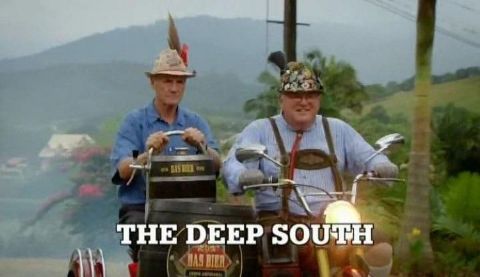
On the last leg of his journey across the South American country, Michael explores the Brazilian south, where he is surprised by the rich diversity of European and Asian influences. Along the way he meets Dom Joao de Orleans e Braganca, second in line of succession to Brazil's defunct throne, goes flying with a man who has made a fortune out of rubbish and meets rap star Criolo, who believes social equality is a distant dream for most of his countrymen. Travelling farther south to Blumenau, the former Python's views on what makes a typical Brazilian are challenged when he finds German speakers and Bavarian dancers, before he catches piranha for sushi and helps cowboys treat a calf attacked by a jaguar

2012 • Travel

You might also like

Morocco to the French Riviera

Taking a ferry across the Strait of Gibraltar, Simon's first stop is Ceuta, a Spanish exclave surrounded by Morocco. This is one of the few land borders between Africa and the European Union. Simon joins the Spanish border police who check engines and even dashboards for stowaways trying to reach Europe. Migrant and refugees attempting to cross Ceuta's fortress border have quadrupled in the last year. Undaunted by Morocco's failure to issue a filming permit, Simon crosses the border as a tourist, tracking down a group of young migrants hiding out in a forest close to Ceuta. They have travelled thousands of miles, crossing the Sahara to get this far, and now they are just a 20-foot, razor wire fence away from their European dream. Crossing the Med to Spain, one the busiest shipping lanes in the world, Simon discovers huge numbers of dolphins and even giant whales surviving by dodging the ferries, container ships and oil tankers. Travelling along the arid southern Spanish coast, Simon takes to air to witness the sea of plastic that form over a hundred square miles of greenhouses. It is where much of our supermarket fruit and veg are grown, but as Simon discovers it is a massive industry built on the back of a low paid, migrant workforce. Following in the footsteps of four million Brits who make the journey every year, Simon travels to the Costa Blanca and its most famous resort, Benidorm. Derided by many, Simon is surprised to learn that high-rise Benidorm is now being hailed by experts as a model of sustainable tourism. The Mediterranean region attracts a third of world tourism and visitor numbers are predicted to rise to half a billion a year by the end of the next decade. Simon travels to a western corner of Corsica, a nature reserve that must be one of the most heavily protected bits of sea on earth, and one of the few places where tourists are actively discouraged from visiting. Lying on the beach, hiking in the mountains and watersport activities are all banned. The park's manager shows Simon the results, taking him for a dive in the fishiest place in the Med. In a sea where over ninety percent of fish stocks are over exploited, it is a beacon of hope in what is otherwise an uncertain future for the Mediterranean.

S1E4Mediterranean with Simon Reeve • 2018 • Travel

Dobrogea

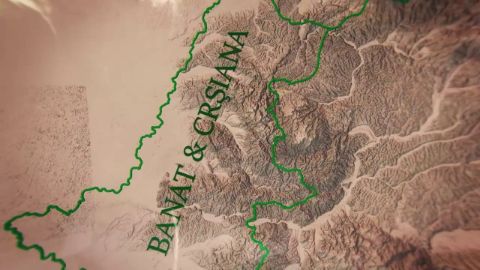
In Dobrogea's fragile Danube Delta ecosystem, Charlie tours by boat and bicycle to visit the region's picturesque beach and fishing villages.

S2E3Flavours of Romania • 2023 • Travel

Mysterious North

Northern Thailand is dominated by mountains and cloaked in forest. It hides ancient creatures and surprising partnerships. To survive here, both the wildlife and people rely on maintaining the natural harmony of the mysterious north.

S1E3Thailand: Earth's Tropical Paradise • 2017 • Travel

Moldova

The next leg of my journey takes us north to Moldova, an ancient region covering the Easternmost part of the country. Originally twice its current size, it included northern Bucovina and Basarabia, now the separate and not to confused with the Republic of Moldova.

S1E4Flavours of Romania • 2018 • Travel

The Loneliest Country In The World

Where is the population in the world the smallest? What countries have the least people? It’s not the size that matters, and with countries, that is often the case. Some of the least populated countries in the world are also the wealthiest in terms of personal wealth and gross national product. And some of the larger nations have problems equally as huge to address. Some of these smaller countries are thinly populated because they are super-difficult to get to or sit in some of the world’s harshest regions. Some simply get by on one or two key industries and foreign aid. Some were used as strategic bases during war time. Some are playgrounds for the rich and famous. And one is reserved for holy activities. Today we take a closer look at the smallest of these nations, in this episode of the Infographics Show, The Ten Least Populated Countries in the World.

The Infographics Show • 2018 • Travel

Bucovina

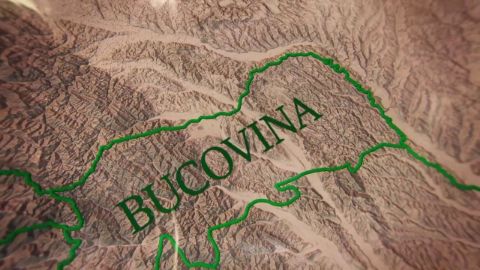
Famed for its painted churches, this is a region that's replete with ancient monuments.

S1E9Flavours of Romania • 2018 • Travel