In Episode Four Watch Manuel Noriega rise through the Panamanian military to become chief of intelligence and then, military dictator. He spied for the United States, but in the end, money laundering, drug trafficking and political crimes led to his downfall.
Hope you're finding these documentaries fascinating and eye-opening. It's just me, working hard behind the scenes to bring you this enriching content.
Running and maintaining a website like this takes time and resources. That's why I'm reaching out to you. If you appreciate what I do and would like to support my efforts, would you consider "buying me a coffee"?
BTC: bc1q8ldskxh4x9qnddhcrgcun8rtvddeldm2a07r2v
ETH: 0x5CCAAA1afc5c5D814129d99277dDb5A979672116
With your donation through , you can show your appreciation and help me keep this project going. Every contribution, no matter how small, makes a significant impact. It goes directly towards covering server costs.
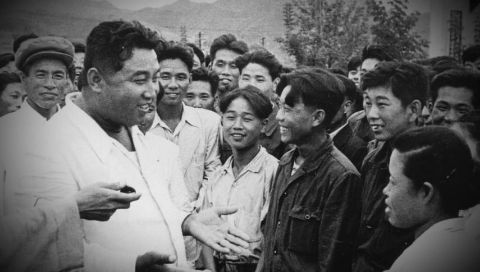
In The First Episode, Witness Kim Il Sung's transformation from guerrilla fighter to brutal dictator of North Korea. How did he build the most controlled society on earth and launch a dictatorship that has lasted for three generations?
2019 • History
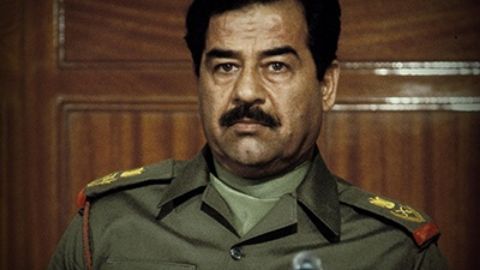
Learn how Saddam Hussein ruled Iraq with an iron fist for almost 30 years. To maintain power, he used fear, intimidation and violence like few other dictators in history, but he made the fatal mistake of believing his regime could take on the world.
2019 • History
Learn how six dictators, from Mussolini to Saddam Hussein, shaped the 20th century. How did they seize and lose power? What forces were against them? Learn the answers in these six immersive hours, each a revealing portrait of brutality and power In Episode Three see why Benito Mussolini was considered a pioneer among 20th century dictators. From undermining judges to indoctrinating children, he forged key tactics for seizing power. He also created fascism, an ideology that would plunge Europe into darkness.
2019 • History
In Episode Four Watch Manuel Noriega rise through the Panamanian military to become chief of intelligence and then, military dictator. He spied for the United States, but in the end, money laundering, drug trafficking and political crimes led to his downfall.
2019 • History
Learn how Francisco Franco used the tactics of colonial war to win control of Spain. Driven by a deeply conservative vision, he used torture, murder and incarceration to transform Spanish Society.
2019 • History
When Hitler expounded his intention to invade Russia his generals looked at him in horrified silence. The Soviet Union was vast and had matchless resources. Hitler's whole plan depended upon striking a swift and decisive knock-out blow. Get sucked into a long, drawn-out war and Germany would surely lose. Hitler was certain his forces could do it. No one had so far defeated them. But there had never been a military gamble like it... This film takes in Stalingrad and the battle of Kursk, the biggest tank battle in all history.
4/13 • World War II In HD Colour • 2009 • History
In April 1944, two Jewish prisoners miraculously escaped from Auschwitz. When they recounted what they had left behind, their harrowing testimony revealed the true horror of the Holocaust to the outside world for the first time. They described in forensic detail the gas chambers and the full extent of the extermination programme. The news they brought presented the Allies with one of the greatest moral questions of the 20th century: Should we bomb Auschwitz? While the Allies deliberated in London and Washington, the killing machine ground on in southern Poland. One month after the men’s escape, almost 800,000 Hungarian Jews had been rounded up awaiting transport to Auschwitz. By early July 1944, the majority had been transported. Most of them were murdered on arrival. As the killing at Auschwitz reached its frenzied climax, the outcome of the Second World War hung in the balance. Millions of troops were fighting on both fronts and battling for supremacy in the air. Should the Allies use their resources to push on and win the war or to stop the industrial slaughter at Auschwitz? The request to bomb the camp, with 30,000 captive prisoners, was remarkable and came from a place of utter desperation. But it was a direct response to the destruction of an entire people. There were operational challenges - was it possible to reach the camp to bomb it? How many heavy bombers would it take? What would the Nazi propaganda machine say about such an attack? - as well as complex moral ones. How many prisoners would likely die in such a raid? Can you kill friendly civilians in order to save the lives of those being transported towards the death camp? These were the hard questions faced by Churchill, Allied Air Command and the Jewish Agency.
2019 • History
Richard Miles explores the rise and fall of the Roman Empire, which at the height of its power, extended the benefits of its civilisation to a staggering 60 million subjects and citizens, from Hadrian's Wall to the banks of the Euphrates. The archaeologist and historian also learns how the expansion of Christianity filled a gap left by the Roman multi-god belief system, eventually leading to the instalment of Constantine as the first Christian emperor
S1E6 • Ancient Worlds • 2010 • History
Alastair explores the extraordinary afterlife of the Greek masterpieces that changed the course of western culture. Succeeding centuries have found in ancient Greek art inspiration for their own ideals and ambitions. Filming in Italy, Germany, France and Britain, Alastair's investigation includes The Venus of Knidos, the first naked woman in Western art, the bronze horses of St Mark's in Venice which became a pawn in an imperial game and the naked discus thrower, the Discobolus, personally bought by Adolf Hitler and used by him as a symbol of Aryan supremacy.
S1E3 • Treasures of Ancient Greece • 2015 • History
The Big Crash” relates the dramatic history of how the continent of Europe came to be – from the carboniferous period to the extinction of the dinosaurs 65 million years ago. During its long creation process Europe has “traveled” through various climate zones, has been shaped by the elements and transformed by collisions with other continents. Dinosaurs were also at home here – until the Big Crash came.
S1E1 • 300 Million Years: Where Life Began • 2015 • History
Think Renaissance and you think of Italy. But in the 15th and 16th centuries, the great Islamic empires experienced their own extraordinary cultural flowering.
5/10 • Civilisations • 2018 • History