May 1945 • 2020 • episode "S1E3" Berlin 1945: Diary of a Metropolis

Category: History | Torrent: | Subtitle:

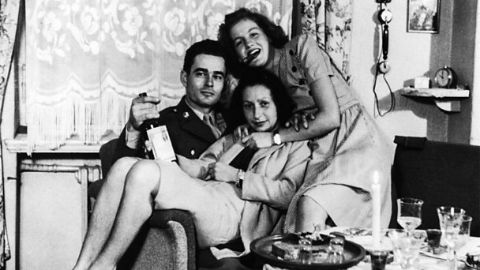
The British, French and Americans are waiting to enter Berlin. In the meantime, the Soviets appoint mayors, organise the food supply and go on the hunt for war criminals. The Jewish community, among whom there are few survivors, regroup. The fate of the city is determined at the Potsdam Conference. Life returns to the ruins, theatres reopen and orchestras play in the open air. By the end of 1945, the bond that held the Allies together is torn apart - and the Cold War begins.

Make a donation

Buy a brother a hot coffee? Or a cold beer?

Hope you're finding these documentaries fascinating and eye-opening. It's just me, working hard behind the scenes to bring you this enriching content.

Running and maintaining a website like this takes time and resources. That's why I'm reaching out to you. If you appreciate what I do and would like to support my efforts, would you consider "buying me a coffee"?

Donation addresses

Buy Me a Coffee at ko-fi.com

patreon.com

BTC: bc1q8ldskxh4x9qnddhcrgcun8rtvddeldm2a07r2v

ETH: 0x5CCAAA1afc5c5D814129d99277dDb5A979672116

With your donation through , you can show your appreciation and help me keep this project going. Every contribution, no matter how small, makes a significant impact. It goes directly towards covering server costs.
Berlin 1945: Diary of a Metropolis • 2020 • 3 episodes •

New Years Eve 1945

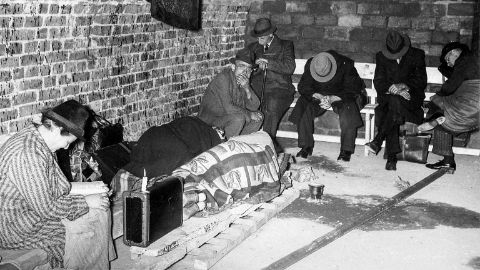
At the beginning of 1945, Berlin remains under the spell of the Nazi promise of salvation, an illusion at odds with the city’s daily reality. Every day there are bombing attacks, fires to be extinguished and corpses to be buried. Life goes on as the front lines of the war close in each day. Death comes for men, women, the old, the young, the National Socialists and the forced labourers. In April, the Red Army stands ready outside the city. In a time of uncertainty on the front lines, nobody has a clear view of what will happen. Civilians hiding, SS soldiers shooting deserters, and Red Army soldiers hoping to survive the final days of the war. As the war comes closer and closer to the metropolis, it returns everything to its roots, showing no mercy.

2020 • History

April 1945

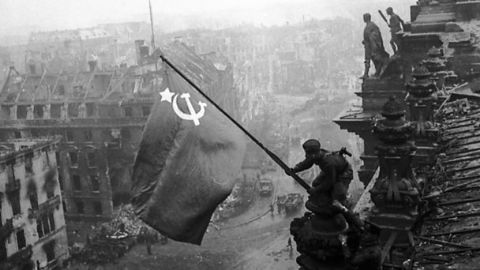
The Battle for Berlin has begun. Step by step, the soon-to-be victorious powers advance. On 30 April, the Red Flag flies over the Reichstag and Adolf Hitler takes his own life. Another seven days pass before the Wehrmacht disassembles. National Socialism is finally beaten, along with Germany and Berlin. But for many, the fall of Nazism spells liberation rather than defeat.

2020 • History

May 1945

The British, French and Americans are waiting to enter Berlin. In the meantime, the Soviets appoint mayors, organise the food supply and go on the hunt for war criminals. The Jewish community, among whom there are few survivors, regroup. The fate of the city is determined at the Potsdam Conference. Life returns to the ruins, theatres reopen and orchestras play in the open air. By the end of 1945, the bond that held the Allies together is torn apart - and the Cold War begins.

2020 • History

You might also like

Joan of Arc: God's Warrior

Dr Helen Castor explores the life - and death - of Joan of Arc. Joan was an extraordinary figure - a female warrior in an age that believed women couldn't fight, let alone lead an army. But Joan was driven by faith, and today more than ever we are acutely aware of the power of faith to drive actions for good or ill. Since her death, Joan has become an icon for almost everyone - the left and the right, Catholics and Protestants, traditionalists and feminists. But where in all of this is the real Joan - the experiences of a teenage peasant girl who achieved the seemingly impossible? Through an astonishing manuscript, we can hear Joan's own words at her trial, and as Helen unpicks Joan's story and places her back in the world that she inhabited, the real human Joan emerges.

2015 • History

A Statesman

In Benito Mussolini, Hitler finds an ally to whom he remains faithful until his downfall. The trips to Italy are the only foreign ones he undertakes. Hitler takes control of the army. The threat alone of an invasion is enough: the Austrian Chancellor allows Hitler to take over, 75% of the Austrian people want to be part of the German Reich. Planning to disintegrate Czechoslovakia, Hitler signs the Munich Agreement in September 1938, in which Czechoslovakia has to abdicate the territories of the so-called Sudeten Germans

7/13The Hitler Chronicles • 2018 • History

Hitler in Power

Once in power, Hitler tightens his grip through propaganda, antisemitic laws, and the expansion of the Third Reich into Austria.

S1E3Hitler and the Nazis: Evil on Trial • 2024 • History

he Wall (1956-1962)

February 24, 1956. During the Soviet Communist Party's twentieth Congress, Khrushchev stuns everyone by denouncing Stalin's crimes. Without denying the ideology, the USSR's new leader seeks to distance himself from his predecessor and open up to the outside world. "Mister K" is full of surprises. He drinks Pepsi with Nixon and insists on spending a day at Disneyland when he visits America... But behind this clown-like character, the "executioner of the Ukraine" hasn't gone soft. In 1956, he didn't hesitate to crush the uprising in Budapest in bloodshed. Now, he is preparing a co-existence with newly elected President Kennedy that will not be all peaceful: construction of the Berlin Wall, the Cuban missile crisis, and not forgetting the aid to Ho Chi Minh in the preparation of his new war for reunification... The Vietnam War is beginning. Kennedy tries to retaliate: in Vietnam, he sends military advisers to train the army of the south. And in Berlin, on June 26, 1963, he gave the famous speech of hope, declaring in front of an excited crowd: "Ich bin ein Berliner".

S1E5Apocalypse: War of Worlds 1945-1991 • 2019 • History

The Worlds Biggest Murder Trial: Nuremberg

On the 19 November 1945, the International Military Tribunal was opened in the Palace of Justice in Nuremberg, Germany. The city, which had seen the rise of the Nazi Party was, in the eyes of the allies, the perfect location to host its demise. The first of the Nuremberg trials was to be the biggest murder trial in human history, with 21 Nazi leaders appearing before the court charged with the deaths of millions of innocent people during the Holocaust of WWII. These were no ordinary criminals; they represented the very foundation of Nazi ideology that had instigated the most ferocious genocide the world had ever seen. With judges and prosecutors from the US, the UK, the USSR and France, the trials were the allies' collective condemnation of Nazi Germany and the atrocities committed in pursuit of their ideology. The decisions made at Nuremberg had implications not only for the accused, but for the very foundation of modern international criminal law. Now, 75 years on, audiences are provided with an immersive look at the event that has become synonymous with the birth of contemporary human rights in the 2020 documentary, The World’s Biggest Murder Trial: Nuremberg. This feature-length documentary provides a detailed account of the events and implications of the trials, featuring more than 1000 archive clips, including recently digitised film footage from the courtroom itself. Whilst 90 minutes seems incredibly brief considering the enormity of the trials, the documentary's constant and unwavering focus on the courtroom, and the horrors it uncovered, suggest any longer might be too harrowing to bear. It is a decision that serves to amplify the inhumanity of the accusations, the apparent indifference of the accused, and the desperate desire for justice in the aftermath of such a dehumanising period of history. The sheer enormity of the task that faced the judges and prosecutors is evident from the moment each of the accused ascends from deep beneath the palace and enters the dock. Convicting a single alleged murderer is one thing, but a murder trial with an estimated 12 million victims is a an almost incomprehensible undertaking, even in a modern context. The cinematic quality of the footage captures every moment in extraordinary detail, from the disturbing cold-bloodedness of the Third Reich leaders as they openly snigger at translation errors throughout the trial, to the accounts of survivors, who witnessed the terror of their actions first hand. With the benefit of hindsight, their crimes seem indisputable; however the documentary proves that there is no conviction without proof, and the trials themselves were not without controversy. The convictions were based on concepts barely understood, laws not yet formalised, and many believed the process served as a political judgement rather than a transformative moment in international law. Despite the criticisms surrounding them, there is no denying that the greatest legacy of the trials is the role they played in reiterating the need for an international body focused on the protection of the human person. Though the majority of Nazis never received a punishment that reflected the extent of their crime, Nuremberg will forever be remembered as the moment that much of the world heard of the atrocities of the Holocaust for the first time.

2020 • History

Pride of Our Nation: June 1944 - August 1944

On June 6, 1944, D-Day, 1.5 million Allied troops take part in the greatest invasion in history, but then bog down in the Norman hedgerows for weeks. Saipan proves the costliest Pacific battle to date, while back home dreaded telegrams from the War Department begin arriving at an inconceivable rate.

S1E4The War • 2007 • History