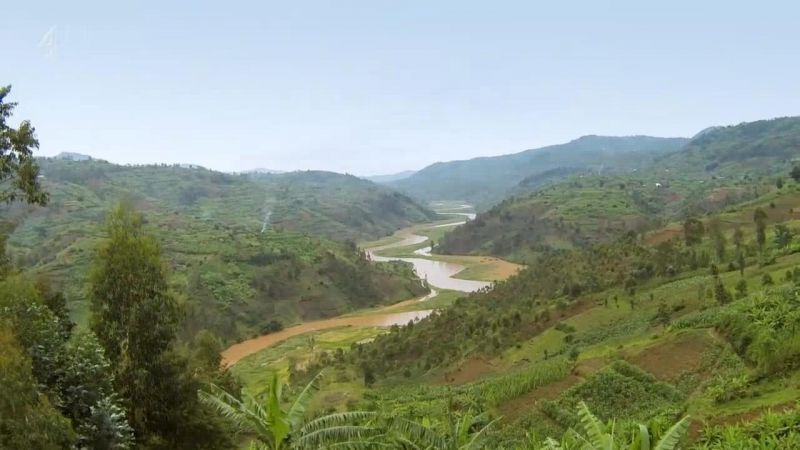
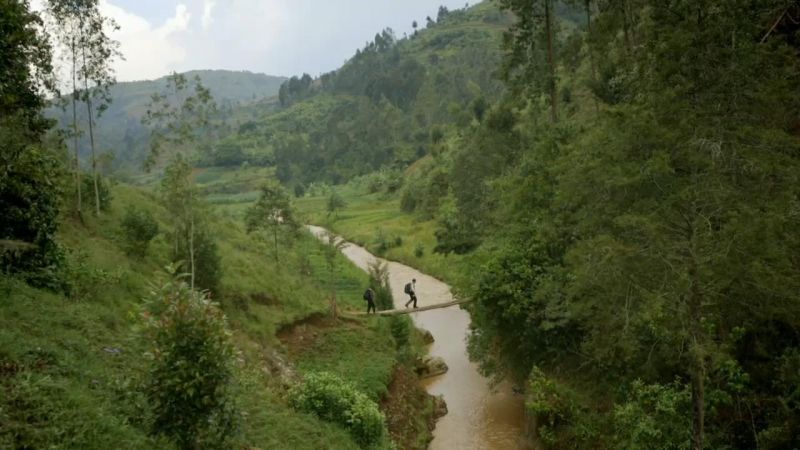
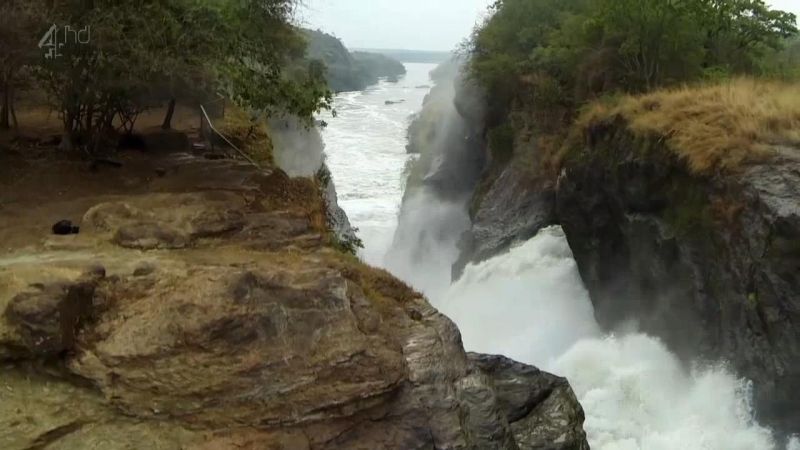
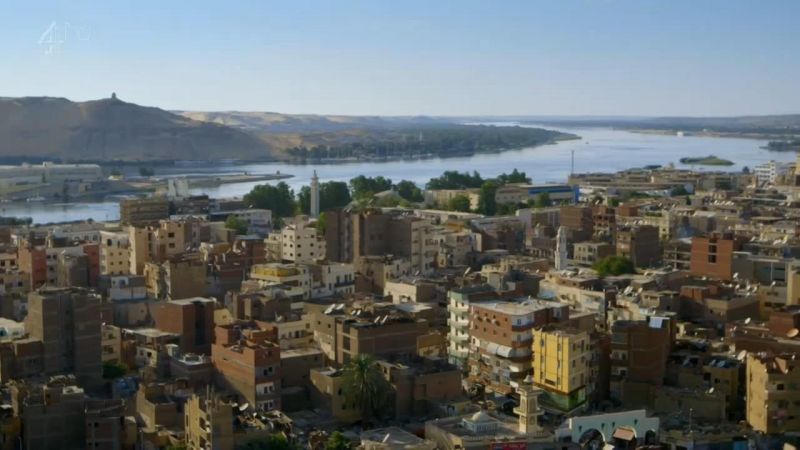
The first programme follows Lev and his guide Boston for their first 1,000 miles, from the river's source in the Rwandan rainforest, through Tanzania's remote and lawless regions and into Uganda. Heading deep into the Ajai Wildlife Reserve, an impenetrable swamp forces them into remote, barren ground cut off from civilisation. But even with rangers to carry their kit and extra water, nothing can prepare the duo for what lies ahead.
Hope you're finding these documentaries fascinating and eye-opening. It's just me, working hard behind the scenes to bring you this enriching content.
Running and maintaining a website like this takes time and resources. That's why I'm reaching out to you. If you appreciate what I do and would like to support my efforts, would you consider "buying me a coffee"?
BTC: bc1q8ldskxh4x9qnddhcrgcun8rtvddeldm2a07r2v
ETH: 0x5CCAAA1afc5c5D814129d99277dDb5A979672116
With your donation through , you can show your appreciation and help me keep this project going. Every contribution, no matter how small, makes a significant impact. It goes directly towards covering server costs.
The first programme follows Lev and his guide Boston for their first 1,000 miles, from the river's source in the Rwandan rainforest, through Tanzania's remote and lawless regions and into Uganda. Heading deep into the Ajai Wildlife Reserve, an impenetrable swamp forces them into remote, barren ground cut off from civilisation. But even with rangers to carry their kit and extra water, nothing can prepare the duo for what lies ahead.
2015 • Travel
Four months into his journey, explorer Levison Wood arrives in the capital of the world's newest nation, South Sudan, only to be arrested by secret police. After several days' delay he and his guide Boston are allowed to continue onwards and soon enjoy a highlight of the trek - an encounter with members of the Mundari tribe. This community has set up a cattle camp on an island in the middle of the River Nile, where its members lead a very simple and sustainable existence of only drinking milk, burning cow dung, washing in cow urine and covering themselves in ash to ward off flies and mosquitos. After bidding them farewell, Lev finds himself caught up in the worsening civil war as his path winds through minefields and he witnesses increasing numbers of refugees fleeing in the opposite direction.
2015 • Travel
Five months into his journey, Levison Wood faces a 1,300-mile walk across the Sahara, one of the most inhospitable places on Earth, to reach the Egyptian border. He's joined by a Sudanese guide, two nomads and three badly behaved camels. Together they encounter some of the most spectacular sights of the mission, camping among the ancient Meroe Pyramids. The explorer then tackles his toughest physical challenge - crossing the Bayuda volcanic field - where temperatures can reach 55C. Trekking 20 miles a day through blinding sandstorms, Lev soon starts to run out of water.
2015 • Travel
After seven months of hiking, Levison Wood reaches his final country - Egypt - and with 900 miles still to go to reach the Mediterranean, the authorities give him just 45 days to finish. After walking the barren shores of Lake Nasser and exploring deserted temples, Lev reaches Aswan and spends a night at a historic hotel. Moving on, he discovers more of Egypt's wonders, from magnificent buildings in the ancient city of Luxor, to the Pyramids of Giza, where he's given a hero's reception. The journey then takes him through strongholds for the Muslim Brotherhood opposition group, and as the security situation deteriorates he finds himself accompanied by police vans and armed officers.
2015 • Travel
The actress flies over Tokyo in a helicopter. The city was bombed extensively during the Second World War, so almost all of it is a symbol of the post-war economic boom that saw Japan become the world's second largest economy. While in the capital, Joanna heads out to a nightclub to see a Japanese girl band and witnesses the largely male audience perform almost as much as the artists on stage. Later, Joanna travels to the Kiso Valley to walk the Nakasendo Way, an ancient route that once linked Tokyo to Kyoto, a place best known for that most famous of Japanese traditions, the Geisha.
Part 2 • Joanna Lumley's Japan • 2016 • Travel
Southern Thailand is the Thailand we think we all know. It is a place of both spectacular natural beauty and of wild parties, but behind this well-known image is also a place of unexpected surprise, where spirituality pervades every bit of life. For the animals that live here, this is natural wonderland.
S1E1 • Thailand: Earth's Tropical Paradise • 2017 • Travel
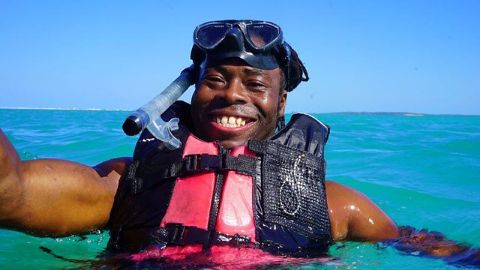
The final leg of Ade's tour of Africa sees him travelling from the beaches of Mozambique, through South Africa, before ending his entire trip in Zimbabwe. He begins on the golden sand beaches of Mozambique's Bazaruto Archipelago, one of Africa's highlights. At Paradise Island, he finds an abandoned hotel, a visual reminder of Mozambique's recent history - this place was once a high-end tourist destination, but 25 years of colonial and then civil war put a stop to development. But the local wildlife has benefited from the fact that so few tourists now come here, and Ade is able to snorkel with one of the world's most elusive sea creatures - a dugong. Since the wars, Mozambique has struggled to develop, and Ade meets someone for whom life is especially hard – a wheelchair user like himself. In a country where disability is viewed with fear and superstition – and believed by many to be contagious – even catching a bus proves impossible for Castigo. The best thing in his life is exactly the same thing that turned Ade's life around - wheelchair basketball - and Ade can't help getting carried away in a game. Along the coast, at one of Mozambique's largest ports, Ade finds out that China is investing a huge amount in Mozambique – and elsewhere across Africa. The money often comes with strings attached, but a poor country like Mozambique needs financial help, which has to come from somewhere. Ade's next stop is South Africa. The country is famous for its wildlife but Ade hears how Chinese influence is having a dramatic impact here – the country's rhino population has been decimated by poachers, driven by a demand for rhino horn in Chinese medicine. Ade follows rangers with a surprising way of tackling the problem - by cutting off the rhino horn themselves, they hope to deter poachers. Ade travels to Johannesburg to see how the country is faring 25 years after apartheid ended. On a tour of the city, he is upset to discover that although the black population now have voting rights, they are living in an economic form of apartheid, with 25% unemployed and many squatting on whatever land they can find. In an emotional scene, Ade visits a squatted piece of land, moments after the police have destroyed people's houses, to hear claims that Mandela's legacy has been forgotten. Land reform is the big political issue here today, with many calling for a redistribution of land from rich white farmers to the black population. The final stop on Ade's African adventure is Zimbabwe – where land reform has already happened, with disastrous results. Ade finds a country still struggling economically. His first stop is the Kariba dam, and a hair-raising boat ride on the vast and stunning Lake Kariba. Ade finds that locals are worried about the stability of the Kariba dam and work has begun to stabilize undermined foundations. The worrying decay of this crucial dam is a sign of how much this country suffered under the rule of Robert Mugabe. As Ade has seen so often on his trip around Africa, Zimbabwe is a country that should be rich. It has huge quantities of gold – enough, in theory, for the entire population to be a millionaire. But there isn't the infrastructure of investment to get at it - in a country dogged by poverty and corruption. But the departure of dictator Robert Mugabe brought a new optimism, and Ade meets gold miners who are willing to risk daily exposure to toxic mercury for every scrap of gold they can get and an entrepreneur who believes the industry can be transformed. Despite the return of violence and repression in Zimbabwe, Ade ends his journey on a high, visiting a remote hut that has been turned into the set of a music video. He joins UK indie musician Shingai Shoniwa as she shoots the video for her forthcoming debut single, Coming Home, in a country that she believes is on the up, and deserves a fresh chance.
S1E4 • Africa with Ade Adepitan • 2019 • Travel
Martin's travels take him 1,500 miles to the San Juan Islands in Washington State then down to the Channel Islands National Park, and across to Avery Island and Delacroix Island.
S1E2 • Martin Clunes: Islands of America • 2019 • Travel
Levison Wood returns to the site of his car crash to resume the journey, and is reunited with the people who saved his life. He keeps a promise to Binod by accompanying him on a trek to his family home in Pokhara, before continuing their travels with members of the Gurung tribe, who risk their lives to collect honey from wild bees living on high cliffs. They visit the site of an earthquake in 2014 and visit Kathmandu, before crossing the border into Bhutan.
Simon travels through the Andes mountains from Peru to Bolivia, beginning at the world-famous ruins of Machu Pichu. He then visits a remote valley where the mostly indigenous population farms coca leaves. the primary ingredient of cocaine. Heading across the border into Bolivia, Simon discovers how the indigenous women known as cholas have battled for increasing have battled for increasing influence and representation.
S1E3 • Simon Reeve's South America • 2022 • Travel