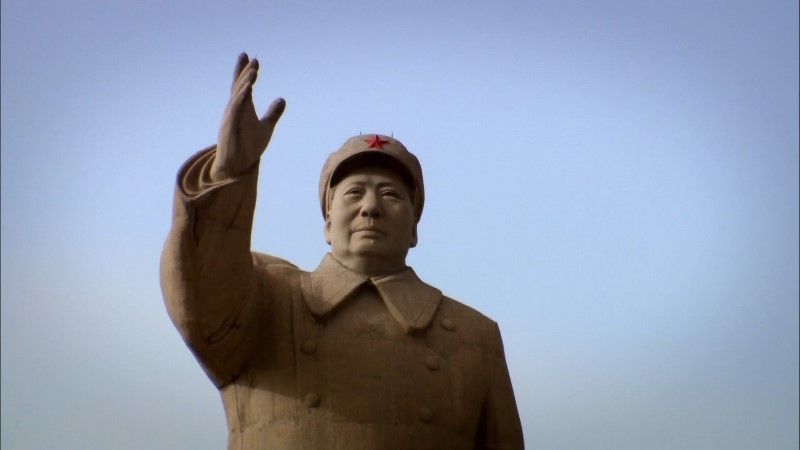
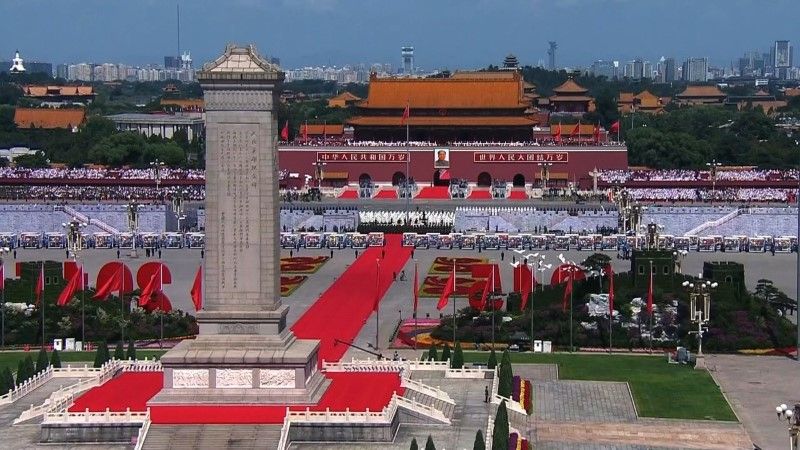
Explores how Xi has made China a more assertive presence on the world stage. For decades, Beijing followed a policy of 'hide your strength and bide your time', but since Xi's accession that has changed, creating alarm in the West over China's growing influence. As Xi faces his greatest test yet - a confrontation in Hong Kong - how will the newly resurgent China react?
Hope you're finding these documentaries fascinating and eye-opening. It's just me, working hard behind the scenes to bring you this enriching content.
Running and maintaining a website like this takes time and resources. That's why I'm reaching out to you. If you appreciate what I do and would like to support my efforts, would you consider "buying me a coffee"?
BTC: bc1q8ldskxh4x9qnddhcrgcun8rtvddeldm2a07r2v
ETH: 0x5CCAAA1afc5c5D814129d99277dDb5A979672116
With your donation through , you can show your appreciation and help me keep this project going. Every contribution, no matter how small, makes a significant impact. It goes directly towards covering server costs.

Explores how Xi has made China a more assertive presence on the world stage. For decades, Beijing followed a policy of 'hide your strength and bide your time', but since Xi's accession that has changed, creating alarm in the West over China's growing influence. As Xi faces his greatest test yet - a confrontation in Hong Kong - how will the newly resurgent China react?
2019 • Economics
Explores the growing tension between China and the west over allegations that the Chinese state has engaged for years in large-scale industrial espionage and hacking to steal the west's business secrets and technological know-how. One former US official has described it as the 'largest transfer of wealth in human history'. China denies the charges – but growing anger in the US is fuelling the trade war with China.
2019 • Economics
Humanity is at a crossroads! on this 2015 documentary we will try to predict what will happened in the future: Nearly half of the Amazon rainforest has been deforested, Hi-tech, intelligent buildings are revolutionizing the urban landscape, Smaller, safer, hi-tech automobiles, Major advances in air travel comfort etc..
One hundred and fifty years ago, the corporation was a relatively insignificant entity. Today, it is a vivid, dramatic and pervasive presence in all our lives. Like the Church, the Monarchy and the Communist Party in other times and places, the corporation is today's dominant institution. But history humbles dominant institutions. All have been crushed, belittled or absorbed into some new order. The corporation is unlikely to be the first institution to defy history. Based on Joel Bakan's book, "The Corporation: The Pathological Pursuit of Profit and Power," this documentary is a timely, critical inquiry that examines the very nature of the corporation--its inner workings, curious history, controversial impacts and possible futures. We begin by learning that under the law, corporations have all the rights and yet few of the responsibilities of people. By viewing the behavior of the corporation through the prism of Diagnostic and Statistical Manual (or DSM III, the gold standard of psychiatric evaluation) the filmmakers discover that if the corporation were indeed a person, the person would be considered a psychopath. Featuring candid interviews with CEOs, whistle-blowers, brokers, gurus, spies, players, pawns and pundits, the chronicle charts the spectacular rise of an institution aimed at achieving specific economic goals as it also recounts victories against this seemingly invincible force. Once you see it, you may find yourself thinking twice about what you eat, what you wear, what you watch and what you read.
2003 • Economics
Jan Leeming narrates a look at controversies, scandals and surprises in TV, film, music and politics in 1988, including Salman Rushdie's book The Satanic Verses igniting a literary and religious firestorm and Ian Paisley daring to heckle the Pope. On the global stage, US president Ronald Reagan and USSR leader Mikhail Gorbachev reshaped geopolitics, while a soundbite from Tory MP Edwina Currie dented the UK's confidence in eggs, leading to a nationwide salmonella scare.
S1E4 • Controversially: That Was the Year that Was • 2023 • Economics
In the autumn of 2007, Matthew Lee, a worried accounting executive at Lehman Brothers, began to notice serious financial irregularities in the company's practices. When he refused to approve tens of billions of dollars' worth of suspicious transactions, he was fired. Six months later, Lehman Brothers sank with 631 billion dollars of debt. Lee, who has since emerged as a crucial figure in Lehman's downfall, and other whistleblowers recount their personal stories of fraud and deception that went right to the top of the bank. Ultimately, they paid the price for trying to expose the 2008 subprime mortgage crisis.
Storyville • 2019 • Economics
Jan Leeming narrates a look at controversies, scandals and surprises in TV, film, music and politics from 1990, when Mark Fowler rocked Walford with a dramatic return to EastEnders and a sitcom about Adolf Hitler was pulled off air after just one episode. The Poll Tax riots caused chaos on the streets of London and it was the end of the road for Britain's longest serving prime minister when Margaret Thatcher resigned. Heavy metal band Judas Priest were accused of hiding subliminal messages in their songs, and pop duo Milli Vanilli's career came to a dramatic end when it was revealed they were nothing more than a mime act.
S1E5 • Controversially: That Was the Year that Was • 2023 • Economics
The Bomb tells the story of the most powerful and destructive device ever invented. Learn how humans harnessed this incredible power and what challenges we have faced living with it since 1945. With newly restored footage of nuclear weaponry, some of which has only recently been declassified, go behind the scenes of the first atomic bomb, revealing how it was developed and how it changed the planet, ushering in a new era and reshaping our lives even today. Rare footage from bomb tests through the 1950s and 60s demonstrates the power and strangely compelling beauty of nuclear explosions. Hear from foremost nuclear bomb historian Richard Rhodes, former Secretary of Defense William Perry, and former Secretary of State George Shultz, as well as from scientists, weapons designers, pilots, witnesses, and ordinary men and women who have lived and worked with the nuclear bomb. Examine the choices society has made--and continues to make--to live with an invention that could destroy the planet.
2015 • Economics