The global economy is in crisis. The exponential exhaustion of natural resources, declining productivity, slow growth, rising unemployment, and steep inequality, forces us to rethink our economic models. Where do we go from here? In this feature-length documentary, social and economic theorist Jeremy Rifkin lays out a road map to usher in a new economic system. A Third Industrial Revolution is unfolding with the convergence of three pivotal technologies: an ultra-fast 5G communication internet, a renewable energy internet, and a driverless mobility internet, all connected to the Internet of Things embedded across society and the environment. This 21st century smart digital infrastructure is giving rise to a radical new sharing economy that is transforming the way we manage, power and move economic life.
Hope you're finding these documentaries fascinating and eye-opening. It's just me, working hard behind the scenes to bring you this enriching content.
Running and maintaining a website like this takes time and resources. That's why I'm reaching out to you. If you appreciate what I do and would like to support my efforts, would you consider "buying me a coffee"?
BTC: bc1q8ldskxh4x9qnddhcrgcun8rtvddeldm2a07r2v
ETH: 0x5CCAAA1afc5c5D814129d99277dDb5A979672116
With your donation through , you can show your appreciation and help me keep this project going. Every contribution, no matter how small, makes a significant impact. It goes directly towards covering server costs.
In the autumn of 2007, Matthew Lee, a worried accounting executive at Lehman Brothers, began to notice serious financial irregularities in the company's practices. When he refused to approve tens of billions of dollars' worth of suspicious transactions, he was fired. Six months later, Lehman Brothers sank with 631 billion dollars of debt. Lee, who has since emerged as a crucial figure in Lehman's downfall, and other whistleblowers recount their personal stories of fraud and deception that went right to the top of the bank. Ultimately, they paid the price for trying to expose the 2008 subprime mortgage crisis.
Storyville • 2019 • Economics
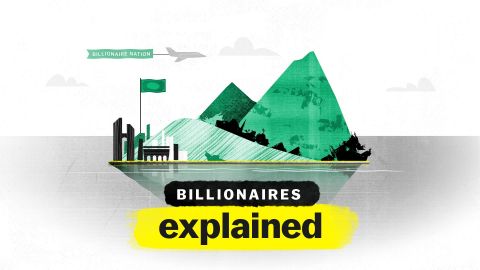
There are more billionaires than ever. But how does this vast accumulation of wealth affect the world?
At the end of the 19th century, a club of millionaires — John D. Rockefeller and his oil monopoly, steel king and philanthropist Andrew Carnegie and banker J. P. Morgan, who financed the Industrial Revolution from Wall Street — took over the United States, where immigrants provided a labor force that was ruthlessly exploited.
S1E1 • American Capitalism – The Cult of Wealth • 2023 • Economics
Ambassador Henry Crumpton, a veteran CIA operative with experiences on the front line of America's initial campaign against the Taliban in Afghanistan, considers the paradigm shift caused by the increased role of non-state actors in the Mid-East and other issues facing that region and the world.
8/10 • Curiosity Retreats: 2014 Lectures • 2014 • Economics
This documentary travels through a world of joblessness, debt, and economic uncertainty to the sovereign nation of the plutocrats, where each crisis seems to offer a new business opportunity. In America, where the 2008 financial meltdown cost $4 trillion in economic output, fortunes were made by the very people who precipitated the disaster while millions lost their homes and their savings. Austerity in Europe, economic stagnation in Asia, a lost generation of the young and unemployed - signs we are living through a fundamental global reorganization, the result of which no-one can predict. The world of the 1% has arrived, and the wealth gap is now greater in many countries than during the Gilded Age, the era of the Rockefellers, Carnegies and Vanderbilts. Can our stressed democracies deal with the fallout? Or have governments simply become instruments of the new elite?
2017 • Economics
Cryptocurrency has made people billionaires, but is digital cash the next revolution? Learn about this anonymous currency and why it's so coveted.