Anita Rani, Ade Adepitan, Ant Anstead and Dan Snow look at food consumption in the Big Apple. From dusk until dawn at the New Fulton fish market in The Bronx, they uncover the hidden night time operations, hard-nosed negotiations and price fluctuations of this enormous wholesale operation. Ade also looks into local apple production, Anita visits a cattle farm that supplies the region's steakhouses, Ant visits the New NY Bridge, and Dan heads to Freshkills on Staten Island. Once the world's biggest landfill, it's been transformed into 2,200 acres of parkland.
Hope you're finding these documentaries fascinating and eye-opening. It's just me, working hard behind the scenes to bring you this enriching content.
Running and maintaining a website like this takes time and resources. That's why I'm reaching out to you. If you appreciate what I do and would like to support my efforts, would you consider "buying me a coffee"?
BTC: bc1q8ldskxh4x9qnddhcrgcun8rtvddeldm2a07r2v
ETH: 0x5CCAAA1afc5c5D814129d99277dDb5A979672116
With your donation through , you can show your appreciation and help me keep this project going. Every contribution, no matter how small, makes a significant impact. It goes directly towards covering server costs.
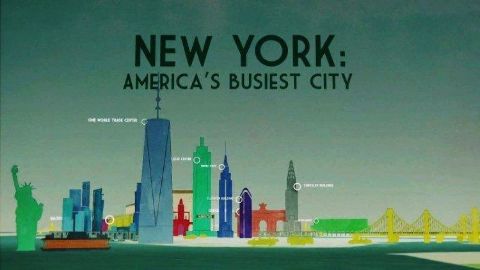
Ade Adepitan, Anita Rani, Ant Anstead and Dan Snow take a closer look at one of the most complex and powerful cities in the world, focusing on transport links in the first edition. Anita, Ade and Ant head to Grand Central Terminal, joining the daily commute on the iconic Staten Island ferry as well as the subway, suburban railroad and citibikes. Dan visits Times Square to see how the 230 LED advertising hoardings are maintained, while Ade takes a ride in a yellow cab, discovering that the business model is under threat from newly created taxi apps.
2016 • Economics
Anita Rani, Ade Adepitan, Ant Anstead and Dan Snow look at food consumption in the Big Apple. From dusk until dawn at the New Fulton fish market in The Bronx, they uncover the hidden night time operations, hard-nosed negotiations and price fluctuations of this enormous wholesale operation. Ade also looks into local apple production, Anita visits a cattle farm that supplies the region's steakhouses, Ant visits the New NY Bridge, and Dan heads to Freshkills on Staten Island. Once the world's biggest landfill, it's been transformed into 2,200 acres of parkland.
2016 • Economics
Behind the scenes with the team who look after all 843 acres of Central Park, revealing the hidden systems and organisational miracles that keep the world's busiest urban park clean and green. Plus, Ant Anstead sees how an entirely new district is being built on top of a functioning rail depot in Manhattan and Dan Snow is in Coney Island, where he discovers that television, air conditioning and extreme weather almost killed off this historic amusement zone.
2016 • Economics
In the 21st century, China has become a global economic powerhouse. Why was the rest of the world so slow to notice its rise to the top?
S1E3 • History 101 • 2020 • Economics
Explores how Xi has made China a more assertive presence on the world stage. For decades, Beijing followed a policy of 'hide your strength and bide your time', but since Xi's accession that has changed, creating alarm in the West over China's growing influence. As Xi faces his greatest test yet - a confrontation in Hong Kong - how will the newly resurgent China react?
S1E2 • China: A New World Order • 2019 • Economics
Command and Control presents the terrifying, true story of what can happen when the weapons built to protect us threaten to become the very source of our own destruction. Based on The New York Times bestseller by Eric Schlosser the film tells the story of a 1980 accident at a Titan II missile complex in Damascus, Arkansas in minute-by-minute detail through the accounts of Air Force personnel, weapon designers, and first responders who were there, revealing the incredible chain of events that brought America to the brink of nuclear disaster. In so doing, the film explores the great dilemma that the United States has faced since the dawn of the nuclear age: How do you manage weapons of mass destruction without being destroyed by them?
2016 • Economics
What makes an entire country take self destructive decisions of eating unhealthy, smoking cigarettes & going to war? In 1916, Woodrow Wilson ran on a platform strongly opposing US entry into WWI. But just a few months after taking office, the United States declared war on Germany. Soon after, the American people, so firmly opposed to the war just a year earlier, were enthusiastic supporters. What happened? The short answer: Sustained consumption of propaganda! PROPAGANDA: THE MANUFACTURE OF CONSENT is a revealing documentary about how public relations grew out of wartime propaganda-and a portrait of one of the key architects of the field, Edward Bernays. The nephew of Sigmund Freud, Bernays refined the techniques used so successfully during the war to sell products to consumers, and ultimately to sell capitalism itself to workers. Public relations was also critical in building support for the New Deal, and in the pushback against it from the National Association of Manufacturers, which created materials including films aimed at children on the glories of manufacturing. Bacon and eggs as part of a hearty breakfast? The work of Bernays on behalf of a bacon company. Cigarettes as a sign of women's liberation? Bernays, again. Casting the democratically elected government of Guatemala as a Communist threat to justify US invasion on behalf of the United Fruit Company? Once more, Bernays. There was nothing shadowy about Bernays. He wrote a book detailing his techniques and discusses them in an archival interview with Bill Moyers from 1983, where we see his pride in hijacking the women's suffrage movement in order to sell more cigarettes—one of many illuminating moments in this film. Featuring Noam Chomsky, Chris Hedges, Public Relations Museum co-founder Shelley Spector, historian Stuart Ewen, sociologist David Miller, and Bernays' daughter Anne, PROPAGANDA offers an insightful look into the development of public relations techniques, and how they continue to affect us today.
2017 • Economics
Retiring comfortably middle-class in America requires more than $1 million in savings. How did the dream of golden years leisure get so out of reach?
S1E5 • Money Explained • 2011 • Economics
Sheryl WuDunn, a best-selling author and Pulitzer Prize-winning journalist, illuminates the economic, financial, political and social issues in East Asia and around the world, and the economic and political uncertainties facing China today.
9/10 • Curiosity Retreats: 2014 Lectures • 2014 • Economics