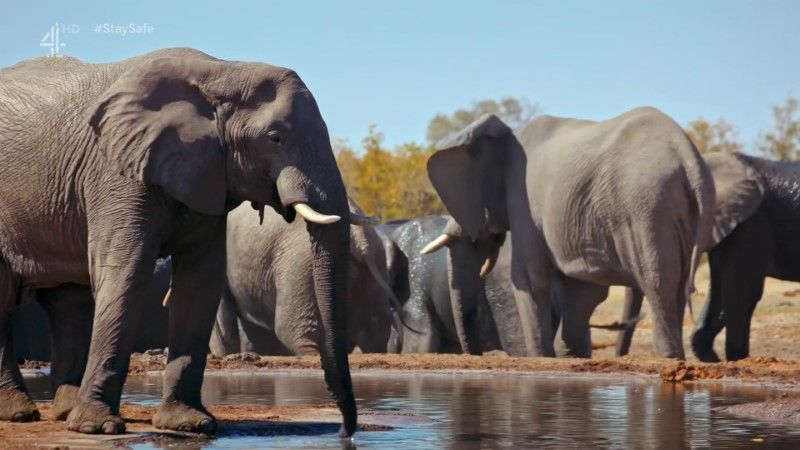
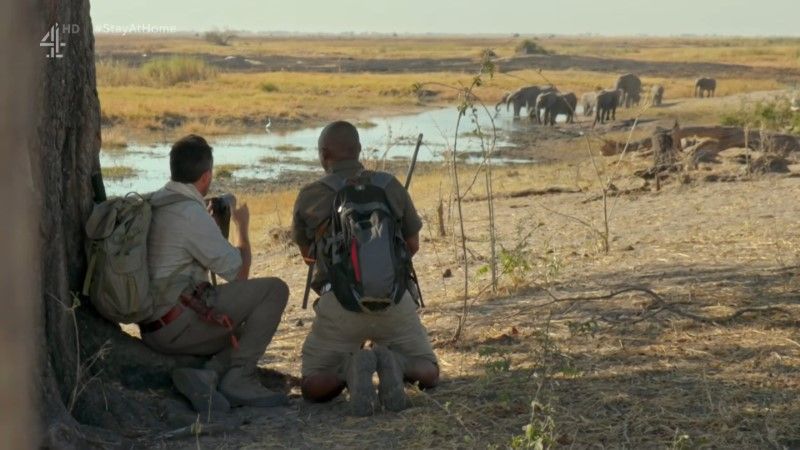
He reaches the final stage of his epic 650-mile journey, following the annual migration of Botswana's 130,000 elephants. Together with his guide Kane, Lev follows the elephants deep into the heart of the Okavango Delta, a vast wetland teeming with wildlife where every year more than 40,000 elephants gather to feed. Lev and Kane narrowly avoid a pride of lions who have brought down a male buffalo and watch as they move in for the kill, but are forced to wade through wide channels where crocodiles, hippos and snakes lurk.
Hope you're finding these documentaries fascinating and eye-opening. It's just me, working hard behind the scenes to bring you this enriching content.
Running and maintaining a website like this takes time and resources. That's why I'm reaching out to you. If you appreciate what I do and would like to support my efforts, would you consider "buying me a coffee"?
BTC: bc1q8ldskxh4x9qnddhcrgcun8rtvddeldm2a07r2v
ETH: 0x5CCAAA1afc5c5D814129d99277dDb5A979672116
With your donation through , you can show your appreciation and help me keep this project going. Every contribution, no matter how small, makes a significant impact. It goes directly towards covering server costs.
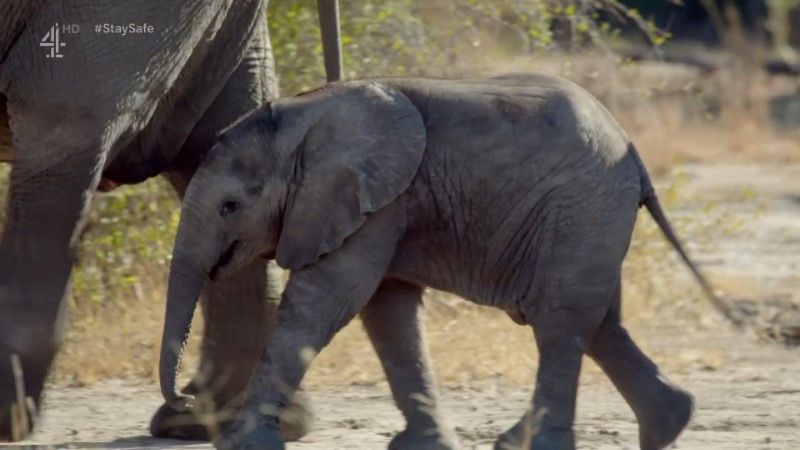
He gets up close and personal for the first time with a group of orphans and takes part in an ancient ceremony, before setting off into the bush in search of a herd to follow. Following potentially dangerous encounters with a buffalo and a pride of lions, Lev finds his first herd, but is forced to leave them alone when one threatens to charge.
2020 • Nature
He continues his epic 650-mile journey on foot, following the annual migration of Botswana's 130,000 elephants, and faces his toughest challenge yet. Together with his guide Kane, Lev treks along the route taken by the male elephants through the immense salt pans of the Makgadikgadi, via the frontier town of Gweta, to the edge of the Okavango Delta. Along the way, he narrowly escapes being surrounded by nervous bull elephants, before enjoying the incredible experience of being up close to the same group as they drink at a waterhole.
2020 • Nature
He reaches the final stage of his epic 650-mile journey, following the annual migration of Botswana's 130,000 elephants. Together with his guide Kane, Lev follows the elephants deep into the heart of the Okavango Delta, a vast wetland teeming with wildlife where every year more than 40,000 elephants gather to feed. Lev and Kane narrowly avoid a pride of lions who have brought down a male buffalo and watch as they move in for the kill, but are forced to wade through wide channels where crocodiles, hippos and snakes lurk.
2020 • Nature
With a million species at risk of extinction, Sir David Attenborough explores how this crisis of biodiversity has consequences for us all, threatening food and water security, undermining our ability to control our climate and even putting us at greater risk of pandemic diseases. Extinction is now happening up to 100 times faster than the natural evolutionary rate, but the issue is about more than the loss of individual species. Everything in the natural world is connected in networks that support the whole of life on earth, including us, and we are losing many of the benefits that nature provides to us. The loss of insects is threatening the pollination of crops, while the loss of biodiversity in the soil also threatens plants growth. Plants underpin many of the things that we need, and yet one in four is now threatened with extinction. Last year, a UN report identified the key drivers of biodiversity loss, including overfishing, climate change and pollution. But the single biggest driver of biodiversity loss is the destruction of natural habitats. Seventy-five per cent of Earth's land surface (where not covered by ice) has been changed by humans, much of it for agriculture, and as consumers we may unwittingly be contributing towards the loss of species through what we buy in the supermarket. Our destructive relationship with the natural world isn’t just putting the ecosystems that we rely on at risk. Human activities like the trade in animals and the destruction of habitats drive the emergence of diseases. Disease ecologists believe that if we continue on this pathway, this year’s pandemic will not be a one-off event.
2020 • Nature
The wildlife and environments of this Latin American wonder are the most diverse and inspiring that anyone could wish to explore. Up until now its glories have been often overlooked… whilst trouble made the headlines. For the first time this cinematic series will reveal Colombia's wild lands, wild life and the people who, everyday, are a part of it. Like the amazing creatures of Colombia the humans have battled, overcome, adapted and embraced the environments around them. Many people have become an integral part of the ecosystem others work selflessly to safeguard it. This film celebrates nature's diversity and will also be a timely wake up call for all people to protect the creatures and respect the habitats that are Colombia's wondrous wild treasures. Through artful photography and exceptional access, the film will explore the nature of Colombia at it most extreme and spectacular and at its most delightful and uplifting. A film of natural stories, striking splendour and surprising charm that will unveil a wild Colombia you wont forget.
2016 • Nature
The Rockies stretch 3,000 miles up the length of North America, and are one of the great mountain ranges of the world. These mountains are home not just to cougars, wolverines, wolves, and grizzly bears, but also daredevil wingsuit flyers, which jump from high peaks, and Native Americans, competing in breakneck horse races.
S1E1 • Kingdoms of the Sky • 2021 • Nature
This documentary follows a spectacular pioneering story of nature preservation. Engadin was created 100 years ago and the wildlife left without human interference to re-populate the Alps first nature reserve. Now ibex, lynx and wolves are thriving in this pristine area.
2015 • Nature
Chris Packham, Liz Bonnin and Steve Backshall explore our oceans and its wildlife, to find out how marine life is coping in the face of increasing environmental pressure.
S1E1 • Blue Planet Live • 2019 • Nature
In the Triassic period, dinosaurs rise to dominate our planet for 150 million years. 66 million years ago, the dinosaurs vanish—along with 75% of all species. Did an asteroid cause the last mass extinction? Experts are using the latest scientific methods to discover what killed the dinosaurs.
S1E4 • Fateful Planet • 2024 • Nature