During the dry winter season on the savanna, life is ruled by water. From gargantuan hippos to nimble antelope, explore how the wildlife of South Africa's lowveld adapt to the harsh conditions of their ecosystem.
Hope you're finding these documentaries fascinating and eye-opening. It's just me, working hard behind the scenes to bring you this enriching content.
Running and maintaining a website like this takes time and resources. That's why I'm reaching out to you. If you appreciate what I do and would like to support my efforts, would you consider "buying me a coffee"?
BTC: bc1q8ldskxh4x9qnddhcrgcun8rtvddeldm2a07r2v
ETH: 0x5CCAAA1afc5c5D814129d99277dDb5A979672116
With your donation through , you can show your appreciation and help me keep this project going. Every contribution, no matter how small, makes a significant impact. It goes directly towards covering server costs.
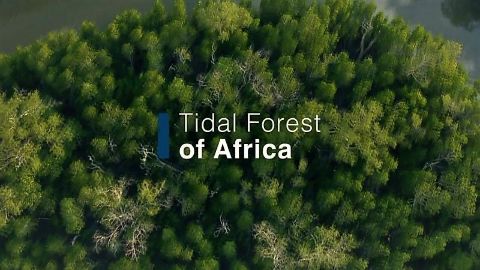
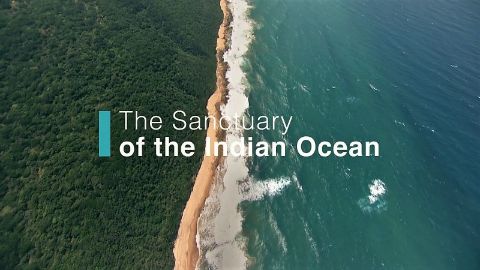
On the eastern coast of Africa lies a subtropical realm of staggering beauty and diversity--a mangrove forest where saltwater meets fresh and a variety of secretive forest dwellers work feverishly to survive. Take a thrilling journey into this rarest of ecosystems, one that few get to witness.
2017 • Nature
For the animals of the Okavango Delta, life itself depends on a fortuitous natural anomaly: a river that cuts through the mighty Kalahari Desert. Embark on a tour of this accidental paradise, where a colorful ecosystem of plants, animals, and birds flourish in the unexpected abundance.
2017 • Nature
African penguins were once the most numerous sea bird on the continent--until their population was decimated by human activity. Visit a rare colony at South Africa's Boulders Beach and see how these master divers and ocean hunters are staging a remarkable revival.
2017 • Nature
During the dry winter season on the savanna, life is ruled by water. From gargantuan hippos to nimble antelope, explore how the wildlife of South Africa's lowveld adapt to the harsh conditions of their ecosystem.
2017 • Nature
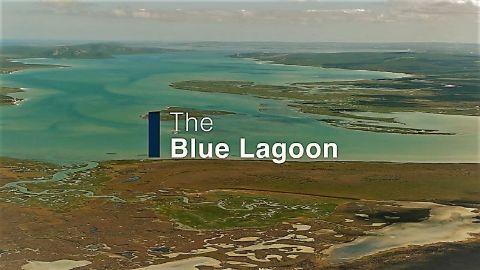
Unlike the many freshwater lagoons in South Africa, the Langebaan consists of 18.5 square miles of saltwater from the Atlantic Ocean. Of all the creatures that rely on it, two are pivotal for its own rejuvenation and sustenance: the regal flamingos and the nutrient-producing prawns.
2017 • Nature
During the dry season in Northern Botswana, over 45,000 elephants--more than 10% of the world's population--congregate along the banks of the Chobe River. Join local wildlife on a quest to escape the punishing drought.
2017 • Nature
Many of the great rivers of southern Africa start high up in mountain ranges, power their way eastwards across wild forests and grasslands, and eventually empty out into the Indian Ocean. Ride the currents of these powerful bodies of water as they reshape the lives of the wild animals who rely on them.
2017 • Nature
Lake St. Lucia, Africa's largest estuary lake, is under siege. A series of human missteps have left it cut off from the sea, and the water levels are dangerously low. The wildlife relying on its ecosystem are most affected--from hippos and crocodiles that live on its banks, to exotic birds that migrate from as far as 6,000 miles away. Can they adjust to the new, drier reality imposed on them?
2017 • Nature
A journey through nature, commerce and adventure, The Fruit Hunters takes us from the dawn of humanity to the cutting of edge of modern agriculture — a series that will change not just the way we look at what we eat, but what it means to be human. The Fruit Hunters' first episode, "The Evolution of Desire," explores the origins of fruit's diversity and tells the story of humanity and fruit's intimate co-evolution. Every variety of fruit has a story, the story of the person who cultivated an individual plant, and then shared something wonderful with the world. To preserve this diversity is to retain this living memory. A passionate few, the fruit hunters, fight to preserve this diversity in a world increasingly dominated by economically driven monoculture.
S52E11 • The Nature of Things • 2013 • Nature
Meet the exceptional animals that have adapted to survive in the difficult conditions of the Andes' Altiplano plateau.
S1E2 • The Wild Andes • 2019 • Nature
At the southern tip of Africa, where two oceans collide, the flat-topped Table Mountain stands guard over a diverse metropolis of cultures and people. Take flight over the Western Cape and discover the breathtaking wonder of this province from above.
S1E4 • Aerial Africa • 2017 • Nature
As almost all animal inhabitants of Antarctica are forced to migrate north, the sea underneath the frozen ice still provides a home to many specially adapted fish whose cells are protected from freezing through an "antifreeze" liquid. Many of them feed on the faeces of other animals. The most notable larger animal that does not migrate north is perhaps the Weddell Seal, which can be found as close as 1300 kilometres to the pole. Groups of seals tear holes into the ice to dive for food and come up to breathe. The females come back to the ice to give birth.
S1E5 • Life in the Freezer • 2003 • Nature
Some species need to be part of a group to survive--more so when they're in their infancy and taking their first, uncertain steps into the world. Join in the rough-and-tumble lives of black bear cubs, playful meerkat pups, and adorable fur seals.
S1E3 • Baby Animals • 2016 • Nature
To say some baby animals are dependent on their parents is an understatement. At Caversham Wildlife Park in Australia, a koala joey can always be found clinging to its mom's body, and Asian small-clawed otter pups share a lifetime family bond. Enjoy a heart-warming look at mother-baby animal relationships.
S2E4 • Baby Animals • 2016 • Nature