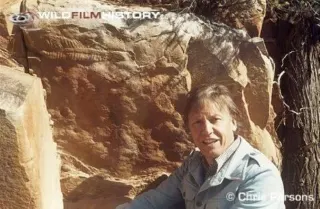
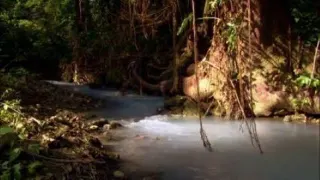
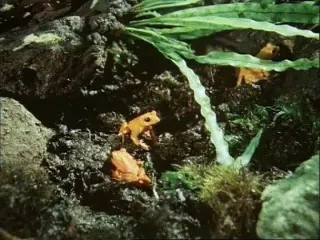
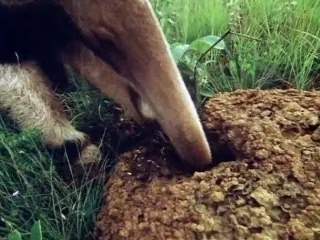
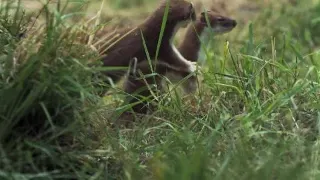
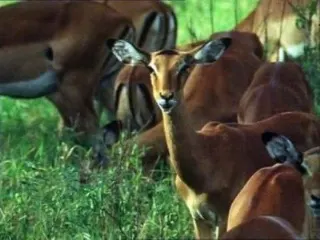
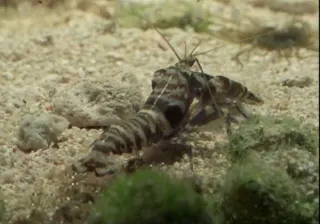
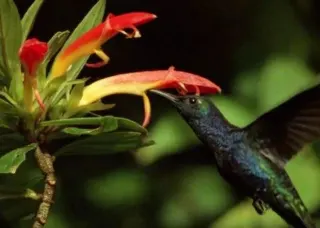
The episode begins in the South American rainforest whose rich variety of life forms is used to illustrate the sheer number of different species…
1/13
1979
Nature
The next programme explores the various sea-living invertebrates. In Morocco, the limestones are 600 million years old, and contain many invertebrate…
2/13
1979
Nature
This instalment examines the earliest land vegetation and insects. The first plants, being devoid of stems, mainly comprised mosses and liverworts…
3/13
1979
Nature
This episode details the relationship between flowers and insects. There are some one million classified species of insect, and two or three times as…
4/13
1979
Nature
The next instalment describes the move from water to land. The fish that did so may have been forced to because of drought, or chose to in search of…
6/13
1979
Nature
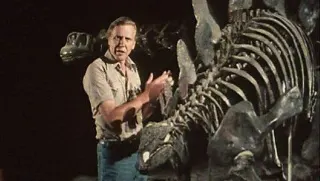
This episode is devoted to the evolution of reptiles. They are not as restricted as their amphibian ancestors, since they can survive in the hottest…
7/13
1979
Nature
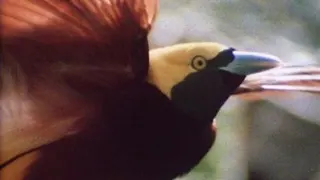
This programme focuses on birds. The feather is key to everything that is crucial about a bird: it is both its aerofoil and its insulator. The…
8/13
1979
Nature
This instalment is the first of several to concentrate on mammals. The platypus and the echidna are the only mammals that lay eggs (in much the same…
9/13
1979
Nature
This episode continues the study of mammals, and particularly those whose young gestate inside their bodies. Attenborough asks why these have become…
10/13
1979
Nature
This programme surveys mammal herbivores and their predators. The herbivores began to populate the forests when the dinosaurs disappeared, and many…
11/13
1979
Nature
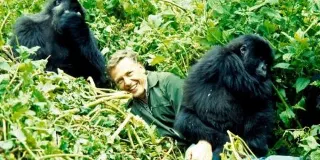
The penultimate instalment investigates the primates, whose defining characteristics are forward-facing eyes for judging distance, and gripping hands…
12/13
1979
Nature
The final episode deals with the evolution of the most widespread and dominant species on Earth: humans. The story begins in Africa, where, some 10…
13/13
1979
Nature