Rise of the Mammals • 1979 • episode "9/13" Life on Earth

Category: Nature

This instalment is the first of several to concentrate on mammals. The platypus and the echidna are the only mammals that lay eggs (in much the same manner of reptiles), and it is from such animals that others in the group evolved. Since mammals have warm blood and most have dense fur, they can hunt at night when temperatures drop. It is for this reason that they became more successful than their reptile ancestors, who needed to heat themselves externally. Much of the programme is devoted to marsupials (whose young are partially formed at birth) of which fossils have been found in the Americas dating back 60 million years.

Make a donation

Buy a brother a hot coffee? Or a cold beer?

Hope you're finding these documentaries fascinating and eye-opening. It's just me, working hard behind the scenes to bring you this enriching content.

Running and maintaining a website like this takes time and resources. That's why I'm reaching out to you. If you appreciate what I do and would like to support my efforts, would you consider "buying me a coffee"?

Donation addresses

Buy Me a Coffee at ko-fi.com

patreon.com

BTC: bc1q8ldskxh4x9qnddhcrgcun8rtvddeldm2a07r2v

ETH: 0x5CCAAA1afc5c5D814129d99277dDb5A979672116

With your donation through , you can show your appreciation and help me keep this project going. Every contribution, no matter how small, makes a significant impact. It goes directly towards covering server costs.
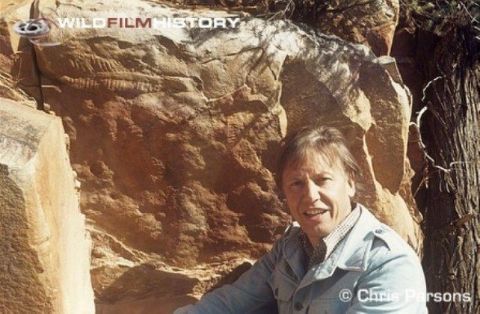
Life on Earth • 1979 • 12 episodes •

Infinite Variety

The episode begins in the South American rainforest whose rich variety of life forms is used to illustrate the sheer number of different species. Since many are dependent on others for food or means of reproduction, David Attenborough argues that they couldn't all have appeared at once. He sets out to discover which came first, and the reasons for such diversity. He starts by explaining the theories of Charles Darwin and the process of natural selection, using the giant tortoises of the Galapagos Islands (where Darwin voyaged on HMS Beagle) as an example. Fossils provide evidence of the earliest life, and Attenborough travels a vertical mile into the Grand Canyon in search of them.

1979 • Nature

Building Bodies

The next programme explores the various sea-living invertebrates. In Morocco, the limestones are 600 million years old, and contain many invertebrate fossils. They fall broadly into three categories: shells, crinoids and segmented shells. The evolution of shelled creatures is demonstrated with the flatworm, which eventually changed its body shape when burrowing became a necessity for either food or safety. It then evolved shielded tentacles and the casings eventually enveloped the entire body: these creatures are the brachiopods. The most successful shelled animals are the molluscs, of which there are some 80,000 different species.

1979 • Nature

First Forests

This instalment examines the earliest land vegetation and insects. The first plants, being devoid of stems, mainly comprised mosses and liverworts. Using both sexual and asexual methods of reproduction, they proliferated. Descended from segmented sea creatures, millipedes were among the first to take advantage of such a habitat and were quickly followed by other species. Without water to carry eggs, bodily contact between the sexes was now necessary. This was problematical for some hunters, such as spiders and scorpions, who developed courtship rituals to ensure that the female didn't eat the male.

1979 • Nature

Swarming Hordes

This episode details the relationship between flowers and insects. There are some one million classified species of insect, and two or three times as many that are yet to be labelled. Around 300 million years ago, plants began to enlist insects to help with their reproduction, and they did so with flowers. Although the magnolia, for instance, contains male and female cells, pollination from another plant is preferable as it ensures greater variation and thus evolution. Flowers advertise themselves by either scent or display. Some evolved to produce sweet-smelling nectar and in turn, several insects developed their mouth parts into feeding tubes in order to reach it.

1979 • Nature

Invasion of the Land

The next instalment describes the move from water to land. The fish that did so may have been forced to because of drought, or chose to in search of food. Either way, they eventually evolved into amphibians. Such creatures needed two things: limbs for mobility and lungs to breathe. The coelacanth is shown as a fish with bony fins that could have developed into legs, and the lungfish is able to absorb gaseous oxygen. However, evidence of an animal that possessed both is presented in the 450 million-year-old fossilised remains of a fish called a eusthenopteron. Three groups of amphibians are explored.

1979 • Nature

Victors of the Dry Lands

This episode is devoted to the evolution of reptiles. They are not as restricted as their amphibian ancestors, since they can survive in the hottest climates. The reason is their scaly, practically watertight skin. The scales protect the body from wear and tear and in the case of some species of lizard, such as the Australian thorny devil, serve to protect from attack. The horned iguana from the West Indies is also one of the most heavily armoured. The skin is rich in pigment cells, which provide effective means of camouflage, and the chameleon is a well-known example. Temperature control is important to reptiles: they cant generate body heat internally or sweat to keep cool.

1979 • Nature

Lords of the Air

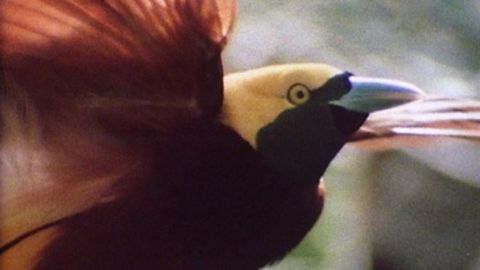
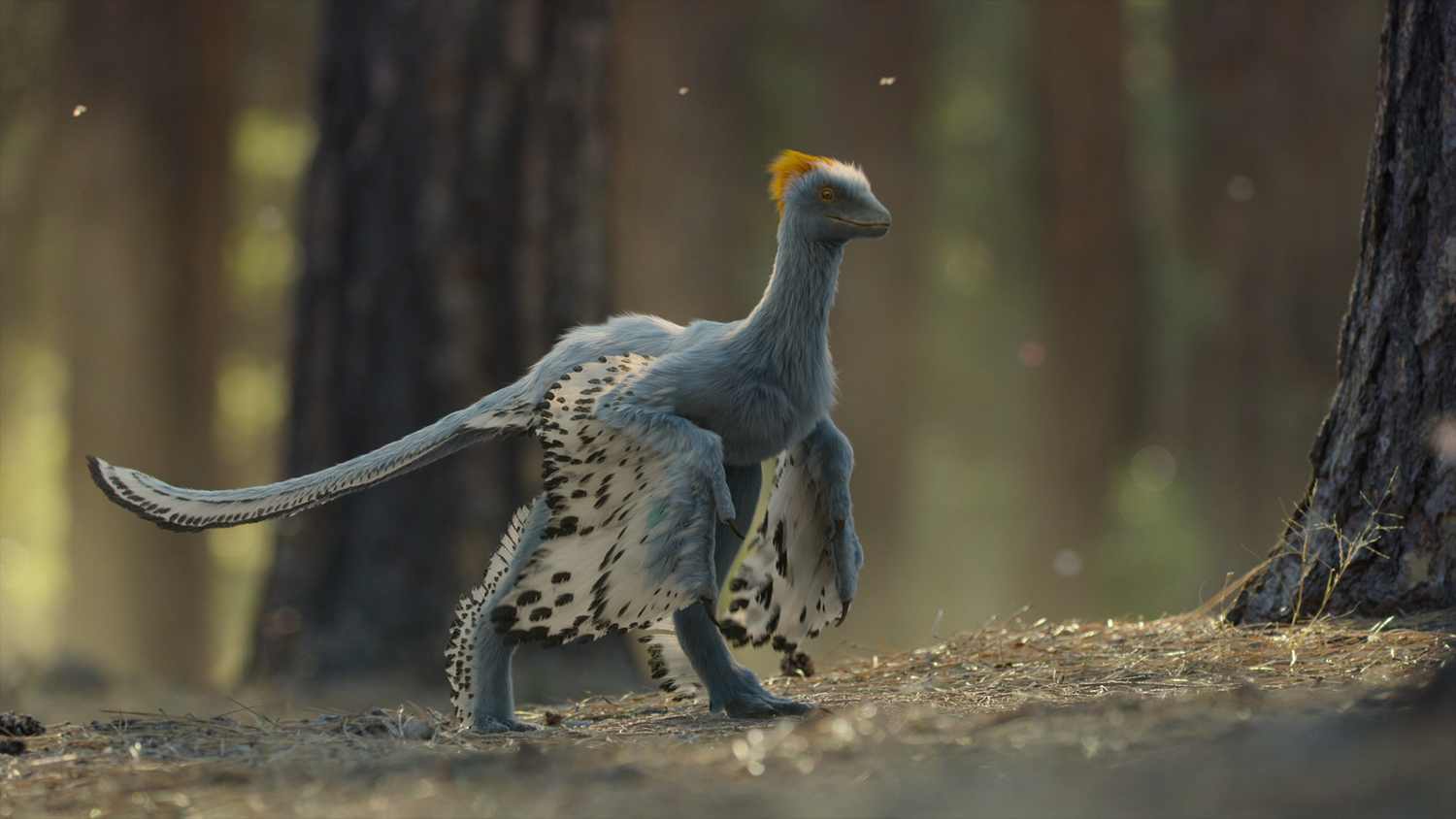
This programme focuses on birds. The feather is key to everything that is crucial about a bird: it is both its aerofoil and its insulator. The earliest feathers were found on a fossilised Archaeopteryx skeleton in Bavaria. However, it had claws on its wings and there is only one species alive today that does so: the hoatzin, whose chicks possess them for about a week or so. Nevertheless, it serves to illustrate the probable movement of its ancestor. It may have taken to the trees to avoid predators, and over time, its bony, reptilian tail was replaced by feathers and its heavy jaw evolved into a keratin beak.

1979 • Nature

Rise of the Mammals

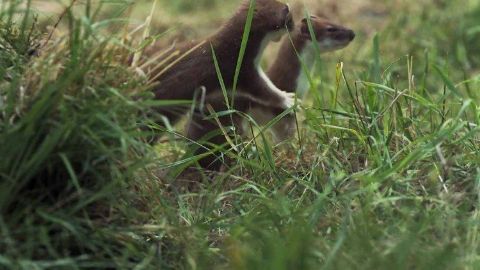
This instalment is the first of several to concentrate on mammals. The platypus and the echidna are the only mammals that lay eggs (in much the same manner of reptiles), and it is from such animals that others in the group evolved. Since mammals have warm blood and most have dense fur, they can hunt at night when temperatures drop. It is for this reason that they became more successful than their reptile ancestors, who needed to heat themselves externally. Much of the programme is devoted to marsupials (whose young are partially formed at birth) of which fossils have been found in the Americas dating back 60 million years.

1979 • Nature

Theme and Variation

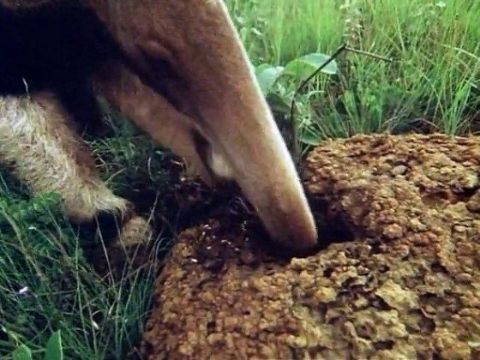
This episode continues the study of mammals, and particularly those whose young gestate inside their bodies. Attenborough asks why these have become so varied and tries to discover the common theme that links them. Examples of primitive mammals that are still alive today include the treeshrew, the desman and the star-nosed mole. Insect eaters vary enormously from the aardvark, giant anteater and pangolin to those to which much of this programme is devoted: the bats, of which there are nearly 1,000 different species. These took to flying at night, and its possible that they evolved from treeshrews that jumped from tree to tree, in much the same way as a flying squirrel.

1979 • Nature

Hunters and Hunted

This programme surveys mammal herbivores and their predators. The herbivores began to populate the forests when the dinosaurs disappeared, and many took to gathering food at night. To prepare for winter, some store it in vast quantities, some hibernate and others make do as best they can. However, the carnivores joined them, and when a drying climate triggered the spread of grass, they followed their prey out on to the plains. Grass is not easily digestible and most animals that eat it have to regurgitate it and chew the cud. Out in the open, the leaf-eaters had to develop means of protection.

1979 • Nature

Life in the Trees

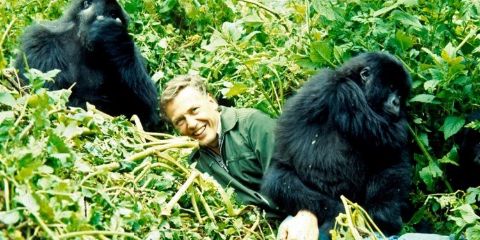
The penultimate instalment investigates the primates, whose defining characteristics are forward-facing eyes for judging distance, and gripping hands with which to grasp branches, manipulate food and groom one another. The programme begins in Madagascar, home to the lemurs, of which there are some 20 different types. Two examples are the sifaka, which is a specialised jumper, and the indri, which has a well-developed voice. Away from Madagascar, the only lemur relatives to have survived are nocturnal, such as the bushbaby, the potto and the loris. The others were supplanted by the monkeys and a primitive species that still exists is the smallest, the marmoset. However, Attenborough selects the squirrel monkey as being typical of the group. Howler monkeys demonstrate why they are so named their chorus is said to the loudest of any mammal and their prehensile tails illustrate their agility.

1979 • Nature

Compulsive Communicators

The final episode deals with the evolution of the most widespread and dominant species on Earth: humans. The story begins in Africa, where, some 10 million years ago, apes descended from the trees and ventured out into the open grasslands in search of food. They slowly adapted to the habitat and grew in size. Their acute sense of vision led to them standing erect to spot predators, leaving their hands free to bear weapons. In addition, the primitive apemen also had stones that were chipped into cutting tools. Slowly, they grew taller and more upright, and their stone implements became ever more elaborate.

1979 • Nature

You might also like

Oceans & Australia

Ch1. Oceans In Cape Verde, Gordon starts the adventure with a look at one of the world's largest populations of nesting loggerhead turtles. He then heads to the Bahamas with Caribbean reef sharks, California to see young elephant seals and the British Isles to attach featherweight cameras to a squadron of gannets. Ch2. Australia In New South Wales, Gordon encounters a marsupial facing a complex set of challenges when he meets a population of kangaroos that are being pushed to the very brink by a coastal development boom. How are they surviving on the edge of this urban expansion? Gordon meets the scientists driven to find out more about what the roos are feeding on as they are pushed onto the coastal fringes. As we become immersed in their world, we get a better understanding of kangaroos' social lives and the impact of human encroachment on their diet. In southern Australia, we head to Adelaide, where one of the team's toughest challenges yet is to create the lightest of cameras to find out what the lure of the big city is to a colony of newly arrived fruit bats. Their appearance is a bit of a puzzle. Are they a threat to the local commercial fruit crops or have they found other ways to adapt to city life? For the first time ever, the fruit bats take our cameras up above the cityscape, showing us a unique view of their nocturnal worlds while providing information crucial to their future. In Queensland, we help scientists find out if koalas really deserve their dozy daytime reputation when we join researchers at a reserve to discover some incredible revelations surrounding their night-time manoeuvres. The team's tech allows us to shadow them after sundown, unveiling their remarkable agility and surprising navigational skills. Specially designed with tree-hugging in mind, koalacams offer an insight which could help koalas as we find out what they need to survive - not just here, but elsewhere in the country.

S2E1E2Animals with Cameras • 2021 • Nature

The Great Butterfly Adventure: Africa to Britain with the Painted Lady

The migration of the painted lady has long fascinated scientists, artists and nature lovers alike. The longest butterfly migration on earth, it sees millions of these delicate creatures travel from the desert fringes of north Africa, across thousands of miles of land and sea, before settling in the UK. However, the migration has never truly been understood, the mysteries of the painted lady never unravelled - until now.

2016 • Nature

Western Cape

At the southern tip of Africa, where two oceans collide, the flat-topped Table Mountain stands guard over a diverse metropolis of cultures and people. Take flight over the Western Cape and discover the breathtaking wonder of this province from above.

S1E4Aerial Africa • 2017 • Nature

Dragons of the Dry

Enter the world of the lizard: from the chameleons, masters of the arboreal life to geckos tapping a code to plant-hopper insects and baby pygmy blue-tongued skinks huddling in their burrows long after birth. In the deserts are found some of the most bizarre lizards: baby Bushveld lizards mimicking acid-squirting beetles; the well-armoured and bizarrely spiky; thorny devils and the lizard kings - the Australian monitors - fast, intelligent and efficient hunters.

S1E3Life in Cold Blood • 2008 • Nature

Macaque

Dynasties Christmas Special - Macaque: Monkeys in the Mountains. High in the Atlas Mountains of Morocco lives a group of Barbary macaque monkeys. The alpha male, known as Mac, has just battled to win the leadership of the troop. He must now lead and protect them while fending off rivals who still want his crown.

S2E5Dynasties • 2022 • Nature

The Super Squirrels

The squirrel family is one of the most widespread on earth, so what is the secret to their success? There are squirrels that can glide through the air, outwit rattlesnakes and survive the coldest temperatures of any mammal. We uncover the extraordinary abilities of these cheeky characters, putting their problem solving to the test on a specially designed assault course. We team up with some of the world's top squirrel scientists who are making groundbreaking discoveries - from the fox squirrel who can remember the location of 9,000 nuts to the grey squirrel whose tree-top leaps are the basis of new designs in robotics. We also see the world through the eyes of an orphan red squirrel called Billy, as he grows up and develops all the skills he will need to be released back to the wild. It is time to meet the animal family we should never underestimate - the super squirrels.

Natural World • 2018 • Nature