Microorganisms: The Air We Breathe
Bacteria, viruses, but also fungus spores, algae, pollen, and even insects: microorganisms are constantly drifting through the sky. How can so many…
Bacteria, viruses, but also fungus spores, algae, pollen, and even insects: microorganisms are constantly drifting through the sky. How can so many…
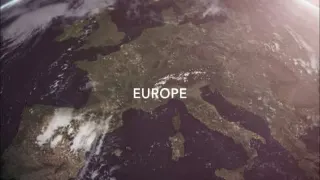
Europe, a continent of 50 countries, famed for cities and ancient civilizations, home to some 700 million people, and yet with a staggering diversity…
In the heart of south-east Asia lies the tropical island of Borneo. Twice the size of the British Isles, it is the third largest island on earth and…
Witness the planet's breathtaking diversity -- from seabirds carpet-bombing the ocean to wildebeests eluding the wild dogs of the Serengeti.
The final episode deals with the evolution of the most widespread and dominant species on Earth: humans. The story begins in Africa, where, some 10…
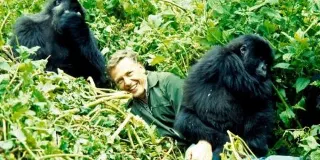
The penultimate instalment investigates the primates, whose defining characteristics are forward-facing eyes for judging distance, and gripping hands…
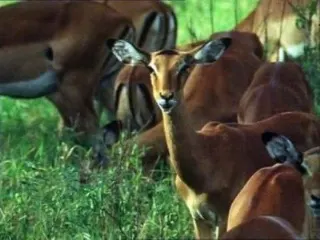
This programme surveys mammal herbivores and their predators. The herbivores began to populate the forests when the dinosaurs disappeared, and many…
This episode continues the study of mammals, and particularly those whose young gestate inside their bodies. Attenborough asks why these have become…
This instalment is the first of several to concentrate on mammals. The platypus and the echidna are the only mammals that lay eggs (in much the same…
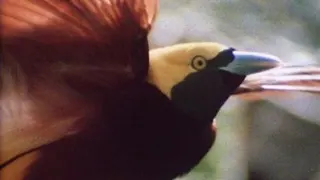
This programme focuses on birds. The feather is key to everything that is crucial about a bird: it is both its aerofoil and its insulator. The…
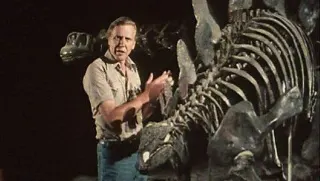
This episode is devoted to the evolution of reptiles. They are not as restricted as their amphibian ancestors, since they can survive in the hottest…
The next instalment describes the move from water to land. The fish that did so may have been forced to because of drought, or chose to in search of…
This episode details the relationship between flowers and insects. There are some one million classified species of insect, and two or three times as…
This instalment examines the earliest land vegetation and insects. The first plants, being devoid of stems, mainly comprised mosses and liverworts…
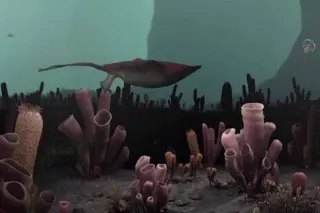
The next programme explores the various sea-living invertebrates. In Morocco, the limestones are 600 million years old, and contain many invertebrate…
The episode begins in the South American rainforest whose rich variety of life forms is used to illustrate the sheer number of different species…
For most of the Earth's history, life consisted of the simplest organisms; but then something happened that would give rise to staggering diversity…
When Homo sapiens turned up in prehistoric Europe, they ran into the Neanderthals. The two types of human were similar enough to interbreed — and…
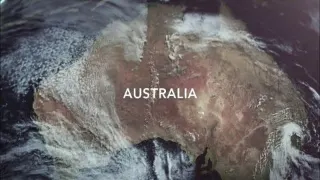
When Homo sapiens arrived in Australia, they were, for the first time, truly alone, surrounded by wildly different flora and fauna. How did they…
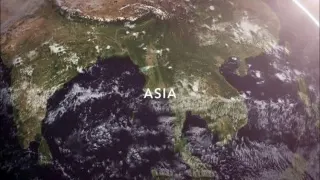
What happened when early humans ventured out of Africa and into Asia? Where did they go and whom did they meet along the way? The latest evidence…
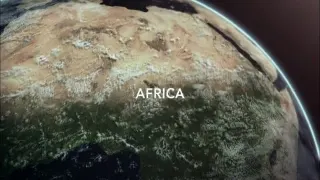
Around 200,000 years ago, a new species, Homo sapiens, appeared on the African landscape. While scientists have imagined eastern Africa as a…
As early humans spread out across the world, their toughest challenge was colonizing the Americas — because a huge ice sheet blocked the route. It…