When we look at the sky, we have a flat, two-dimensional view. So how do astronomers figure the distances of stars and galaxies from Earth? Yuan-Sen…
2014
Physics
One deck. Fifty-two cards. How many arrangements? Let's put it this way: Any time you pick up a well shuffled deck, you are almost certainly holding…
2014
Math
Would mathematics exist if people didn't? Did we create mathematical concepts to help us understand the world around us, or is math the native…
2014
Math
Where did time-telling come from? What are time zones and why are there so many of them? Get the answers to these questions and more in this journey…
History
When you listen to music, multiple areas of your brain become engaged and active. But when you actually play an instrument, that activity becomes…
Music
Every day, we move and operate within systems of power that other people have constructed. But we’re often uncomfortable talking about power. Why?…
People
Using the fundamentals of set theory, explore the mind-bending concept of the "infinity of infinities" -- and how it led mathematicians to conclude…
Math
The shape, contents and future of the universe are all intricately related. We know that it's mostly flat; we know that it's made up of baryonic…
Astronomy
An algorithm is a method of solving problems both big and small. Though computers run algorithms constantly, humans can also solve problems with…
Math
Traveling is extremely arduous for microscopic sperm -- think of a human trying to swim in a pool made of...other humans.
Nature
Everyone hates mosquitos. So shouldn't we just get rid of them?
Nature
Archimedes once said “Give me a place to stand, and I shall move the Earth.”
Nature
We hear anywhere from 10 to 200 lies a day. And although we’ve spent much of our history coming up with ways to detect these lies by tracking…
People
When you breathe, you transport oxygen to the body’s cells to keep them working, while also clearing your system of the carbon dioxide that this work…
Health
There’s a factory inside you that weighs about 1.4 kilograms and runs for 24 hours a day. It’s your liver: the heaviest organ in your body, which…
Health
Our skin is the largest organ in our bodies, with a surface area of about 20 square feet in adults. When we are cut or wounded, our skin begins to…
Health
One of the most significant scientific discoveries of the early 21st century is surely the Higgs boson, but the boson and the Higgs Field that allows…
Physics
Austrian physicist Erwin Schrödinger, one of the founders of quantum mechanics, posed this famous question: If you put a cat in a sealed box with a…
Physics
One of the most amazing facts in physics is that everything in the universe, from light to electrons to atoms, behaves like both a particle and a…
Physics
When you think about Einstein and physics, E=mc^2 is probably the first thing that comes to mind. But one of his greatest contributions to the field…
Physics
The Heisenberg Uncertainty Principle states that you can never simultaneously know the exact position and the exact speed of an object.
Physics
The classical physics that we encounter in our everyday, macroscopic world is very different from the quantum physics that governs systems on a much…
Physics
How is it that Beethoven, who is celebrated as one of the most significant composers of all time, wrote many of his most beloved songs while going…
Music
How do we know what matter is made of? The quest for the atom has been a long one, beginning 2,400 years ago with the work of a Greek philosopher and…
Physics
As the narrative goes, fat is bad. Well, it's actually more nuanced than that. The type of fat you eat is more impactful on your health than the…
Health
How many times does the chorus repeat in your favorite song? How many times have you listened to that chorus? Repetition in music isn’t just a…
Music
In standard notation, rhythm is indicated on a musical bar line. But there are other ways to visualize rhythm that can be more intuitive. John Varney…
Music
When you picture the lowest levels of the food chain, you might imagine herbivores happily munching on lush, living green plants. But this idyllic…
Nature
How do you know you’re real? Is existence all just a big dream? Has some mad scientist duped us into simply believing that we exist? James Zucker…
Science
Population statistics are like crystal balls -- when examined closely, they can help predict a country's future (and give important clues about the…
People
Our planet was once populated by megafauna, big top-of-the-food-chain predators that played their part in balancing our ecosystems. When those…
Nature
Light always travels at a speed of 299,792,458 meters per second. But if you're in motion too, you're going to perceive it as traveling even faster…
Physics
The human eye is an amazing mechanism, able to detect anywhere from a few photons to a few quadrillion, or switch focus from the screen in front of…
Nature
It’s 4am, and the big test is in 8 hours. You’ve been studying for days, but you still don’t feel ready. Should you drink another cup of coffee and…
Health
Ten years of research and 500 face-to-face-interviews led Richard St. John to a collection of eight common traits in successful leaders around the…
Lifehack
The wheels in your brain are constantly turning, even when you're asleep or not paying attention. In fact, most of your brain’s activities are ones…
Brain
GPS location apps on a smartphone can be very handy when mapping a travel route or finding nearby events. But how does your smartphone know where you…
Technology
Everyone knows we're not supposed to multitask while driving, but do you know why? It turns out your brain literally can't focus on too much at once.
Brain
Earthquakes have always been a terrifying phenomenon, and they’ve become more deadly as our cities have grown — with collapsing buildings posing one…
Environment
It's perfectly human to grapple with questions, like 'Where do we come from?' and 'How do I live a life of meaning?' These existential questions are…
People
After drinking a few glasses of water on a hot day, you might be struck with a sudden ... urge. Behind that feeling are two bean-shaped organs that…
Health
You can't help it; sometimes, you just get a bad feeling about someone that's hard to shake. So, what's happening in your brain when you make that…
Lifehack
Imagine a game of dice: if the biggest number rolled is one, two, three, or four, player 1 wins. If the biggest number rolled is five or six, player…
Math
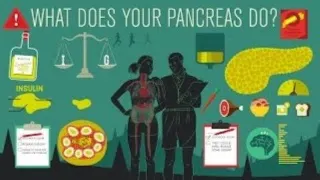
Beneath your ribs, you’ll find, among other things, the pancreas -- an organ that works a lot like a personal health coach.
Health
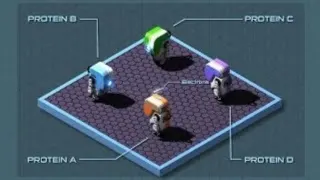
Humans, octopi and pine trees alike are all made up of cells, tiny but sophisticated systems that keep life going. Cells are almost like tiny…
Nature
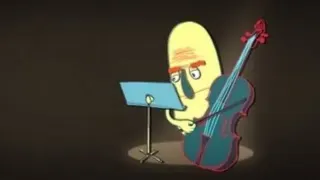
Like an actor's script, a sheet of music instructs a musician on what to play (the pitch) and when to play it (the rhythm). Sheet music may look…
Music
Sitting down for brief periods can help us recover from stress or recuperate from exercise. But nowadays, our lifestyles make us sit much more than…
Health
Alzheimer's disease is the most common cause of dementia, affecting over 40 million people worldwide. And though it was discovered over a century…
Health
Particles come in pairs, which is why there should be an equal amount of matter and antimatter in the universe. Yet, scientists have not been able to…
Physics
When you think of Archimedes’ Eureka moment, you probably imagine a man in a bathtub, right? As it turns out, there's much more to the story. Armand…
Physics
David Gallo shows jaw-dropping footage of amazing sea creatures, including a color-shifting cuttlefish, a perfectly camouflaged octopus, and a Times…
Nature
Why are most manhole covers round? Sure it makes them easy to roll, and slide into place in any alignment. But there’s another, more compelling…
Math
Questions of good and evil, right and wrong are commonly thought unanswerable by science. But Sam Harris argues that science can -- and should -- be…
Science
Stem cells found in the bone marrow are crucial for our health because they are needed to become new blood cells that sustain and protect our bodies…
Health
Infertility affects 1 in 8 couples worldwide. But in the last 40 years, more than 5 million babies have been born using in vitro fertilization (IVF)…
Health
Some people love the feeling of cracking their knuckles, while others cringe at the sound. But what causes that trademark pop? And is it dangerous?…
Health
Nestled in the tissues of your neck is a small, unassuming organ that wields enormous power over your body: the thyroid. Emma Bryce explains how the…
Health
We’ve all been told that we should recycle plastic bottles and containers. But what actually happens to the plastic if we just throw it away? Emma…
Environment
One hundred green-eyed logicians have been imprisoned on an island by a mad dictator. Their only hope for freedom lies in the answer to one famously…
Math
We hear about calories all the time: How many calories are in this cookie? How many are burned by doing 100 jumping jacks, or long-distance running…
2015
Health
Has anyone ever told you, “Stand up straight!” or scolded you for slouching at a family dinner? Comments like that might be annoying—but they’re not…
2015
Health
Throughout the history of mankind, the subject of identity has sent poets to the blank page, philosophers to the agora and seekers to the oracles…
2015
Brain
Dolphins are one of the smartest animal species on Earth. In fact, their encephalization quotient (their brain size compared to the average for their…
2015
Nature
In previous decades, most news with global reach came from several major newspapers and networks with the resources to gather information directly…
2015
People
Can you ever travel from one place to another? Ancient Greek philosopher Zeno of Elea gave a convincing argument that all motion is impossible - but…
2013
Math
Pascal’s triangle, which at first may just look like a neatly arranged stack of numbers, is actually a mathematical treasure trove. But what about it…
2015
Math
When faced with a big challenge where potential failure seems to lurk at every corner, you’ve probably heard the advice, “Be more confident!” But…
2015
Lifehack
Have you noticed how the full moon looks bigger on the horizon than high overhead? Actually, the two images are exactly the same size -- so why do we…
2013
Brain
How can you tell the two poles apart? Where are the penguins? What about the bears? The Arctic pole is located in the Northern Hemisphere within the…
2013
Nature
Imagine if you could plug your brain into a machine that would bring you ultimate pleasure for the rest of your life. The only catch? You have to…
2015
Brain
Suppose you placed a camera at a fixed position, took a picture of the sky at the same time every day for an entire year, and overlaid all of the…
2015
Astronomy
In the United States, it’s estimated that 30 percent of adults and 66 percent of adolescents are regularly sleep-deprived. This isn’t just a minor…
2015
Health
Our hard-wired stress response is designed to gives us the quick burst of heightened alertness and energy needed to perform our best. But stress…
2015
Health
Without water, a human can only survive for about 100 hours. But there’s a creature so resilient that it can go without it for decades. This…
2017
Nature
They're cute, they're lovable, and judging by the 26 billion views on over 2 million YouTube videos of them, one thing is certain: cats are very…
2016
Science
Explore the psychology of decision fatigue, what kinds of choices lead us to this state and what we can do to fight it.
2023
Lifehack
Explore how heat waves affect the body, what levels of extreme heat we can survive, and what you can do to manage high temperatures.
2024
Health