Rare Glimpses
In this final installment to the series, David Attenborough travels to four unique locations about the globe where an abundance of fossilized plant…
In this final installment to the series, David Attenborough travels to four unique locations about the globe where an abundance of fossilized plant…
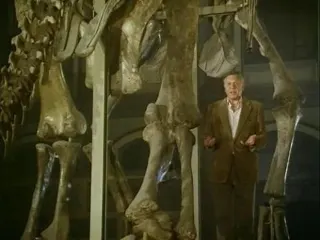
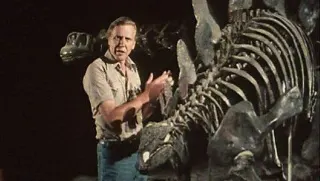
Attenborough visits several museums of natural history. With the aid of dinosaur skeletons, he demonstrates how they existed in real life, and…
2nd prog in series about fossils. David Attenborough investigates some fossil mysteries - could pterodactyls fly? And why did trilobites have such…
First prog in series about fossils. David Attenborough travels in UK, Dominican Republic, West Germany & USA in search of fossils, & the…
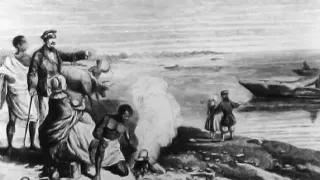
First transmitted in 1965, David Attenborough retraces the steps of the famous Scottish explorer Dr David Livingstone in the final part of his…
First transmitted in 1965. David Attenborough continues his journey along the Zambezi River. This episode begins at Victoria Falls, the largest…
At the start of his journey, Attenborough meets some of the people and animals that have made their home along the river in Zambia. He is invited to…
Surveys those environments that have been created by and for humans.
Attenborough goes underwater to observe the ocean's life forms and comment on them at first hand.
Investigates remote islands and their inhabitants. Some islands are tips of volcanoes; others are coral atolls. Those that colonise them transform…
Details coastal environments and the effect of tides, of which the highest can be found in the Bay of Fundy in North America. In places, erosion is…
Attenborough describes the course the Amazon, starting high up in the Andes of Peru, whose streams flow into the great river. Young rivers are by…
Starts in NASA's gravity research aircraft to illustrate the effect of weightlessness. There are surprisingly many plants whose seeds are, in effect…
Starts in the Sahara, where the highest land temperatures have been recorded. Rock paintings depict creatures such as giraffes and antelopes…
Explores the grasses which are present all over the world. Grass sustains huge numbers of creatures the world over, particularly in the African…
Ascends a kapok in the South American tropical rainforest to observe "the greatest proliferation of life that you can find anywhere on the surface of…
Begins in northern Norway, 500 kilometres north of the Arctic Circle. Here, there is only just enough light for the pine trees to survive, but it is…
Describes the inhospitable habitats of snow and ice. Mount Rainier in America is an example of such a place: there is no vegetation, therefore no…
Visits the world's deepest valley: the Kali Gandaki river in the Himalayas. Its temperatures range from those of the tropics in its lower reaches to…
The final episode deals with the evolution of the most widespread and dominant species on Earth: humans. The story begins in Africa, where, some 10…
The penultimate instalment investigates the primates, whose defining characteristics are forward-facing eyes for judging distance, and gripping hands…
This programme surveys mammal herbivores and their predators. The herbivores began to populate the forests when the dinosaurs disappeared, and many…
This episode continues the study of mammals, and particularly those whose young gestate inside their bodies. Attenborough asks why these have become…
This instalment is the first of several to concentrate on mammals. The platypus and the echidna are the only mammals that lay eggs (in much the same…
This programme focuses on birds. The feather is key to everything that is crucial about a bird: it is both its aerofoil and its insulator. The…
This episode is devoted to the evolution of reptiles. They are not as restricted as their amphibian ancestors, since they can survive in the hottest…
The next instalment describes the move from water to land. The fish that did so may have been forced to because of drought, or chose to in search of…
This episode details the relationship between flowers and insects. There are some one million classified species of insect, and two or three times as…
This instalment examines the earliest land vegetation and insects. The first plants, being devoid of stems, mainly comprised mosses and liverworts…
The next programme explores the various sea-living invertebrates. In Morocco, the limestones are 600 million years old, and contain many invertebrate…
The episode begins in the South American rainforest whose rich variety of life forms is used to illustrate the sheer number of different species…