Tales of the Cold War • 2018 • episode "S1E1" The Spying Game Tales from the Cold War

Category: History | Torrent: | Subtitle:

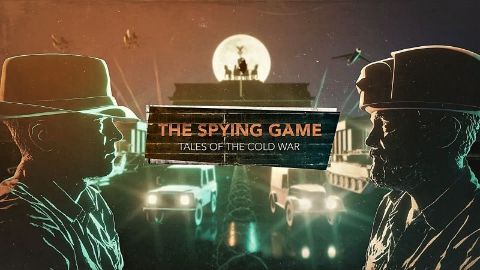
Some just counted tanks, others stole blueprints for bombs. The Cold War was the battleground for thousands of spies and spotters. Even the Allied Military Missions in Germany doubled as covert observers in the spying game.

Make a donation

Buy a brother a hot coffee? Or a cold beer?

Hope you're finding these documentaries fascinating and eye-opening. It's just me, working hard behind the scenes to bring you this enriching content.

Running and maintaining a website like this takes time and resources. That's why I'm reaching out to you. If you appreciate what I do and would like to support my efforts, would you consider "buying me a coffee"?

Donation addresses

Buy Me a Coffee at ko-fi.com

patreon.com

BTC: bc1q8ldskxh4x9qnddhcrgcun8rtvddeldm2a07r2v

ETH: 0x5CCAAA1afc5c5D814129d99277dDb5A979672116

With your donation through , you can show your appreciation and help me keep this project going. Every contribution, no matter how small, makes a significant impact. It goes directly towards covering server costs.
The Spying Game Tales from the Cold War • 2018 • 3 episodes •

Tales of the Cold War

Some just counted tanks, others stole blueprints for bombs. The Cold War was the battleground for thousands of spies and spotters. Even the Allied Military Missions in Germany doubled as covert observers in the spying game.

2018 • History

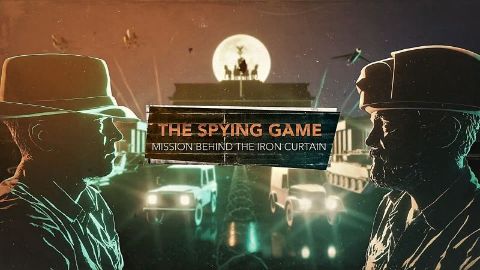
Mission Behind the Iron Curtain

During the Cold War, tensions between East and West mount alarmingly. In consequence, western intelligence services shift their focus on East Germany as the Warsaw Pact’s major deployment zone.

2018 • History

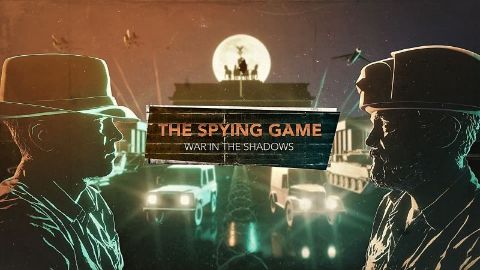
War in the Shadows

At the end of the 80s, the Soviet army is being universally modernized, observed closely by western military intelligence in East Germany. Weapons-scouts in the field are constantly on duty, as are agents in high command or in intelligence service stations.

2018 • History

You might also like

Republic of Virtue

How did an insignificant cluster of Latin hill villages on the edge of the civilised world become the greatest empire the world has known? In the fifth programme of the series, archaeologist and historian Richard Miles examines the phenomenon of the Roman Republic, from its fratricidal mythical beginnings, with the legend of Romulus and Remus, to the all too real violence of its end, dragged to destruction by war lords like Pompey the Great and Julius Caesar. Travelling to Sicily and North Africa, Richard tells the story of Rome's century-long struggle for dominance with the other great regional power, Carthage. It was a struggle that would end with the total destruction of this formidable enemy and the transformation of landlubber Rome into a seapower, and the Republic into an Empire. But with no-one left to beat, the only enemy that Rome had left was itself.

S1E5Ancient Worlds • 2010 • History

Writing on the Wall

If knowledge is power, communication is the jet fuel, the delivery system, the gift we give each other that links the modern world. But it has a dark side.

S1E4Origins: The Journey of Humankind • 2017 • History

Rome

Rome was the world's first ancient megacity. At a time when few towns could number more than 10,000 inhabitants, more than a million lived in Rome. But in a world without modern technology, how on earth did the Romans do it? How did they feed their burgeoning population, how did they house them, and how did they get them into town without buses or trains? How on earth did the Romans make their great city work? In the final episode of the series, Professor Andrew Wallace-Hadrill takes us up ancient tower blocks, down ancient sewers, and above 2,000-year-old harbour basins still filled with water, to find out. He reveals how this city surpassed all those from the ancient world that had gone before. Last but not least, Professor Wallace-Hadrill uncovers the secret of Rome's success - the planning still captured on pieces of an 1,800-year-old marble map of the city, a map which shows that astonishingly, in many places, the street plan of Ancient Rome mirrors that of the city today in exact detail.

S1E2Building the Ancient City: Athens and Rome • 2015 • History

My Human Earth

In the subsequent 65 million years, mammals are part of Europe’s history. Sea mammals conquered the oceans while herds of herbivores crisscrossed the land. It was 600,000 years ago that Homo Heidelbergensis first began hunting. Seen from a geological perspective, human beings have been on the earth for only a few short moments, but within this brief time we have already fundamentally transformed the planet. Rivers have been straightened, forests cleared and roads laid down across the natural habitats of nearly all the earth’s animals.

S1E2300 Million Years: Where Life Began • 2015 • History

Athens

Professor Darius Arya uses scanning technology to reveal the hidden secrets of ancient Athens. From the buildings on the Acropolis to the silver mines and quarries beyond the city, he investigates the story of the city that gave the world democracy.

S1E1Ancient Invisible Cities • 2018 • History

The Teutonic Knights

The Teutonic Knights were one of the great chivalric orders that emerged from the Crusades, alongside the Hospitallers and Templars. The Teutonic Knights evolved out of a "fraternity" of German crusaders who took part in the siege of Acre during the Third Crusade. 'Help, defend, Heal' was the motto of the 'Order of Brothers of the German House of Saint Mary in Jerusalem', the Teutonic Order. It was formed to aid Christians on their pilgrimages to the Holy Land and to establish hospitals.

S1E2The Crusaders • 2019 • History