The Adaptable Ape • 2015 • episode "S1E2" The Great Human Odyssey

Category: People

How did we become our planet's only global species, at home in every environment on Earth. Learn how our ancestors found a way through the deserts and out of Africa. Explore the meeting of Neanderthals and humans. And discover how we survived the Ice Age.

Make a donation

Buy a brother a hot coffee? Or a cold beer?

Hope you're finding these documentaries fascinating and eye-opening. It's just me, working hard behind the scenes to bring you this enriching content.

Running and maintaining a website like this takes time and resources. That's why I'm reaching out to you. If you appreciate what I do and would like to support my efforts, would you consider "buying me a coffee"?

Donation addresses

Buy Me a Coffee at ko-fi.com

patreon.com

BTC: bc1q8ldskxh4x9qnddhcrgcun8rtvddeldm2a07r2v

ETH: 0x5CCAAA1afc5c5D814129d99277dDb5A979672116

With your donation through , you can show your appreciation and help me keep this project going. Every contribution, no matter how small, makes a significant impact. It goes directly towards covering server costs.
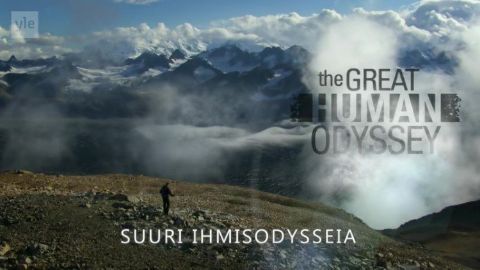
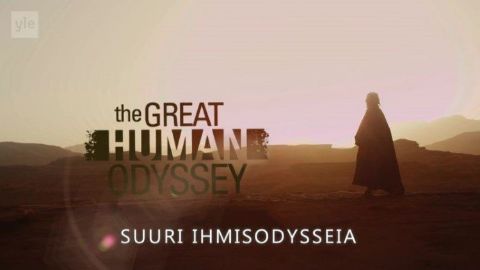
The Great Human Odyssey • 2015 • 3 episodes •

Rise of a Species

Like other kinds of human who once shared our world, homo sapiens should have died away. Discover how our species faced near extinction in Africa, and then found a place to rebuild. Explore the birth of language and art at archeological excavations scientists are now calling "the cradle of the human mind".

2015 • People

The Adaptable Ape

How did we become our planet's only global species, at home in every environment on Earth. Learn how our ancestors found a way through the deserts and out of Africa. Explore the meeting of Neanderthals and humans. And discover how we survived the Ice Age.

2015 • People

Journey's End

Early humans eventually colonized Australia, the South Pacific, and the Americas. But how did our ancestors master the oceans? Learn how new discoveries in ancient DNA research are changing our understanding of the earliest sea voyages, from Easter Island to the Bering Strait.

2015 • People

You might also like

The Lost Territories

The third episode opens on a world of drug trafficking that has been fragmented by the efforts of the police. Dealers have now changed; invisibility is their chief weapon. The trade has shifted to areas beyond law-and-order, like war zones in Afghanistan or areas with guerilla activity like Colombia. Designer drugs, which are easy to manufacture and conceal, play a key role in the transformation of the traffic. In Mexico, the cartels have dragged the whole country into a merciless spiral of violence – wherever one looks, the toll of the war on drugs makes for grim reading. Synthetic drugs, which are easy to manufacture and conceal, herald the fourth generation to come: traffickers in white coats. This poses the question: Is it time to legalize drugs, radically changing the current situation and perhaps the way we perceive them?

S1E3The Story of Drug Trafficking • 2020 • People

The Rules for Rulers

If we want to make the world a better place, we better understand how the world works.

CGP Grey • 2016 • People

The Five Major World Religions

It's perfectly human to grapple with questions, like 'Where do we come from?' and 'How do I live a life of meaning?' These existential questions are central to the five major world religions -- and that's not all that connects these faiths. John Bellaimey explains the intertwined histories and cultures of Hinduism, Judaism, Buddhism, Christianity and Islam.

TED-EdPeople

Pablo Escobar

Colombian drug lord Pablo Escobar leads a horrific war against his own country until a team of politicians and police end his reign of terror.

S1E1Drug Lords • 2017 • People

The Cali Cartel

Gilberto and Miguel Rodriguez Orejuela use violence and guile to turn the Cali Cartel into a $7 billion-per-year criminal operation.

S1E2Drug Lords • 2017 • People

Notes on Blindness

A moving and inspiring account of loss, rebirth and renewal - and the discovery of 'a world beyond sight'. In 1983, after decades of steady deterioration, John Hull, a professor at the University of Birmingham, became totally blind. To help him make sense of the upheaval in his life, he began documenting his experiences on audio cassette. Over three years he recorded over sixteen hours of material. This beautifully crafted documentary takes John's original recordings as the template for the film, incorporating lip-syncing by actors in evocative reconstructions. The technique allows the viewer to immerse themselves in John's world as he comes to terms with his deteriorating sight, and learns to experience the world in different ways. As John explains about his redemptive journey: 'I knew that if I didn't understand blindness, it would destroy me.'

2017 • People