The True Story of King Tut’s Treasure unravels the fascinating tale of the boy pharaoh Tutankhamun, whose lavish tomb lay hidden for over 3,000 years beneath the sands of Egypt’s Valley of the Kings. When British archaeologist Howard Carter uncovered the burial chamber in 1922, he revealed an astonishing collection of golden artifacts, intricate jewelry, and the legendary golden funerary mask. This discovery captivated the world, fueled myths about the “Curse of the Pharaohs,” and transformed our understanding of ancient Egyptian civilization.
Hope you're finding these documentaries fascinating and eye-opening. It's just me, working hard behind the scenes to bring you this enriching content.
Running and maintaining a website like this takes time and resources. That's why I'm reaching out to you. If you appreciate what I do and would like to support my efforts, would you consider "buying me a coffee"?
BTC: bc1q8ldskxh4x9qnddhcrgcun8rtvddeldm2a07r2v
ETH: 0x5CCAAA1afc5c5D814129d99277dDb5A979672116
With your donation through , you can show your appreciation and help me keep this project going. Every contribution, no matter how small, makes a significant impact. It goes directly towards covering server costs.
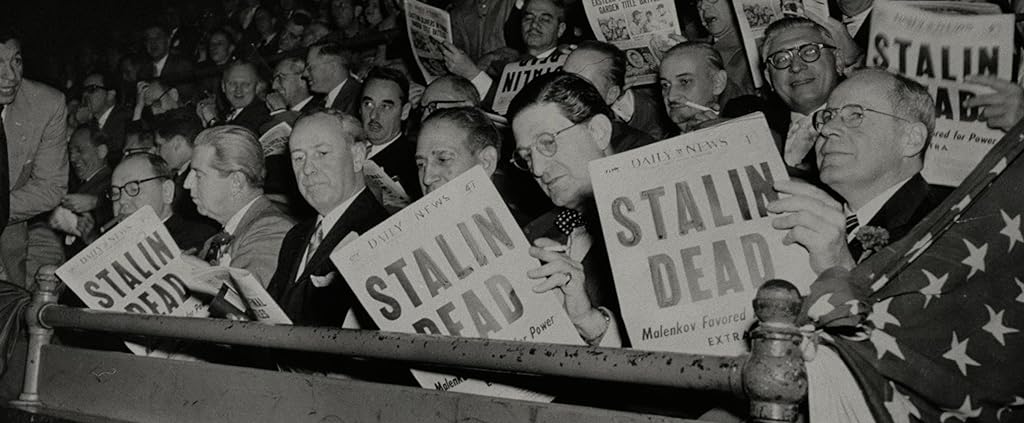
Between 1931 and 1933, 4 million Ukrainians were to die of hunger. This famine was not preceded by any cataclysmic weather event, nor by a war. This was an ideological crime: decided by Stalin and approved by the Politburo, with the aim of punishing Ukrainian peasants who refused the collectivization of the countryside, cultivated a strong form of nationalism and showed resistance to communist ideology. The purpose of this famine, unprecedented in Soviet history, was to break all forms of opposition. How was it implemented? What was known at the time? What was said? What was seen? The most important event in pre-war Soviet history is taboo: all traces of it were immediately erased, and the evidence drowned in a flood of lies. And yet, within just two years, this famine killed twice as many Ukrainians as the gulag did Soviets in half a century. This state secret was particularly well-kept for more than fifty years and only revealed in its full magnitude after the disintegration of the USSR, when the archives were revealed. Drawing on previously unpublished material, on many Soviet films and on a number of particular points of view, including that of Welsh journalist and whistleblower Gareth Jones, this film retraces the story of that famine.
2022 • History
An ancient murder mystery plays out like an episode of C.S.I. When human bones are found hidden under the floor of an old army barracks, a homicide detective is called in to examine the evidence. Preliminary observations indicate the victim may have been bound and killed with blunt force trauma to the skull. The culprit must be found and brought to justice. But there is one key problem: The victim died nearly 1,800 years ago. British investigators discover bones hidden under the floor of an old army barracks near the Scotland border. Solving the mystery of who murdered a 10-year old child in 213 AD, Murder in the Roman Empire delves into the life of an ancient Roman garrison using forensics, archaeology, and criminal investigation. Could an individual soldier have taken advantage of deserted barracks to hide his crime? Or was there collusion among a group of soldiers?
2011 • History
Forty years ago, hundreds of skeletons were unearthed in a mass grave in an English village. Bioarchaeologist Cat Jarman believes these bones are the last remains of the “Great Heathen Army,” a legendary Viking fighting force that invaded England in the ninth century and has long been lost to history. Armed with the latest scientific methods, Cat’s team uncovers extraordinary human stories from the front line, including evidence of women fighters and a lost warrior reunited with his son in death
Simon Schama starts his meditation on colour and civilisation with the great Gothic cathedrals of Amiens and Chartres. He then moves to 16th-century Venice...
7/10 • Civilisations • 2018 • History
This film shows how the Nazis developed a terrifying new military tactic - Blitzkrieg - and how it caught first Poland and then Britain and France utterly unprepared. It charts the fall of Poland and how Hitler then conquered France in just a few weeks, an achievement that had eluded Germany throughout all the four years of World War One. It also reveals how heroic French resistance allowed the British to escape from Dunkirk and live to fight another day.
2/13 • World War II In HD Colour • 2009 • History
During the fifth episode of NEW YORK: A DOCUMENTARY FILM, the post-war economic boom, the rise of consumer culture, and the birth of new mass-media industries fuel the convergence of an incredible array of human and cultural energies, ending with the Crash of 1929 and the construction of the Empire State Building. In this short but dazzling period, New York became the focal point of an extraordinary array of human and cultural energies, reaching its highest levels of urban excitement and glamour. In just over a decade, New York gave birth to its signature skyscrapers, the Chrysler and Empire State Buildings, and to artistic creations like F. Scott Fitzgerald's THE GREAT GATSBY, George Gershwin's "Rhapsody in Blue," and to the jazz compositions of Duke Ellington and Louis Armstrong. Along the way, Harlem emerged as the undisputed capital of the African- American experience and the new media industries of advertising, radio networks, public relations, and magazines found their homes in midtown Manhattan.
S1E5 • New York: A Documentary Film • 1999 • History