Viking Women & Ragnar and his Sons • 2016 • episode "S1E2" Real Vikings

Category: History

Vikings cast members Katheryn Winnick and Alyssa Sutherland join leading experts in an investigation of the different roles women played within Norse society-and they are surprised at what they discover and in Ragnar and His Sons,Vikings creator Michael Hirst, actor Clive Standen and a host of experts sort through historic accounts, Icelandic sagas and archaeological discoveries to gain insight into the real lives of Ragnar Lothbrok and his famous sons.

Make a donation

Buy a brother a hot coffee? Or a cold beer?

Hope you're finding these documentaries fascinating and eye-opening. It's just me, working hard behind the scenes to bring you this enriching content.

Running and maintaining a website like this takes time and resources. That's why I'm reaching out to you. If you appreciate what I do and would like to support my efforts, would you consider "buying me a coffee"?

Donation addresses

Buy Me a Coffee at ko-fi.com

patreon.com

BTC: bc1q8ldskxh4x9qnddhcrgcun8rtvddeldm2a07r2v

ETH: 0x5CCAAA1afc5c5D814129d99277dDb5A979672116

With your donation through , you can show your appreciation and help me keep this project going. Every contribution, no matter how small, makes a significant impact. It goes directly towards covering server costs.
Real Vikings • 2016 • 2 episodes •

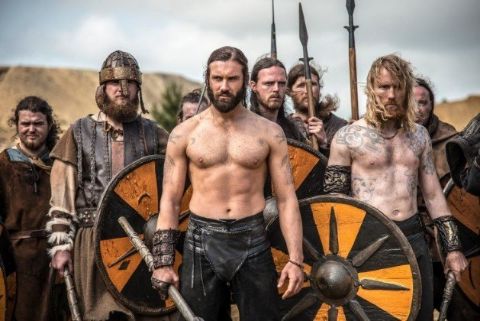
Age of Invasion & Rise of the Pagans

Actor Clive Standon travels across Europe with Viking experts to discover how the Vikings were able to invade England and France. In Rise of the Pagans,Vikings actors Clive Standen and Maude Hirst travel to Scandinavia to explore the pagan beliefs and warrior culture of the Vikings-and dispel myths about their violent society.

2016 • History

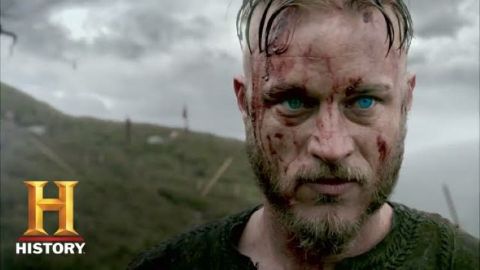
Viking Women & Ragnar and his Sons

Vikings cast members Katheryn Winnick and Alyssa Sutherland join leading experts in an investigation of the different roles women played within Norse society-and they are surprised at what they discover and in Ragnar and His Sons,Vikings creator Michael Hirst, actor Clive Standen and a host of experts sort through historic accounts, Icelandic sagas and archaeological discoveries to gain insight into the real lives of Ragnar Lothbrok and his famous sons.

2016 • History

You might also like

Heroes and Misfits

War heroes, disaffected workers, a wealthy playwright and an enigmatic veteran named Adolf Hitler create a movement fuelled by mythology and racism.

1/10Hitler's Circle of Evil • 2017 • History

Christians against Christians

Corruption, loose morals, depravity – the German monk Martin Luther had enough of this and demanded a pure church and a pure faith. His goal was nothing less than a revolution: the Reformation of the church and the ousting of the "depraved" popes. Instead, the freedom within every Christian believer was to be expressed. The first example was the Peasants' Wars. Christianity once again became divided after the downfall of Byzantium: there were now Catholics, Lutherans and Reformed, for the rebels soon went their own way. The new longing for a purer Christianity soon led to the biggest catastrophe in Europe, the Thirty Years' War. It was not foremost a religious war, although it was easier to kill more mercilessly without a legitimation than have to worry about "eternal life." Europe lost half of its population during this period. The horror of the roving hordes of soldiers, the plunge into the most terrible atrocities that humans are capable of, caused the educated to doubt the beneficial power of religion. The separation of church and state is the result of the European experience of so-called religious wars. Outlining the provincial causes and ravaging effects of Europe's Thirty Years' War, this program illustrates the ability of religious fervor to inflame nationalism and drive the quest for power. With background on Martin Luther's split with the Catholic Church and the St. Bartholomew's Day Massacre, Dr. Helmut Neuhaus of Friedrich Alexander University offers detailed analysis of the Hapsburg-Bohemian conflict, the shifting alliances of Catholics and Protestants, and the mercenary campaigns of Wallenstein—leading to a comparison with large-scale natural disaster. The program clearly identifies the three-decade inferno as an inspiration for later divisions of church and state.

S1E2The Holy Wars: War and Religion • 2004 • History

Tutankhamun's Treasures

Archaeologists unearth a long-lost box of treasures from inside Tutankhamun's tomb; new technology reveals why this boy king's resting place remained hidden from tomb robbers for thousands of years; a team is tasked with transporting Tut's treasures.

Part 1Lost Treasures of Egypt • 2019 • History

Raiders of the Lost Past: Tutankhamun's Secrets

On the 100th anniversary of the discovery of Tutankhamun's treasure-packed tomb, Dr Janina Ramirez turns detective and heads to Egypt to uncover the real story of how a Briton called Howard Carter unearthed a pharaoh's tomb when everyone else believed there were no more great Egyptian finds to be made. She discovers that some of Tutankhamun's treasures are missing and reveals the name of the person responsible. She delves into the origins of the supposed pharaoh's curse, finds the surprising truth about the young king's brutal injuries, and digs out fresh evidence that Tutankhamun wasn't the delicate, powerless boy king of legend but was instead a powerful statesman.

2022 • History

The Real Inglorious Bastards

This is the incredible true story behind Quentin Tarantino's film Inglourious Basterds; a group of Jewish-American refugees of Nazi Germany who boldly went behind enemy lines for vengeance. As a teenager, Hans Wijnberg is sent to America from Holland to escape Nazi aggression; Fred Mayer and his family flee Germany at the onset of war. Both enlist in the U.S. army and are recruited by the OSS. But for their daring mission 'Operation Greenup', investigating the Nazi stronghold of Tyrol in the Austrian alps, they need an inside man – POW and Tyrol native Franz Weber, a former officer and conscientious deserter from the Austrian Wehrmacht… "The truth is way stranger than fiction," muses one interviewee in this unbelievable true account of an incredible war time saga. As the Second World War was coming to a close, the US Office of Strategic Services trained and parachuted two Jewish refugees and a German deserter deep into Nazi occupied Austria. The film reveals how their efforts disrupted a vital supply route between Germany and the Italian front to bring about the surrender of Innsbruck to Allied Forces. Their unbelievable adventure has a finale that beats any Hollywood movie hands down — but a story so powerful that it became the basis for Quentin Tarantino's mega hit. Through vivid first-person accounts from the extraordinary OSS veterans, gripping dramatic reconstructions, CGI and archive, the intrepid trio's hair-raising 'Operation Greenup' is brought to life, revealing one of the most successful and daring covert operations of World War Two. Hear directly from two of the men on the missions, Hans Wijnberg and Fred Mayer as they detail their amazing exploits. Both Fred and Hans were interviewed extensively, however Hans died from heart problems the day after the interviews with him were recorded. Written and Directed by Min Sook Lee ; Produced by 2271120 Ontario Inc. for Storyline Entertainment with Shaw Media, CMF Canada Media Fund, Rogers Cable Network Fund, History Television and TVF International

2012 • History

The Great Famine

The little-known story of the American effort to relieve starvation in the new Soviet Russia in 1921, The Great Famine is a documentary about the worst natural disaster in Europe since the Black Plague in the Middle Ages. Five million Russians died. Half a world away, Americans responded with a massive two-year relief campaign, championed by Herbert Hoover, director of the American Relief Administration known as the ARA. In July of 1921, Herbert Hoover, received a plea for international aid by Russian novelist Maxim Gorky. "Gloomy days have come for the country of Tolstoy, Dostoyevsky, Mendeleyev," Gorky warned. He made a similar request to other Western nations, but it was Hoover who responded immediately with a promise of support. The first American relief ships arrived in Petrograd in September 1921, as the embers of the 1917 Russian revolution still smoldered. American relief workers were among the first outsiders to break through Russia's isolation and to witness and record the impact of the Bolshevik Revolution. They would be tested by a railroad system in disarray, a forbidding climate, a ruthless government suspicious of their motives, and the enormous scale of death and starvation. The initial plan called for feeding one million children by delivering bread, rice, grits, sugar, corn and milk to the most hard hit regions. Almost immediately, Hoover encountered formidable obstacles. Vladimir Lenin's new communist government was skeptical of American aid and sabotaged the relief effort by planting spies in local American Relief Administration offices. When trains stuck on the tracks prevented food from being transported, Russian officials were uncooperative, resulting in delays that contributed to an estimated 50,000 deaths. New estimates in the fall of 1921 revealed that at least 16 million Russians would be impacted by the famine. Hoover's initial plan to feed just the children would not be sufficient. That winter, cannibalism became widespread across Russia as the people continued to starve. In the U.S., Hoover managed to double the project's funding, arguing that by providing food famine relief, Americans could demonstrate the strength, kindness and efficiency of American society to a Communist culture. After a spring thaw, hundreds of American relief workers — nicknamed "Hoover's boys" — were finally able to deliver food. In August 1922, a full five months after the initial shipments of corn were sent to Russia, American Relief Administration officials were still feeding almost 11 million Soviet citizens each day in 19,000 kitchens. By the end of the famine that fall, five million Russians had starved to death, but the toll would have been significantly higher without Hoover's unprecedented humanitarian commitment. Known as "the Great Humanitarian" for his relief work during and after World War I, Hoover is said to have saved more lives than any person in history. "Lenin's government never recognized America's humanitarian motives," says producer Austin Hoyt (George H. W. Bush, Victory in the Pacific, Reagan). The Soviets always saw the relief workers as exploiters and spies." The Cheka, Lenin's secret police, kept a watchful eye on the Americans and especially on the 120,000 Russians the ARA hired to do the work. White Russians and aristocrats, the losers in Russia's brutal civil war, were hired because they were educated. The Bolsheviks feared the ARA was training them as counter-revolutionaries. The tensions the Americans experienced in the early 1920s would come to dominate U.S. Soviet relations for much of the century.

2011 • History