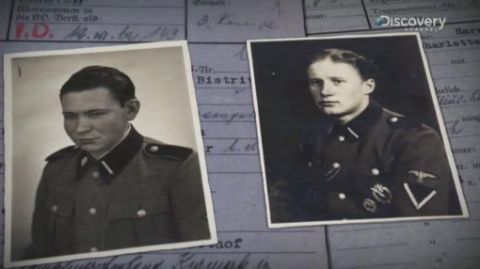
Journalist and author Jelani Cobb investigates how 'hate tools' like propaganda, dehumanization, the internet, symbols, and more can incite, amplify and spread hatred.
Hope you're finding these documentaries fascinating and eye-opening. It's just me, working hard behind the scenes to bring you this enriching content.
Running and maintaining a website like this takes time and resources. That's why I'm reaching out to you. If you appreciate what I do and would like to support my efforts, would you consider "buying me a coffee"?
BTC: bc1q8ldskxh4x9qnddhcrgcun8rtvddeldm2a07r2v
ETH: 0x5CCAAA1afc5c5D814129d99277dDb5A979672116
With your donation through , you can show your appreciation and help me keep this project going. Every contribution, no matter how small, makes a significant impact. It goes directly towards covering server costs.
Journalist and author Jelani Cobb investigates how 'hate tools' like propaganda, dehumanization, the internet, symbols, and more can incite, amplify and spread hatred.
2019 • Brain
International criminal lawyer Patricia Viseur Sellers investigates the role of perpetrators, from leaders to followers, as well as those who resist the power of hate.
2019 • Brain
Artificially intelligent machines are taking over. They’re influencing our everyday lives in profound and often invisible ways. They can read handwriting, interpret emotions, play games, and even act as personal assistants. They are in our phones, our cars, our doctors’ offices, our banks, our web searches…the list goes on and is rapidly growing ever longer. But how does today’s A.I. actually work—and is it truly intelligent? And for that matter, what is intelligence? The world’s brightest computer programmers are trying to build brighter machines by reverse-engineering the brain and by inventing completely new kinds of computers, with exponentially greater speed and processing power. NOVA Wonders looks at how far we’ve come and where machines are headed as their software becomes ever more…cerebral. How close are we from a world in which computers take over—from diagnosing cancer to driving our cars to targeting weapons? If we place more and more of our lives under the control of these artificial brains, what are we putting at risk?
Nova Wonders • 2018 • Brain
Join us as we explore the revolutionary science of "neuroplasticity" - a concept that expands not just our knowledge of how our brains work, but how we use them. For centuries the human brain has been thought of as incapable of fundamental change. People suffering from neurological defects, brain damage or strokes were usually written-off as hopeless cases. But recent and continuing research into the human brain is radically changing how we look at the potential for neurological recovery. The human brain, as we are now quickly learning, has a remarkable ability to change itself - in fact, even to rewire itself. The Brain that Changes Itself, based on the best-selling book by Toronto psychiatrist and researcher Dr. Norman Doidge, presents a strong case for reconsidering how we view the human mind.
S48E08 • The Nature of Things • 2008 • Brain
Throughout the history of mankind, the subject of identity has sent poets to the blank page, philosophers to the agora and seekers to the oracles. These murky waters of abstract thinking are tricky to navigate, so it’s probably fitting that to demonstrate the complexity, the Greek historian Plutarch used the story of a ship.
Reporter Dr. Graham Phillips examines the effects of meditation in his own life, and the medical evidence of how it affects those who practice it. Can meditation literally make your brain younger?
S1E1 • Catalyst: Season 2 • 2017 • Brain
Humans are the only Earthlings with complex language. But at what cost was that ability acquired? In this episode, I visit Tetsuro Matsuzawa to learn about his influential cognitive tradeoff hypothesis.
S3E1 • Mind Field • 2019 • Brain