How and why dogs have become such good working companions, including Midge, the world's first police Chihuahua, and Joey, a sheepdog from the Cotswolds. Mother-of-four Toni Curtis gives her remarkable account of the fateful day when she was swept out to sea off the north coast of Wales and how she owes her life to the Newfoundland dog that saved her life..
Hope you're finding these documentaries fascinating and eye-opening. It's just me, working hard behind the scenes to bring you this enriching content.
Running and maintaining a website like this takes time and resources. That's why I'm reaching out to you. If you appreciate what I do and would like to support my efforts, would you consider "buying me a coffee"?
BTC: bc1q8ldskxh4x9qnddhcrgcun8rtvddeldm2a07r2v
ETH: 0x5CCAAA1afc5c5D814129d99277dDb5A979672116
With your donation through , you can show your appreciation and help me keep this project going. Every contribution, no matter how small, makes a significant impact. It goes directly towards covering server costs.

How and why dogs have become such good working companions, including Midge, the world's first police Chihuahua, and Joey, a sheepdog from the Cotswolds. Mother-of-four Toni Curtis gives her remarkable account of the fateful day when she was swept out to sea off the north coast of Wales and how she owes her life to the Newfoundland dog that saved her life..
2016 • Nature
While dogs are said to share more than 99 per cent of their DNA with grey wolves, recent research has indicated that this link might actually be the key to why dogs have become the perfect family pet. The pack mentality of their lupine ancestors remains in domestic dogs, inspiring what seems to be a fierce loyalty to their human families,
2016 • Nature
A look at how dogs have become part of human life and the closest of companions. An example of this special relationship is the amazing story of a cliff-diving Jack Russell.
2016 • Nature
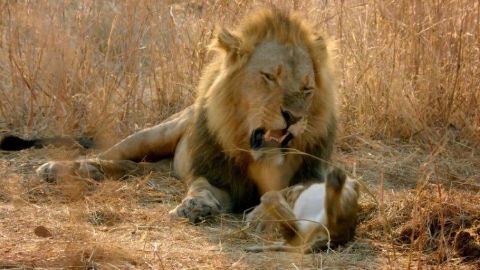
In Ruaha, Tanzania, lions form huge super prides in order to hunt giants. Amongst cats lions are unusual, the only one to live in groups. In numbers they find the strength and audacity to hunt the most formidable prey. In Sri Lanka a tiny rusty-spotted cat explores his forest home - 200 times smaller than a lion, the rusty-spotted is the smallest of all cats, but just as curious. The Canada lynx lives further north than any cat, relying on snowshoe hares to survive the bitterly cold winters. Until now, lynx were creatures of mystery, but now technology provides an insight into their secret lives.
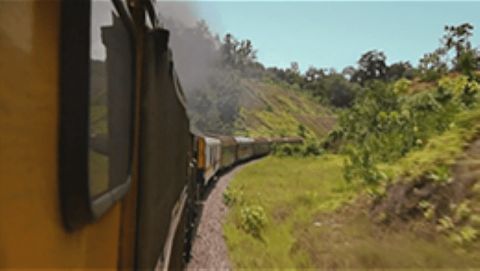
Abandoned in a rainforest in Gabon and greeted by circumcisers in Kenya, Simon's journey gets underway.
S1E1 • Equator with Simon Reeve • Nature
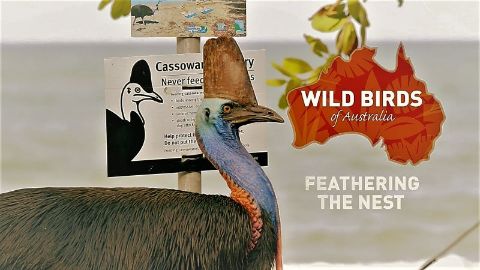
There are more than 370 species of birds unique to Australia, including flightless wonders like the prehistoric-looking cassowary and the dramatic male Victoria's riflebird, whose elaborate and flamboyant mating ritual just can't be ignored. Venture into the natural habitat of these avian oddities as they showcase their unique takes on family life.
S1E4 • Wild Birds of Australia • 2018 • Nature
Professor Brian Cox follows Earth's epic journey through space. He takes to the air in a top-secret fighter jet to race the spin of the planet and reverse the passage of the day. In Brazil, a monstrous wave that surges up the Amazon River provides an epic ride of a different kind - chased by a top surfer through the rainforest, this tidal wave marks Earth's constant dance with the Moon. Greenland experiences some of the biggest swings in seasons in the world, but despite the deep freeze, the harsh winter brings opportunity to the Inuit people who live there. All this spectacle here on Earth signals that we are thundering through the universe at breakneck speed. Brian explains why we can't feel it and how understanding motion brings us to understanding the nature of space and time itself, leading to the astonishing conclusion that the past, present and future all exist right now.
Part 2 • Forces of Nature With Brian Cox • 2016 • Nature
The big blue is the world's greatest wilderness, far from shore and many kilometres deep. It's a vast marine desert where there is little to eat and nowhere to hide. Yet it's home to some of the biggest and most spectacular creatures on earth. This episode reveals what it takes to survive in this savage and forbidding world. We witness feats of incredible endurance, moments of high drama and extraordinary acts of heart-wrenching self-sacrifice. Every animal in the big blue must find their own unique way to survive.
S1E4 • Blue Planet II • 2017 • Nature
In this episode Brian uncovers how the stunning diversity of shapes in the natural world are shadows of the rules that govern the universe. In Spain he shows how an attempt by hundreds of people to build the highest human tower reveals the force that shapes our planet. In Nepal, honey hunters seek out giant beehives that cling to cliff walls. The perfect hexagonal honeycombs made by the bees to store their honey conceal a mathematical rule. Off the coast of Canada, Brian explains how some of the most irregular, dangerous shapes in nature - massive icebergs that surge down from Greenland and into shipping lanes of the Atlantic - emerge from a powerful yet infinitely small force of nature. Even the most delicate six-sided snowflake tells a story of the forces of nature that forged it.
Part 1 • Forces of Nature With Brian Cox • 2016 • Nature