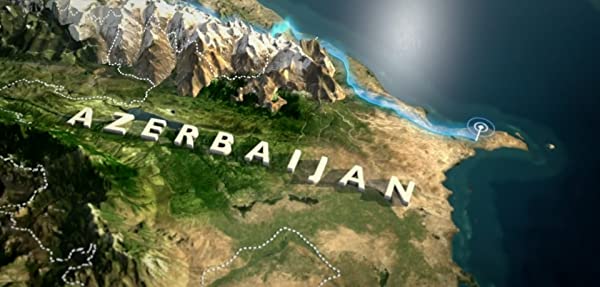
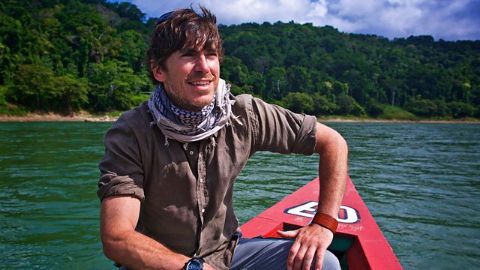
Levison meets nomadic shepherds and dangerous dogs in the Gobustan desert, climbs to a castle halfway up a cliff, visits Stalin's birthplace and meets a hermit monk who lives atop a 45-metre monolith.
Hope you're finding these documentaries fascinating and eye-opening. It's just me, working hard behind the scenes to bring you this enriching content.
Running and maintaining a website like this takes time and resources. That's why I'm reaching out to you. If you appreciate what I do and would like to support my efforts, would you consider "buying me a coffee"?
BTC: bc1q8ldskxh4x9qnddhcrgcun8rtvddeldm2a07r2v
ETH: 0x5CCAAA1afc5c5D814129d99277dDb5A979672116
With your donation through , you can show your appreciation and help me keep this project going. Every contribution, no matter how small, makes a significant impact. It goes directly towards covering server costs.
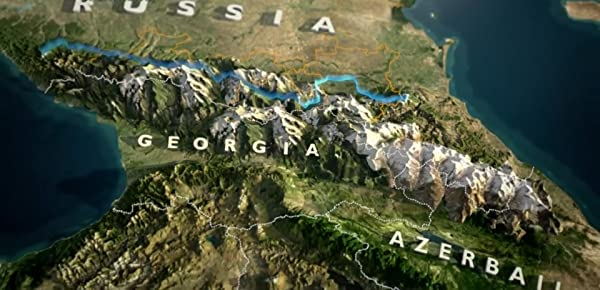
Levison experiences breath-taking landscapes, bizarre ruins, and a sufi ceremony and crosses Chechnya - now ruled by a terrifying strongman - into Dagestan, where terrorists hide out in the mountains.
2017 • Travel
In Dagestan - which the Foreign Office warns against visiting - Levison experiences warrior clans' hospitality, stunning beauty and ancient cities. Then it's on to country-of-contrasts Azerbaijan.
2017 • Travel
Levison meets nomadic shepherds and dangerous dogs in the Gobustan desert, climbs to a castle halfway up a cliff, visits Stalin's birthplace and meets a hermit monk who lives atop a 45-metre monolith.
2017 • Travel
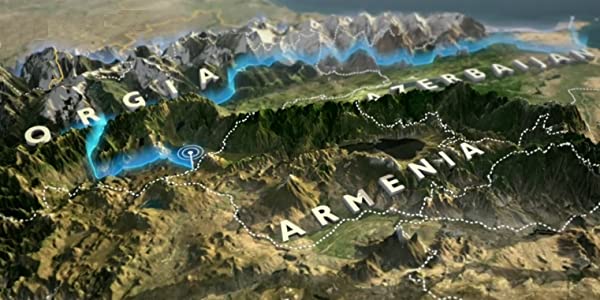
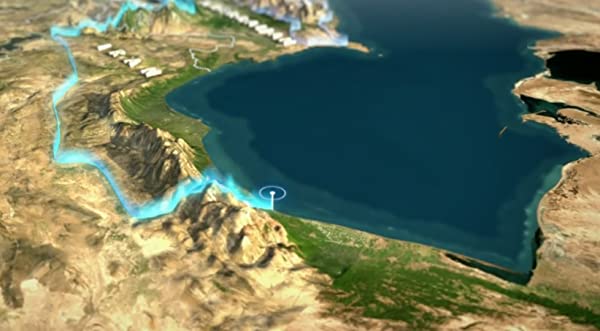
Levison travels through Armenia and Europe's forgotten war zone Nagorno-Karabakh, before heading into Iran towards Tehran, the Caspian Sea and the journey's end.
2017 • Travel
The final leg of Ade's tour of Africa sees him travelling from the beaches of Mozambique, through South Africa, before ending his entire trip in Zimbabwe. He begins on the golden sand beaches of Mozambique's Bazaruto Archipelago, one of Africa's highlights. At Paradise Island, he finds an abandoned hotel, a visual reminder of Mozambique's recent history - this place was once a high-end tourist destination, but 25 years of colonial and then civil war put a stop to development. But the local wildlife has benefited from the fact that so few tourists now come here, and Ade is able to snorkel with one of the world's most elusive sea creatures - a dugong. Since the wars, Mozambique has struggled to develop, and Ade meets someone for whom life is especially hard – a wheelchair user like himself. In a country where disability is viewed with fear and superstition – and believed by many to be contagious – even catching a bus proves impossible for Castigo. The best thing in his life is exactly the same thing that turned Ade's life around - wheelchair basketball - and Ade can't help getting carried away in a game. Along the coast, at one of Mozambique's largest ports, Ade finds out that China is investing a huge amount in Mozambique – and elsewhere across Africa. The money often comes with strings attached, but a poor country like Mozambique needs financial help, which has to come from somewhere. Ade's next stop is South Africa. The country is famous for its wildlife but Ade hears how Chinese influence is having a dramatic impact here – the country's rhino population has been decimated by poachers, driven by a demand for rhino horn in Chinese medicine. Ade follows rangers with a surprising way of tackling the problem - by cutting off the rhino horn themselves, they hope to deter poachers. Ade travels to Johannesburg to see how the country is faring 25 years after apartheid ended. On a tour of the city, he is upset to discover that although the black population now have voting rights, they are living in an economic form of apartheid, with 25% unemployed and many squatting on whatever land they can find. In an emotional scene, Ade visits a squatted piece of land, moments after the police have destroyed people's houses, to hear claims that Mandela's legacy has been forgotten. Land reform is the big political issue here today, with many calling for a redistribution of land from rich white farmers to the black population. The final stop on Ade's African adventure is Zimbabwe – where land reform has already happened, with disastrous results. Ade finds a country still struggling economically. His first stop is the Kariba dam, and a hair-raising boat ride on the vast and stunning Lake Kariba. Ade finds that locals are worried about the stability of the Kariba dam and work has begun to stabilize undermined foundations. The worrying decay of this crucial dam is a sign of how much this country suffered under the rule of Robert Mugabe. As Ade has seen so often on his trip around Africa, Zimbabwe is a country that should be rich. It has huge quantities of gold – enough, in theory, for the entire population to be a millionaire. But there isn't the infrastructure of investment to get at it - in a country dogged by poverty and corruption. But the departure of dictator Robert Mugabe brought a new optimism, and Ade meets gold miners who are willing to risk daily exposure to toxic mercury for every scrap of gold they can get and an entrepreneur who believes the industry can be transformed. Despite the return of violence and repression in Zimbabwe, Ade ends his journey on a high, visiting a remote hut that has been turned into the set of a music video. He joins UK indie musician Shingai Shoniwa as she shoots the video for her forthcoming debut single, Coming Home, in a country that she believes is on the up, and deserves a fresh chance.
S1E4 • Africa with Ade Adepitan • 2019 • Travel
In this episode, Julia’s journey brings her to the impossibly glamorous island of Santorini in search of the perfect sunset. Her trip begins in one of Santorini's most exclusive hotels where she discovers how one of the Aegean’s poorest islands became a playground for the rich and famous. In search of the secret Santorini away from the bustling crowds, she heads inland for a walk on the wild side, hiking through a forager’s paradise to the hilltop village of Pyrgos
S1E3 • The Greek Islands with Julia Bradbury • 2020 • Travel
His journey begins in the vast Boreal Forest at the heart of Canada. This is a place where knowledge and experience are still far more important than the equipment you carry, a place left alone for centuries before Europeans arrived. Ray explores the wonder of this special forest, learns about the people who called it home and unlocks the secrets of this forgotten world. This is a land where knowledge of bushcraft is not just desirable, it is essential.
S1E1 • Ray Mears's Northern Wilderness • 2009 • Travel
his leg takes Ade to the east of the continent, from Tanzania, through Ethiopia and on to war-torn Somalia. Ade begins in Tanzania, in Selous Game Reserve – a game park the size of Switzerland. He is on the lookout for elephants. But the numbers in this park have fallen by 90 per cent over the last few decades. As well as poaching, one of the big problems is that elephants trample and eat crops – so the locals don't like them. But a new collaring programme is helping numbers to recover. Ade's next stop is Ethiopia's far north. He travels to the hottest place on the planet where he spends a night with some of the toughest people on earth - the Afar. He joins them doing what their ancestors have done for centuries – hacking blocks of salt from a dried-up salt lake and loading them onto camels. But change is finally coming to this place – thanks to another of its resources, the fertilizer potash. It is a sign of Ethiopia's development, which Ade sees more of in the capital, Addis Ababa. Having grown up with images of starving children in the famine-plagued 80s, Addis is nothing like Ade expected. The city is booming. And it is driving Ethiopia's economy - now one of the fastest-growing in the world. Ade gets a guided tour from perhaps the world's greatest-ever long distance runner, Haile Gebrselassie. Haile is now a businessman, with investments in coffee and construction. The real fuel in Ethiopia's boom is manufacturing. Asia is still the workshop of the world, but with wages there on the rise, Chinese companies are increasingly looking to countries like Ethiopia to set up factories – as Ade discovers on a visit to a shoe factory. Leaving Addis, Ade travels on Ethiopia's new high-speed Chinese built train, which whisks him all the way to neighbouring Djibouti, a vital port for Ethiopia's export-led economy. The final stop on this leg of Ade's trip is war-torn Somalia. He joins the African Union troops on a mission out of Mogadishu and discovers a country in ruins, thanks to decades of conflict with Islamist group al-Shabab. Even in areas ruled by the government conservative Islam dominates and women face restriction on their freedom. Back in Mogadishu, Ade shoots some hoops with a group of women defying the odds by playing basketball. His final encounter is with a female doctor who worked for the NHS for 30 years, and has now returned to Somalia to rebuild her country. She is prepared to give her life, if necessary, in her efforts to provide quality maternity care for new mothers.
S1E3 • Africa with Ade Adepitan • 2019 • Travel
The stories of mountaineers who have reached the summit of the world's tallest mountain, including a look at the dangers of the low oxygen levels at high altitudes. The programme examines the factors that allowed Edmund Hillary and Tenzing Norgay's 1953 expedition to succeed where so many had failed, and reveals how the Sherpas, who work as porters and guides for expeditions, have a physiology uniquely adapted to surviving at high altitudes.
2021 • Travel
Giles Coren and Monica Galetti experience the warm embrace of Fogo Island Inn on a rocky, sea-sprayed outpost of remote Fogo Island in Newfoundland. White, angular and perched atop zig-zagged stilts like the local fishermen's houses.
S1E5 • Amazing Hotels: Life Beyond the Lobby • 2017 • Travel