Understand the importance of persuading the public to protect themselves during health crises. History shows that handwashing, social distancing and grassroots campaigning all play important roles in helping to shift behavior and save lives.
Hope you're finding these documentaries fascinating and eye-opening. It's just me, working hard behind the scenes to bring you this enriching content.
Running and maintaining a website like this takes time and resources. That's why I'm reaching out to you. If you appreciate what I do and would like to support my efforts, would you consider "buying me a coffee"?
BTC: bc1q8ldskxh4x9qnddhcrgcun8rtvddeldm2a07r2v
ETH: 0x5CCAAA1afc5c5D814129d99277dDb5A979672116
With your donation through , you can show your appreciation and help me keep this project going. Every contribution, no matter how small, makes a significant impact. It goes directly towards covering server costs.
Learn about the surprisingly recent invention of medicine that combats illness directly, such as antibiotics. From the accidental discovery of penicillin to today's hunt for antivirals, this history underpins work to find COVID-19 treatments.
2021 • Health
Learn about the surprisingly recent invention of medicine that combats illness directly, such as antibiotics. From the accidental discovery of penicillin to today's hunt for antivirals, this history underpins work to find COVID-19 treatments.
S1E2 • Extra Life: A Short History of Living Longer • 2021 • Health
How bad can our drinking pattern be for our health? Doctors and genetically identical twins Chris and Xand van Tulleken want to find out. With the current drinking guidelines under review, the twins embark on self-experimentation to see the effects of different drinking patterns on their health. With Chris drinking 21 units spread evenly across the week and Xand having his 21 in single weekly binges, how will their bodies differ after a month? Catching up with the latest research into alcohol drinking patterns, we ask if moderate drinking is genuinely good for us - and whether binge drinking is really that bad.
Explained examines why diets are often unsuccessful. It looks at the science that suggests that low carb, low fat, and body type diets as well as supplements and detoxification regimes simple do not work in helping most people lose weight. While the diet industry pushes us to avoid calories the food industry encourage us to eat more of them.
In this episode, they unpick the dramatic shift in advice on drinking alcohol. After warnings that there's no longer any safe limit, what's the truth on whether it's still ok to have a drink? And what about all the previous reports that suggest the occasional drink might actually be a good thing? The shocking secrets of how Britain snacks are revealed, but it seems the mid-afternoon energy slump that prompts millions to reach for treats may just be all in the mind. Also, the controversial 5:2 diet is put to the test. With the experts still divided, could regular fast days really be the key to losing weight?
S1E5 • Food: Truth or Scare • 2016 • Health
Many clinical trials target the nation's most acute health issues. With deaths from liver disease soaring by 40 per cent in a decade, more and more patients are waiting for vital liver transplants. There is a shortage of organ donors and many donated organs are rejected as only those in excellent condition are considered suitable for a transplant procedure. Surgeons Richard Laing and Thamara Perera are part of a team at QEHB trialling a revolutionary way to tackle this crisis, by maximising the number of donor organs that can be safely re-used. The film follows the trial every step of the way, as Richard receives a donor liver that would usually be rejected and tries to prove it is viable for transplant by rejuvenating and testing it on a perfusion machine. This machine sustains the liver by mimicking the supply of blood, oxygen and nutrients an organ receives inside a live, healthy human body. Once the donor liver has proved itself fit for transplant, the surgical team start to remove grandmother Connie O'Driscoll's severely diseased liver. Once the donor liver has been disconnected from the perfusion machine, they have just 20 minutes to place it in Connie's body and plumb it into the complex and delicate network of hepatic blood vessels.
S1E3 • Surgeons: At the Edge of Life • 2018 • Health
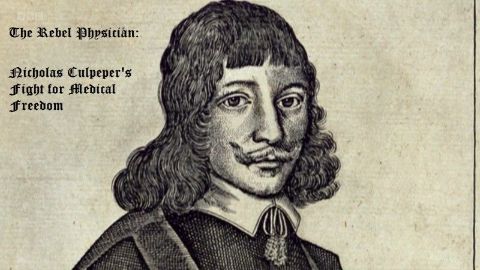
Benjamin Woolley presents the gripping story of Nicholas Culpeper, the 17th century radical pharmacist who took on the establishment in order to bring medicine to the masses. Culpeper lived during one of the most tumultuous periods in British history. When the country was ravaged by famine and civil war, he took part in the revolution that culminated in the execution of King Charles I. But it is Culpeper's achievements in health care that made him famous. By practicing (often illegally) as a herbalist and publishing the first English-language texts explaining how to treat common ailments, he helped to break the monopoly of a medical establishment that had abandoned the poor and needy. His book The English Physician became the most successful non-religious English book of all time, remaining in print continuously for more than 350 years.
2007 • Health