Communicators • 2021 • episode "S1E2" Chris Packham's Animal Einsteins

Category: Nature | Torrent: | Subtitle:

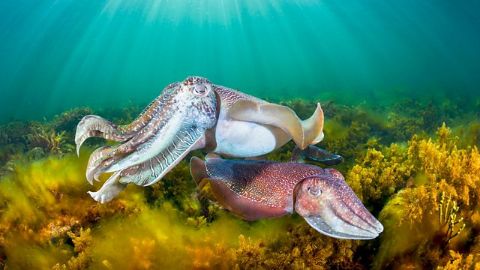
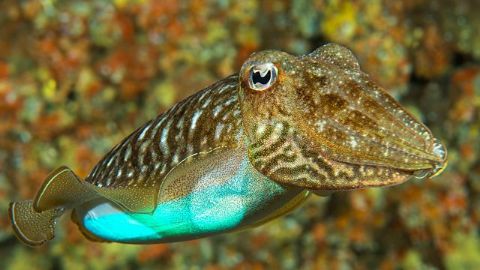
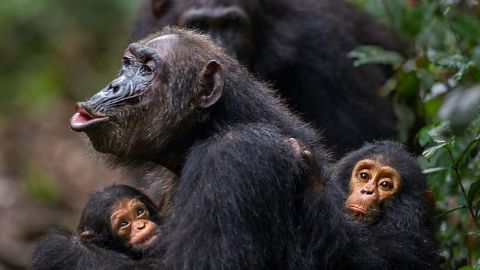
Chris reveals some of the cleverest animal communicators on the planet. For decades, people have longed to emulate Dr Doolittle and be able to understand what animals are communicating to one another. But their methods often go far beyond the capabilities of our human senses. Now, thanks to dedicated researchers, new science and cutting-edge technology, we're being given a glimpse into the ingenious ways that animals get their message across - that dolphins have individual names for each other, that cuttlefish use covert signals, and that humans can understand apes without even realising it.

Make a donation

Buy a brother a hot coffee? Or a cold beer?

Hope you're finding these documentaries fascinating and eye-opening. It's just me, working hard behind the scenes to bring you this enriching content.

Running and maintaining a website like this takes time and resources. That's why I'm reaching out to you. If you appreciate what I do and would like to support my efforts, would you consider "buying me a coffee"?

Donation addresses

Buy Me a Coffee at ko-fi.com

patreon.com

BTC: bc1q8ldskxh4x9qnddhcrgcun8rtvddeldm2a07r2v

ETH: 0x5CCAAA1afc5c5D814129d99277dDb5A979672116

With your donation through , you can show your appreciation and help me keep this project going. Every contribution, no matter how small, makes a significant impact. It goes directly towards covering server costs.
Chris Packham's Animal Einsteins • 2021 • 6 episodes •

Masterminds

Chris investigates how nature's masterminds measure up against human brain power. Looking at a variety of animals, such as ravens, crows, bees and starlings, Chris explores how different animals can use tools, solve complex puzzles, recognise themselves in mirrors and even reason like humans.

2021 • Nature

Communicators

Chris reveals some of the cleverest animal communicators on the planet. For decades, people have longed to emulate Dr Doolittle and be able to understand what animals are communicating to one another. But their methods often go far beyond the capabilities of our human senses. Now, thanks to dedicated researchers, new science and cutting-edge technology, we're being given a glimpse into the ingenious ways that animals get their message across - that dolphins have individual names for each other, that cuttlefish use covert signals, and that humans can understand apes without even realising it.

2021 • Nature

Builders

Finding somewhere to keep safe is one of the biggest challenges an animal faces. But some animals don't have to find a safe place - they build one. Chris reveals some of the best building animals in the world - a group that is incredibly varied. Accomplished animal architects include everything from beavers to bees and prairie dogs to bowerbirds. They don't only build homes, however - they also make structures to raise their young, store food, catch prey and impress mates. But what can be learnt from their building brilliance?

2021 • Nature

Social Networkers

Chris looks at social intelligence in the animal kingdom and finds out why it is that, for animals, being together means being clever. He looks at how lions hunt in teams and each hold a very specific position, how vampire bats build trust and donor networks through grooming, and how wild wolves first became domesticated and transformed into man's best friend.

2021 • Nature

Con Artists

Chris Packham reveals that deceit is rife in the natural world – from cunning masters of disguise and sneaky thieves, to kidnapping otters and even femme fatale fireflies.

2021 • Nature

Travellers

Chris discovers the cleverest animal travellers and how they find their way, from deer with mental maps, blue whales planning routes, and dung beetles navigating by the stars.

2021 • Nature

You might also like

Family Matters

A look at the extraordinary social lives of primates. From devoted fathers and protective relatives to lifelong friendships and complex hierarchies, the episode explores how family bonds help primates survive and prosper.

S1E2Primates • 2020 • Nature

In Cold Blood

After Earth's third mass extinction, mammals' surviving ancestors ruled the supercontinent Pangea. But lizards soon ushered in the age of reptiles.

S1E4Life on Our Planet • 2023 • Nature

Incredible Shells

David Attenborough investigates two shells that have proved to be winners in evolution: the tortoise's shell and the shells of birds' eggs. The ostrich egg is so strong it is possible for a person to stand on it without it breaking, but how does the chick break out of this fortress? The evolution of the tortoise shell was for a long time a mystery and this bony box offers a lot more than just protection.

S4E5Natural Curiosities • 2018 • Nature

The Sky Above

Starts in NASA's gravity research aircraft to illustrate the effect of weightlessness. There are surprisingly many plants whose seeds are, in effect, lighter than air.

7/12The Living Planet • 1984 • Nature

From Pole to Pole

"Planet Earth" travels around the Earth, finding where the sun always shines and where it's rarely seen. Next, they find where water is abundant and where it's scarce.

1/11Planet Earth • 2006 • Nature

Extinction: The Facts

With a million species at risk of extinction, Sir David Attenborough explores how this crisis of biodiversity has consequences for us all, threatening food and water security, undermining our ability to control our climate and even putting us at greater risk of pandemic diseases. Extinction is now happening up to 100 times faster than the natural evolutionary rate, but the issue is about more than the loss of individual species. Everything in the natural world is connected in networks that support the whole of life on earth, including us, and we are losing many of the benefits that nature provides to us. The loss of insects is threatening the pollination of crops, while the loss of biodiversity in the soil also threatens plants growth. Plants underpin many of the things that we need, and yet one in four is now threatened with extinction. Last year, a UN report identified the key drivers of biodiversity loss, including overfishing, climate change and pollution. But the single biggest driver of biodiversity loss is the destruction of natural habitats. Seventy-five per cent of Earth's land surface (where not covered by ice) has been changed by humans, much of it for agriculture, and as consumers we may unwittingly be contributing towards the loss of species through what we buy in the supermarket. Our destructive relationship with the natural world isn’t just putting the ecosystems that we rely on at risk. Human activities like the trade in animals and the destruction of habitats drive the emergence of diseases. Disease ecologists believe that if we continue on this pathway, this year’s pandemic will not be a one-off event.

2020 • Nature