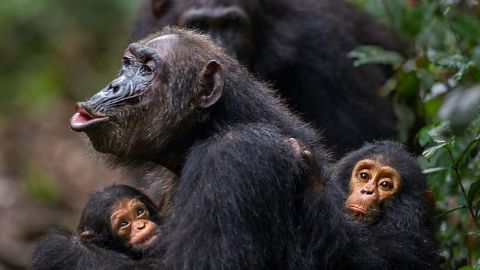
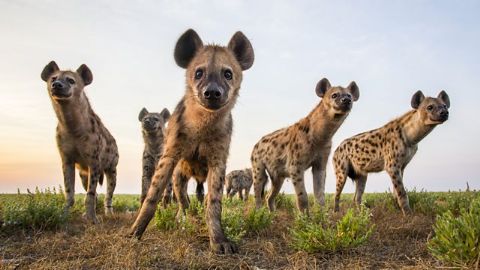
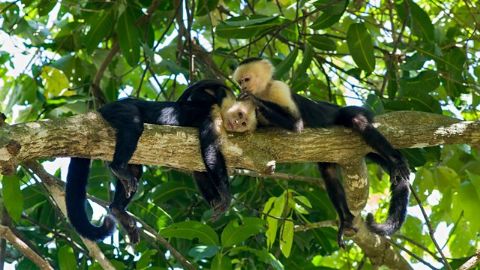
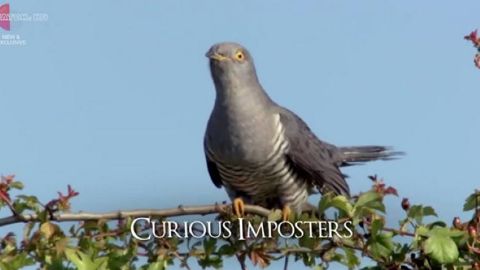
Chris Packham reveals that deceit is rife in the natural world – from cunning masters of disguise and sneaky thieves, to kidnapping otters and even femme fatale fireflies.
Hope you're finding these documentaries fascinating and eye-opening. It's just me, working hard behind the scenes to bring you this enriching content.
Running and maintaining a website like this takes time and resources. That's why I'm reaching out to you. If you appreciate what I do and would like to support my efforts, would you consider "buying me a coffee"?
BTC: bc1q8ldskxh4x9qnddhcrgcun8rtvddeldm2a07r2v
ETH: 0x5CCAAA1afc5c5D814129d99277dDb5A979672116
With your donation through , you can show your appreciation and help me keep this project going. Every contribution, no matter how small, makes a significant impact. It goes directly towards covering server costs.
Chris investigates how nature's masterminds measure up against human brain power. Looking at a variety of animals, such as ravens, crows, bees and starlings, Chris explores how different animals can use tools, solve complex puzzles, recognise themselves in mirrors and even reason like humans.
2021 • Nature
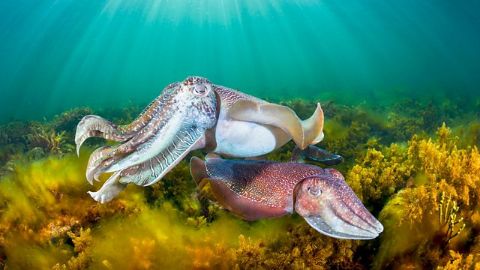
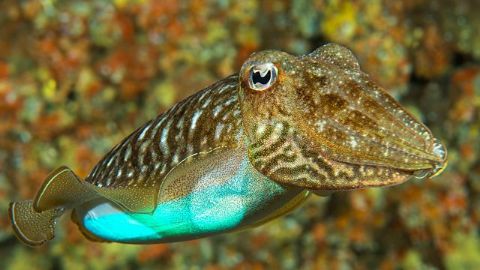
Chris reveals some of the cleverest animal communicators on the planet. For decades, people have longed to emulate Dr Doolittle and be able to understand what animals are communicating to one another. But their methods often go far beyond the capabilities of our human senses. Now, thanks to dedicated researchers, new science and cutting-edge technology, we're being given a glimpse into the ingenious ways that animals get their message across - that dolphins have individual names for each other, that cuttlefish use covert signals, and that humans can understand apes without even realising it.
2021 • Nature
Finding somewhere to keep safe is one of the biggest challenges an animal faces. But some animals don't have to find a safe place - they build one. Chris reveals some of the best building animals in the world - a group that is incredibly varied. Accomplished animal architects include everything from beavers to bees and prairie dogs to bowerbirds. They don't only build homes, however - they also make structures to raise their young, store food, catch prey and impress mates. But what can be learnt from their building brilliance?
2021 • Nature
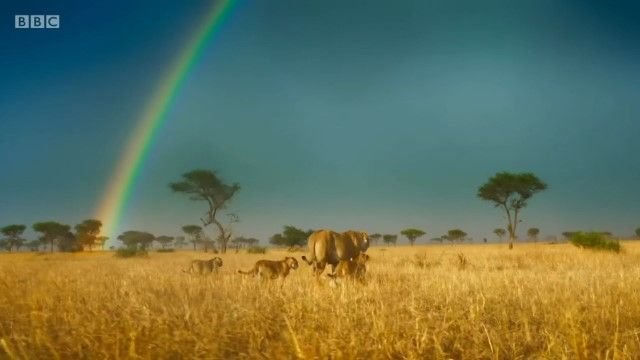
Chris looks at social intelligence in the animal kingdom and finds out why it is that, for animals, being together means being clever. He looks at how lions hunt in teams and each hold a very specific position, how vampire bats build trust and donor networks through grooming, and how wild wolves first became domesticated and transformed into man's best friend.
2021 • Nature
Chris Packham reveals that deceit is rife in the natural world – from cunning masters of disguise and sneaky thieves, to kidnapping otters and even femme fatale fireflies.
2021 • Nature
Chris discovers the cleverest animal travellers and how they find their way, from deer with mental maps, blue whales planning routes, and dung beetles navigating by the stars.
2021 • Nature
Isolated since the time of the dinosaurs, New Zealand's wildlife has been left to its own devices, with surprising consequences. Its ancient forests are still stalked by predators from the Jurassic era. It's also one of the most geologically active countries on earth. From Kiwis with their giant eggs, to forest-dwelling penguins and helicopter-riding sheep dogs, meet the astonishing creatures and resilient people who must rise to the challenges of their beautiful, dramatic and demanding home.
Part 1 • New Zealand: Earth's Mythical Islands • 2016 • Nature
The Taiga forest, on the edge of the Arctic, is a silent world of stunted conifers. The trees may be small but filming from the air reveals its true scale. A third of all trees on Earth grow here and during the short summer they produce enough oxygen to change the atmosphere.
10/11 • Planet Earth • 2006 • Nature
This episode is a pioneering exploration of the latest discoveries concerning the Amazon - by far the greatest river on Earth. It is the river of superlatives, flowing more than 4,000 miles from the Andes to the Atlantic. Its 1,100 tributaries drain the greatest river basin on the planet and along its incredible journey it collects and transports one-fifth of the world's fresh water. Due to its enormous size, it still hides secrets.
S1E1 • Earth's Great Rivers • 2018 • Nature
For nearly 4 billion years, the continents of Earth were a lifeless wasteland. But beneath the sea, our planet was teeming with life. Many strange creatures evolved, from eel-like conodonts to voracious cephalopods, until nearly all life was wiped out in our planet’s first mass extinction.
S1E1 • Ancient Oceans • 2019 • Nature
Glimpse into grasslands where the biggest animal numbers are found, and see how animal life helps to draw down carbon.
S1E2 • The Future of Nature • 2025 • Nature
A captivating world of creepy crawlies exists all around us. And they are the biggest group of animals in the world, outnumbering humans 200 million to one. Thanks to millions of years of evolution, these invertebrates not only survive in almost every landscape known to man, but also thrive by means of fascinating, and sometimes bizarre adaptations. There's the Bombardier beetle that squirts a boiling hot liquid from its anus, the Assassin bug that turns its victims into soup, and the Parasitic wasp that lays her eggs inside her victims, until her young are ready to eat their way out. We end off with the biggest bugs on the planet: the Atlas moth with a wingspan of over 20 centimetres, the Hercules beetle that can carry 850 times its own weight, and the Giant centipede - big enough to catch flying bats from midair!
2015 • Nature