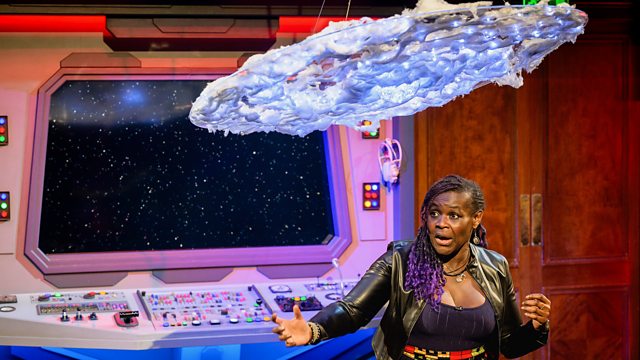
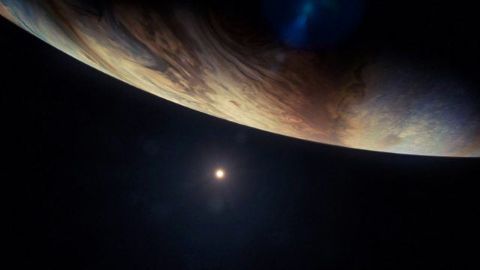
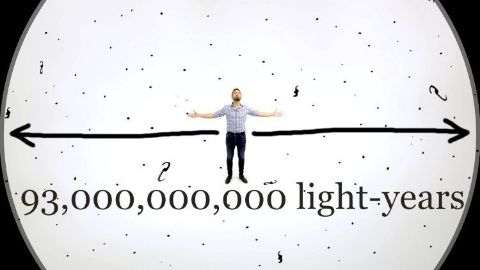
Dame Dr Maggie Aderin-Pocock begins her search for extraterrestrial life with an exploration of our nearest neighbour, and her favourite space rock, the moon.
Hope you're finding these documentaries fascinating and eye-opening. It's just me, working hard behind the scenes to bring you this enriching content.
Running and maintaining a website like this takes time and resources. That's why I'm reaching out to you. If you appreciate what I do and would like to support my efforts, would you consider "buying me a coffee"?
BTC: bc1q8ldskxh4x9qnddhcrgcun8rtvddeldm2a07r2v
ETH: 0x5CCAAA1afc5c5D814129d99277dDb5A979672116
With your donation through , you can show your appreciation and help me keep this project going. Every contribution, no matter how small, makes a significant impact. It goes directly towards covering server costs.
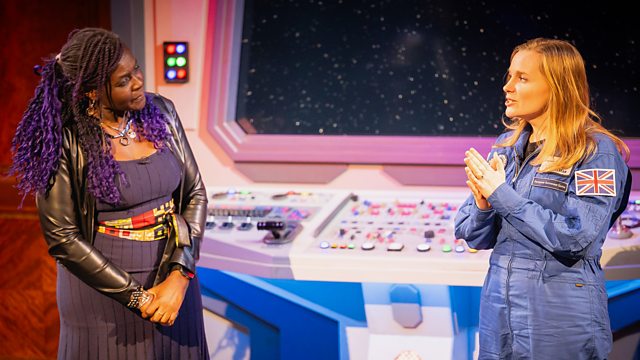
Dame Dr Maggie Aderin-Pocock begins her search for extraterrestrial life with an exploration of our nearest neighbour, and her favourite space rock, the moon.
2025 • Astronomy
Space scientist Dame Dr Maggie Aderin-Pocock continues her search for alien life with a grand tour of our solar system. Could any other planets or moons out there be habitable?
2025 • Astronomy
Dame Dr Maggie Aderin-Pocock, with the help of the world’s most powerful telescope, ventures through the Milky Way and into the universe beyond, on the hunt for alien worlds.
2025 • Astronomy
2003 - millions watch live as Columbia breaks up in the sky over Texas, killing all on board. NASA, loved ones and investigators share how an incredible journey ended in tragedy. Chapter 1: As Nasa prepares Space Shuttle Columbia for its 28th mission, excitement and trepidation build amongst the astronauts and their families as they count down to launch. This programme hears from the seven astronauts - a mixture of veterans and rookies - and their families as they train for an awe-inspiring journey of a lifetime. Chapter 2: Nasa engineers analyse film footage of a piece of debris striking the shuttle Columbia 81 seconds after launch. What no-one yet knows is whether any serious damage has been done to the vehicle or the tiles which protect the vehicle against the intense heat of re-entry. But calls for photographs to be taken of the shuttle using satellites go unheeded. Meanwhile, in space, the crew continue their mission, unaware of any concerns inside Nasa. Chapter 3: Sixteen minutes from landing, mission control lose contact with the crew of Columbia. On the shuttle landing strip, families waiting to welcome their loved ones back home are swiftly ushered away. In the skies over Texas, locals hear a loud explosion, and debris strikes the ground in multiple locations. The fears of some Nasa engineers are coming true: Columbia is lost and there are no survivors. Following the disaster, Nasa comes under increasing pressure from the media to provide answers.
2024 • Astronomy
Neutrinos are the most mysterious particles in the universe, and they power some of the most explosive events in the cosmos; new discoveries reveal how these ghosts pass through objects undetected and why they could be the reason we exist.
S9E8 • How the Universe Works • 2021 • Astronomy
Volcanoes have long helped shape the Earth. But what is less well known is that there are volcanoes on other planets and moons that are even more extraordinary than those on our own home planet. Horizon follows an international team of volcanologists in Iceland as they draw fascinating parallels between the volcanoes on Earth and those elsewhere in the solar system. Through the team's research, we discover that the largest volcano in the solar system - Olympus Mons on Mars - has been formed in a similar way to those of Iceland, how a small moon of Jupiter - Io - has the most violent eruptions anywhere, and that a moon of Saturn called Enceladus erupts icy geysers from a hidden ocean. Computer graphics combined with original NASA material reveal the spectacular sights of these amazing volcanoes. Along the way, we learn that volcanoes are not just a destructive force, but have been essential to the formation of atmospheres and even life. And through these volcanoes of the solar system, scientists have discovered far more about our own planet, Earth - what it was like when Earth first formed, and even what will happen to our planet in the future.
For decades, scientists have dreamed of finding life on Mars. But despite their best efforts, no signs of life have been found. Could that be about to change? This is the story of the scientists and engineers behind Perseverance: the rover that could change our view of Mars forever.
Today Phil explores the world of tides! What is the relationship between tides and gravity? How do planets and their moons become tidally locked? What would happen if you were 300km tall? Important questions.
#8 • Crash Course Astronomy • Astronomy
Mercury is the closest planet to the sun. It has no atmosphere and is, as such, covered in craters. It's also incredibly hot but, surprisingly, has water ice hiding beneath its surface.
13 • Crash Course Astronomy • Astronomy