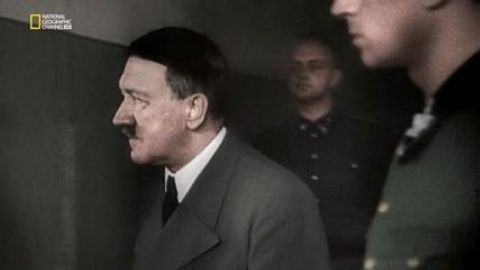
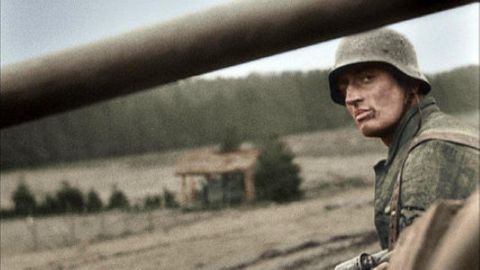
This film tells the story of the last year of the war in Europe, from the D-Day landings in Normandy in June 1944 to the dual German surrender, first in Reims then Berlin, in May 1945. Eleven months of unprecedented combat.
Hope you're finding these documentaries fascinating and eye-opening. It's just me, working hard behind the scenes to bring you this enriching content.
Running and maintaining a website like this takes time and resources. That's why I'm reaching out to you. If you appreciate what I do and would like to support my efforts, would you consider "buying me a coffee"?
BTC: bc1q8ldskxh4x9qnddhcrgcun8rtvddeldm2a07r2v
ETH: 0x5CCAAA1afc5c5D814129d99277dDb5A979672116
With your donation through , you can show your appreciation and help me keep this project going. Every contribution, no matter how small, makes a significant impact. It goes directly towards covering server costs.
A disease that developed and killed within a few days decimates Europe and changes the course of history.
S2E6 • Butterfly Effect • 2017 • History
In the subsequent 65 million years, mammals are part of Europe’s history. Sea mammals conquered the oceans while herds of herbivores crisscrossed the land. It was 600,000 years ago that Homo Heidelbergensis first began hunting. Seen from a geological perspective, human beings have been on the earth for only a few short moments, but within this brief time we have already fundamentally transformed the planet. Rivers have been straightened, forests cleared and roads laid down across the natural habitats of nearly all the earth’s animals.
S1E2 • 300 Million Years: Where Life Began • 2015 • History
Archaeologist and historian Richard Miles explores the roots of one of the most profound innovations in the human story - civilisation - in the first episode of an epic series that runs from the creation of the first cities in Mesopotamia some 6,000 years ago, to the decline and fall of the Roman Empire. Starting in Uruk, the 'mother of all cities', in southern Iraq, Richard travels to Syria, Egypt, Anatolia and Greece, tracing the birth and development of technology and culture.
S1E1 • Ancient Worlds • 2010 • History
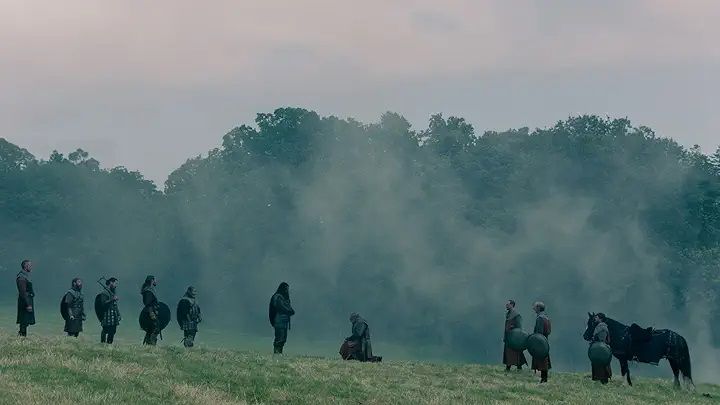
The year is 1066 and the Vikings are no longer engaged in coastal raids and pillaging monasteries, but in a fight for the throne of England. The Norman Duke William is determined to take the island. In this final episode we will discover what novel tactics William used and how he managed to conquer England once and for all. This is a tumultuous and historic event, and it will also be the last battle of the Vikings.
S1E4 • The Last Journey of the Vikings • 2019 • History
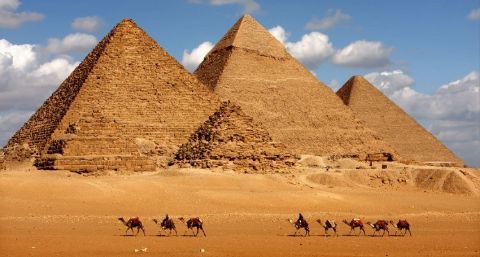
Alastair concludes the epic story of Egyptian art by looking at how, despite political decline, the final era of the Egyptian Empire saw its art enjoy revival and rebirth. From the colossal statues of Rameses II that proclaimed the pharaoh's power to the final flourishes under Queen Cleopatra, Sooke discovers that the subsequent invasions by foreign rulers from the Nubians to Alexander the Great and the Romans produced a new hybrid art full of surprise. He also unearths a seam of astonishing satirical work, produced by ordinary men, that continues to inspire Egypt's graffiti artists today.
S1E3 • Treasures of Ancient Egypt • 2014 • History
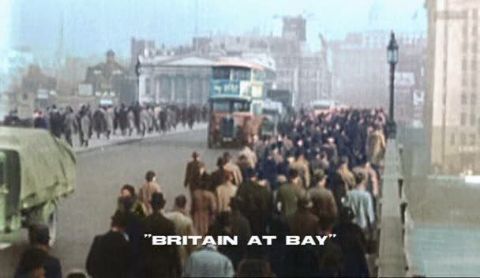
In June 1940, Britain stood alone against the Nazis. Hitler was convinced that it was only a matter of days before it sued for peace. He had more troops, a better air force and the better weapons. This film shows how close Britain came to defeat, as its exhausted air force struggled to fight all the German Luftwaffe. However, because of critical errors by the Luftwaffe commander Hermann Goering, Britain was able to regroup. Then using its brilliant team of code crackers and specially trained spies, it began the fightback, working alongside the resistance movements in the occupied territories.
3/13 • World War II In HD Colour • 2009 • History