Love and Rivals • 2024 • episode "S1E2" Secret World of Sound with David Attenborough

Category: Nature | Subtitle:

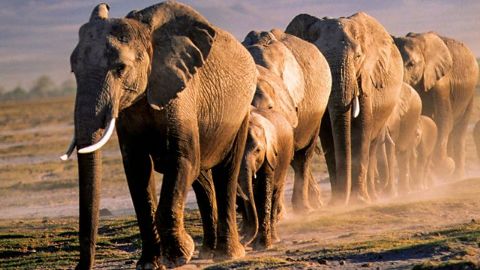
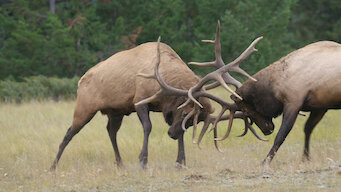
Explores how sound is used in attraction and competition — from mating calls and bird songs to mimicry and rivalries.

Make a donation

Buy a brother a hot coffee? Or a cold beer?

Hope you're finding these documentaries fascinating and eye-opening. It's just me, working hard behind the scenes to bring you this enriching content.

Running and maintaining a website like this takes time and resources. That's why I'm reaching out to you. If you appreciate what I do and would like to support my efforts, would you consider "buying me a coffee"?

Donation addresses

Buy Me a Coffee at ko-fi.com

patreon.com

BTC: bc1q8ldskxh4x9qnddhcrgcun8rtvddeldm2a07r2v

ETH: 0x5CCAAA1afc5c5D814129d99277dDb5A979672116

With your donation through , you can show your appreciation and help me keep this project going. Every contribution, no matter how small, makes a significant impact. It goes directly towards covering server costs.
Secret World of Sound with David Attenborough • 2024 • 3 episodes •

Hunters and Hunted

Explores how animals use sound in the struggle between predator and prey. We see examples like great grey owls detecting voles under snow, kangaroo rats sensing rattlesnakes via sound, and other species using vibration or stealthy audio cues to survive.

2024 • Nature

Love and Rivals

Explores how sound is used in attraction and competition — from mating calls and bird songs to mimicry and rivalries.

2024 • Nature

Finding a Voice

Reveals how baby animals, even before birth, use sound to call for help, find food, and make themselves heard for survival.

2024 • Nature

You might also like

Attenborough and the Empire of the Ants

David Attenborough is in the Swiss Jura Mountains to discover the secrets of a giant. Beneath his feet lies a vast network of tunnels and chambers, home to a huge empire of ants. It is believed to be one of the largest animal societies in the world, where over a billion ants from rival colonies live in peace. Their harmonious existence breaks many of the rules for both ants and evolution, and raises some important questions. Through winter, spring and into summer, David turns detective to find the answers.

Natural World • 2017 • Nature

Beneath the Waves

Focuses on the oceans that surround the continent's coastline, which are home to more than 60 per cent of the world's marine species. Featuring footage of reef fish, manta rays, and a juvenile sperm whale, as well as the whirlpools that form in the Indonesian Throughflow.

S1E1Asia • 2024 • Nature

The Kingdom: How Fungi Made Our World

You find fungi in Antarctica and in nuclear reactors. They live inside your lungs and your skin is covered with them. Fungi are the most under appreciated and unexplained organisms, yet they could cure you from smallpox and turn cardboard boxes into forests. They could even transform Mars into Eden. There are vastly more fungi species than plants and each and every one of them plays a crucial role in life’s support systems. Join us on a journey into the mysterious world of Fungi to witness their beauty, unravel their mysteries and discover how this secret kingdom is essential to life on Earth, and may in fact hold the key to our future.

2018 • Nature

Tasmania: Weird and Wonderful

David Attenborough reveals that the animal inhabitants of this vast wilderness are every bit as extraordinary as they are bizarre. Unearthly calls of the notorious Tasmanian devil echo through the land, but following them over the course of a year reveals a surprisingly gentle side. In the dry east, rare white wallabies graze on the plains and jack jumper ants build huge nests – these venomous ants are amongst the most dangerous on earth. In the west, where it can rain nearly every day of the year, caves light up with the magical spectacle of thousands of glow-worms, and the trees are 100-metre towering monsters. Rivers are home to the peculiar platypus, and world’s largest freshwater invertebrate, the Tasmanian giant lobster. Miniature penguins come ashore to breed, and as winter approaches, the southern lights dance in the sky. Tasmania’s isolation and unique climate has created a world that is as weird as it is wonderful.

Natural World • 2019 • Nature

Rebirth

It's time to close another chapter in the lives of the animals of the Serengeti, the end of an extraordinary year for them all. But first, all around is a blackened smoking wasteland, the aftermath of the huge fire. Which of the families made it out alive and who is still missing? Torrential rain brings hope and the land is reborn into a green paradise as water quenches the scorched earth. Mirroring the changes in the landscape, the cycle of death and rebirth comes to the fore as the Serengeti's elders prepare their young for adulthood and a life on their own. Lioness Kali is alive, but one of her three cubs is missing. Kike the cheetah returns and must train her grown-up cubs to survive on their own. The short, lush grasslands make the perfect training grounds for her lessons of survival. She teaches them to stalk, chase and trip their prey. A giraffe, grieving over the unexplained death of her calf, interrupts the cubs' training regime. Leader of the wild dogs Jasari is also showing his pups how to survive on their own, but when he teaches them to fight off hyenas, they too are interrupted by the grieving giraffe. In the flooded river, elephant matriarch Nalla's baby struggles in the torrents. Bakari returns when a huge fight with a rival baboon troop threatens his family, and he shows his bravery once more. Kali has yet more surprises in store which bring hope for her and her pride's future. Kike has to leave her cubs and hope that they are ready for independence. With the death of an old male elephant, all the families come together and old rivalries end in a remarkable truce. With a new regime in place among the baboons, the harmony of nature is restored and for now, the future is bright for the families of the Serengeti.

S1E6Serengeti • 2019 • Nature

Life in the Trees

The penultimate instalment investigates the primates, whose defining characteristics are forward-facing eyes for judging distance, and gripping hands with which to grasp branches, manipulate food and groom one another. The programme begins in Madagascar, home to the lemurs, of which there are some 20 different types. Two examples are the sifaka, which is a specialised jumper, and the indri, which has a well-developed voice. Away from Madagascar, the only lemur relatives to have survived are nocturnal, such as the bushbaby, the potto and the loris. The others were supplanted by the monkeys and a primitive species that still exists is the smallest, the marmoset. However, Attenborough selects the squirrel monkey as being typical of the group. Howler monkeys demonstrate why they are so named their chorus is said to the loudest of any mammal and their prehensile tails illustrate their agility.

12/13Life on Earth • 1979 • Nature