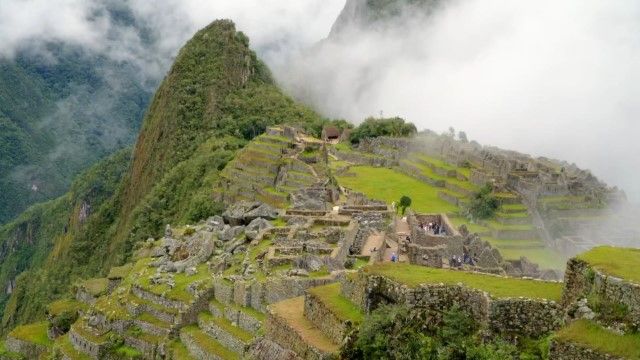
Simon travels through the Andes mountains from Peru to Bolivia, beginning at the world-famous ruins of Machu Pichu. He then visits a remote valley where the mostly indigenous population farms coca leaves. the primary ingredient of cocaine. Heading across the border into Bolivia, Simon discovers how the indigenous women known as cholas have battled for increasing have battled for increasing influence and representation.
Hope you're finding these documentaries fascinating and eye-opening. It's just me, working hard behind the scenes to bring you this enriching content.
Running and maintaining a website like this takes time and resources. That's why I'm reaching out to you. If you appreciate what I do and would like to support my efforts, would you consider "buying me a coffee"?
BTC: bc1q8ldskxh4x9qnddhcrgcun8rtvddeldm2a07r2v
ETH: 0x5CCAAA1afc5c5D814129d99277dDb5A979672116
With your donation through , you can show your appreciation and help me keep this project going. Every contribution, no matter how small, makes a significant impact. It goes directly towards covering server costs.
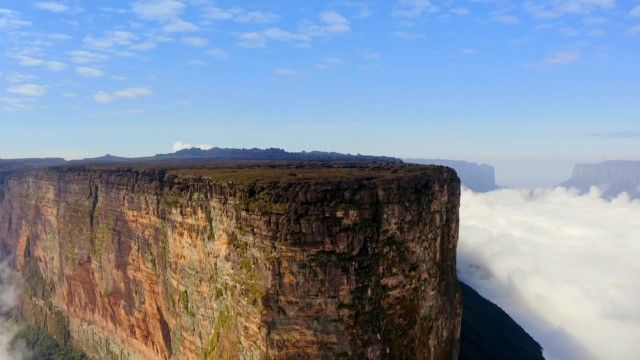
Simon sets off on a journey through the continent, beginning in the remote and little-visited north-east. In Venezuela, Simon meets some of the thousands of migrants fleeing the economic collapse of their country, while he learns that neighbouring Guyana could be on the verge of its own oil boom. He also meets a gun-toting former warlord who is now one of Suriname's most successful businessmen, and ends his journey in French Guiana, where he goes to the launch site of the European Space Agency.
2022 • Travel
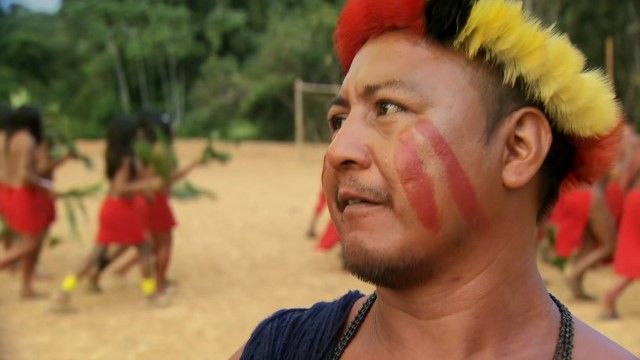
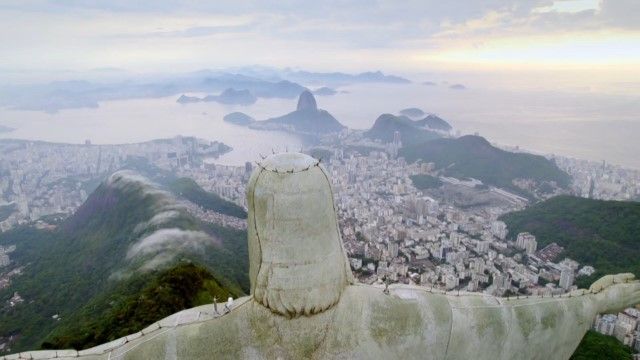
Simon starts his travels through Brazil in one of the remotest regions of the Amazon with the Waiapi people, who cling on to their traditional way of life, which is under threat from logging and mining interests. In Manaus, the city at the heart of the Amazon, he visits a neglected indigenous neighbourhood and meets a nurse who was the only source of healthcare during the pandemic. Simon ends this leg of his journey on the west coast in the city of Rio de Janeiro, where the government has built a hi-tech control room to monitor all parts of the city for potential disasters such as floods.
2022 • Travel
Simon travels through the Andes mountains from Peru to Bolivia, beginning at the world-famous ruins of Machu Pichu. He then visits a remote valley where the mostly indigenous population farms coca leaves. the primary ingredient of cocaine. Heading across the border into Bolivia, Simon discovers how the indigenous women known as cholas have battled for increasing have battled for increasing influence and representation.
2022 • Travel
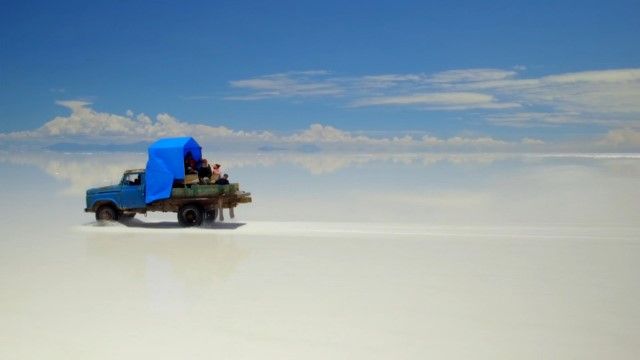
Simon travels through three of the world's most extreme environments as he takes in the salt flats of Bolivia, Brazil's Pantanal wetland region and Paraguay's Chaco Forest. In Bolivia, he meets a family making a living carving salt from the vast white expanse of the Uyuni flats, while in Brazil he has a close encounter with South America's apex predator, the jaguar. In Paraguay, Simon visits a Mennonites school, where traditionally clothed children are drilled in Bible texts and there are no smartphones to be seen.
2022 • Travel
The last leg of Simon's journey through South America takes him from Chile's Atacama Desert right down to Tierra Del Fuego, the most southerly inhabited place on Earth. In the Atacama, one of the driest places on the planet with is as little as 1mm of rain per year, Simon discovers shocking evidence of human pollution.
2022 • Travel
In the second leg of his journey, Simon Reeve travels down the Rocky Mountains. In Montana, Simon meets a former Silicon Valley executive who has envisaged a new future for the land.
S1E2 • The Americas with Simon Reeve • 2019 • Travel
Taking a ferry across the Strait of Gibraltar, Simon's first stop is Ceuta, a Spanish exclave surrounded by Morocco. This is one of the few land borders between Africa and the European Union. Simon joins the Spanish border police who check engines and even dashboards for stowaways trying to reach Europe. Migrant and refugees attempting to cross Ceuta's fortress border have quadrupled in the last year. Undaunted by Morocco's failure to issue a filming permit, Simon crosses the border as a tourist, tracking down a group of young migrants hiding out in a forest close to Ceuta. They have travelled thousands of miles, crossing the Sahara to get this far, and now they are just a 20-foot, razor wire fence away from their European dream. Crossing the Med to Spain, one the busiest shipping lanes in the world, Simon discovers huge numbers of dolphins and even giant whales surviving by dodging the ferries, container ships and oil tankers. Travelling along the arid southern Spanish coast, Simon takes to air to witness the sea of plastic that form over a hundred square miles of greenhouses. It is where much of our supermarket fruit and veg are grown, but as Simon discovers it is a massive industry built on the back of a low paid, migrant workforce. Following in the footsteps of four million Brits who make the journey every year, Simon travels to the Costa Blanca and its most famous resort, Benidorm. Derided by many, Simon is surprised to learn that high-rise Benidorm is now being hailed by experts as a model of sustainable tourism. The Mediterranean region attracts a third of world tourism and visitor numbers are predicted to rise to half a billion a year by the end of the next decade. Simon travels to a western corner of Corsica, a nature reserve that must be one of the most heavily protected bits of sea on earth, and one of the few places where tourists are actively discouraged from visiting. Lying on the beach, hiking in the mountains and watersport activities are all banned. The park's manager shows Simon the results, taking him for a dive in the fishiest place in the Med. In a sea where over ninety percent of fish stocks are over exploited, it is a beacon of hope in what is otherwise an uncertain future for the Mediterranean.
S1E4 • Mediterranean with Simon Reeve • 2018 • Travel
Northern England: birthplace of the Industrial Revolution, the Beatles, and a long list of mythical, historical, and literary legends. From Hadrian's Wall, the ancient stone boundary that stretches across the country, to the brooding Yorkshire Moors, the setting for Emily Bronte's Wuthering Heights, this aerial tour explores the region's most dramatic natural and manmade landmarks.
S1E2 • Aerial Britain • 2019 • Travel
To really understand Rome, you must understand its people - or the mob, as they were known in ancient times. As Giorgio Locatelli and Andrew Graham-Dixon explore Italy's iconic capital, they are in search of the generations of ordinary Romans who have left their mark on the city's culture and gastronomy.
2018 • Travel
Martin Clunes visits the lush, tropical island of Hawaii to investigate the state's status as a tourist paradise, and the islands of Alaska.
S1E1 • Martin Clunes: Islands of America • 2019 • Travel
He explores how the artistic life of three Japanese cities shaped the country's attitudes to past and present, east and west, and helped forge the very idea of Japan itself. In Kyoto, James reveals how the flowering of classical culture produced many treasures of Japanese art, including The Tale of Genji, considered to be the first novel ever written. In Edo, where Tokyo now stands, a very different art form emerged, in the wood block prints of artists such as Hokusai and Hiroshige. James meets the artisans still creating these prints today, and discovers original works by a great master, Utamaro, who documented the so-called 'floating world'. In contemporary Tokyo, James discovers the darker side of Japan's urbanisation through the photographs of Daido Moriyama, and meets a founder of the Studio Ghibli, Isao Takahata, whose film Grave of the Fireflies helped establish anime as a powerful and serious art form.
S1E2 • The Art of Japanese Life • 2017 • Travel