Stalin: Russia's Steel Tyrant • 2015 • episode "3/10" Evolution of Evil

Category: History

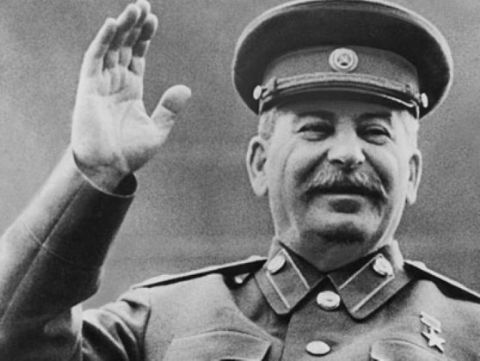
For 30 years Joseph Stalin rules the Soviet Union with an iron fist. Anyone who stands in his way will be destroyed.

Make a donation

Buy a brother a hot coffee? Or a cold beer?

Hope you're finding these documentaries fascinating and eye-opening. It's just me, working hard behind the scenes to bring you this enriching content.

Running and maintaining a website like this takes time and resources. That's why I'm reaching out to you. If you appreciate what I do and would like to support my efforts, would you consider "buying me a coffee"?

Donation addresses

Buy Me a Coffee at ko-fi.com

patreon.com

BTC: bc1q8ldskxh4x9qnddhcrgcun8rtvddeldm2a07r2v

ETH: 0x5CCAAA1afc5c5D814129d99277dDb5A979672116

With your donation through , you can show your appreciation and help me keep this project going. Every contribution, no matter how small, makes a significant impact. It goes directly towards covering server costs.
Evolution of Evil • 2015 • 10 episodes •

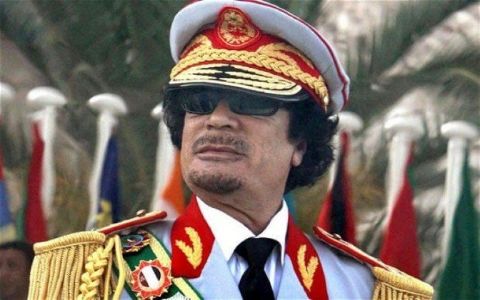
Gaddafi: Mad Dog of the Middle East

The story of the world's longest serving dictator, Muammar Gaddafi, and his 42 year reign of terror at home in Libya and around the world. His actions are so increasingly insane that President Reagan dubs him The Mad Dog of the Middle East

2015 • History

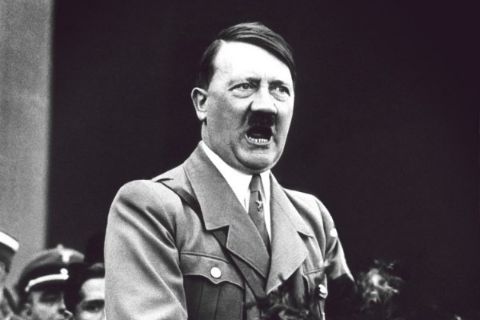
Hitler: The Benchmark of Terror

Adolf Hitler murders six million Jews and invades peaceful countries brutally killing anyone in his way. But what terrible forces turns a high school dropout into the most evil dictator the world has ever seen?

2015 • History

Stalin: Russia's Steel Tyrant

For 30 years Joseph Stalin rules the Soviet Union with an iron fist. Anyone who stands in his way will be destroyed.

2015 • History

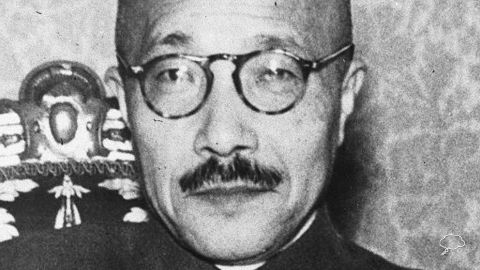
Tojo: Japan's Razor of Fear

Japanese General, Hideki Tojo is a cold blooded control freak, who takes millions to their deaths in the dirtiest war ever known. This is the story of the dictator responsible for Pearl Harbor, an Asian Holocaust and the torture of thousands of POWs.

2015 • History

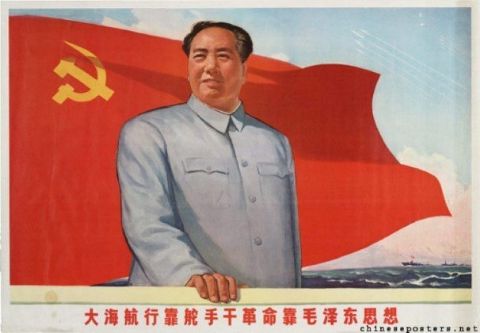
Mao: China's Chairman of Death

Mao Zedong, Supreme Leader of Communist China for 30 years, is one of the 20th Century's most ruthless tyrants. His reign of cruelty and revenge, transforms him to a position of authority so great, his personality cult remains to this day.

2015 • History

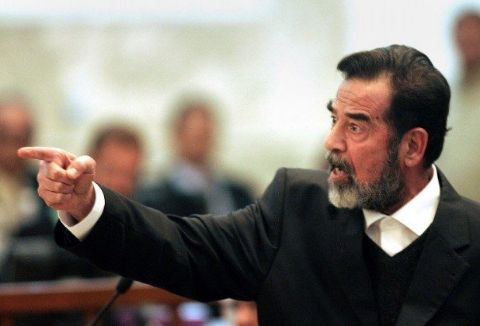
Saddam: The Butcher of Baghdad

The story of Saddam Hussein the sadistic tyrant who rules Iraq with an utter contempt for humanity for 23 years - a man whose cruelty knows no limits and who'll stop at nothing to achieve the power of life and death over millions of people.

2015 • History

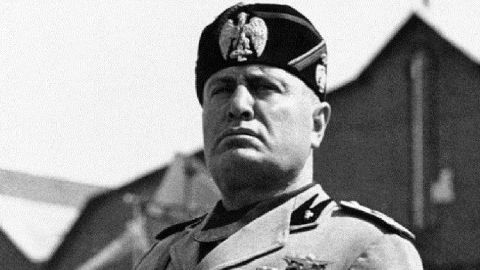
Mussolini: The Father of Fascism

This is the story of the rise and fall of the man who became a role model to Hitler and some of history's worst dictators of the twentieth century and beyond - Benito Mussolini.

2015 • History

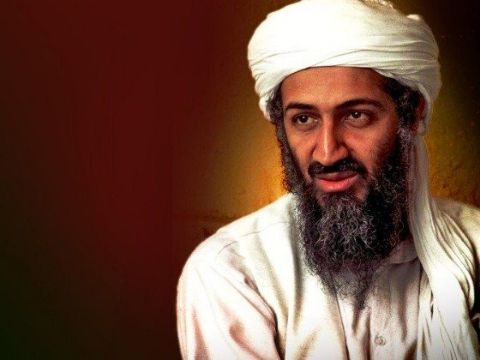
Bin Laden: A Terrorist Mastermind

See how Osama bin Laden's journey unfolds; from his roots as a privileged young Saudi boy to becoming the formidable leader of al-Qaeda, and his lifetime commitment to violent jihad against the West, which results in the horrific attacks in 2001.

2015 • History

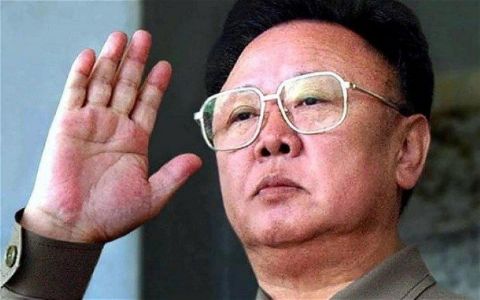
Kim: North Korea's Evil Dynasty

North Korea's evil dictator, Kim Jong-il, ruled his country for 17 years without mercy. While personally enriching himself, he let his people starve to death and threatened to bring the world to the brink of a third world war.

2015 • History

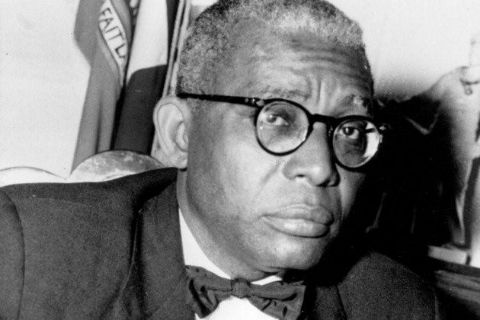
Papa Doc: Haiti's President for Life

Francois Duvalier trained as a medical doctor, but his healing touch was lost as he became the ruthless dictator "Papa Doc". The tools of his tyranny were violence and Voodoo. He killed 30,000 people, and kept a nation in fear of his mystical powers.

2015 • History

You might also like

Turning the Tide

Both the Allies and the Nazis were always looking for a single knock-out blow to end the war. Britain's Sir Arthur "Bomber" Harris thought the answer might lie in "strategic bombing." The idea was to blow the belt out of Germany's infrastructure and cities. This, he argued, would cripple the Nazis ability to wage a war and the ordinary people would soon lose the will to fight. But it led directly to the tragedy of Dresden, when Allied planes firebombed tens of thousands of ordinary Germans. The Germans believed that the decisive stranglehold would come from their submarines. If they could only cut American supply lines to Britain across the Atlantic, then the Allied effort would collapse. So begun a long game of cat and mouse between U-Boats and British and American convoys.

7/13World War II In HD Colour • 2009 • History

Tales of the Cold War

Some just counted tanks, others stole blueprints for bombs. The Cold War was the battleground for thousands of spies and spotters. Even the Allied Military Missions in Germany doubled as covert observers in the spying game.

S1E1The Spying Game Tales from the Cold War • 2018 • History

Benito Mussolini

Learn how six dictators, from Mussolini to Saddam Hussein, shaped the 20th century. How did they seize and lose power? What forces were against them? Learn the answers in these six immersive hours, each a revealing portrait of brutality and power In Episode Three see why Benito Mussolini was considered a pioneer among 20th century dictators. From undermining judges to indoctrinating children, he forged key tactics for seizing power. He also created fascism, an ideology that would plunge Europe into darkness.

S1E3The Dictator's Playbook • 2019 • History

Samurai Warrior Queens

In ancient Japan, honor and glory were reserved for male soldiers only, which makes the story of Takeko Nakano so remarkable. Not only was she a female Japanese warrior, but she was joined by several hundred other samurai warrior women, whose complete dedication and extensive suffering remains one of the world's great untold stories. In this Docu Drama, Discover Nakano's rise to become a martial arts master, her epic battle for her clans' independence, and how in today's martial arts schools, the spirit of Japan's female warriors continues to thrive.

2015 • History

Lightning War

This film shows how the Nazis developed a terrifying new military tactic - Blitzkrieg - and how it caught first Poland and then Britain and France utterly unprepared. It charts the fall of Poland and how Hitler then conquered France in just a few weeks, an achievement that had eluded Germany throughout all the four years of World War One. It also reveals how heroic French resistance allowed the British to escape from Dunkirk and live to fight another day.

2/13World War II In HD Colour • 2009 • History

The Great Famine

The little-known story of the American effort to relieve starvation in the new Soviet Russia in 1921, The Great Famine is a documentary about the worst natural disaster in Europe since the Black Plague in the Middle Ages. Five million Russians died. Half a world away, Americans responded with a massive two-year relief campaign, championed by Herbert Hoover, director of the American Relief Administration known as the ARA. In July of 1921, Herbert Hoover, received a plea for international aid by Russian novelist Maxim Gorky. "Gloomy days have come for the country of Tolstoy, Dostoyevsky, Mendeleyev," Gorky warned. He made a similar request to other Western nations, but it was Hoover who responded immediately with a promise of support. The first American relief ships arrived in Petrograd in September 1921, as the embers of the 1917 Russian revolution still smoldered. American relief workers were among the first outsiders to break through Russia's isolation and to witness and record the impact of the Bolshevik Revolution. They would be tested by a railroad system in disarray, a forbidding climate, a ruthless government suspicious of their motives, and the enormous scale of death and starvation. The initial plan called for feeding one million children by delivering bread, rice, grits, sugar, corn and milk to the most hard hit regions. Almost immediately, Hoover encountered formidable obstacles. Vladimir Lenin's new communist government was skeptical of American aid and sabotaged the relief effort by planting spies in local American Relief Administration offices. When trains stuck on the tracks prevented food from being transported, Russian officials were uncooperative, resulting in delays that contributed to an estimated 50,000 deaths. New estimates in the fall of 1921 revealed that at least 16 million Russians would be impacted by the famine. Hoover's initial plan to feed just the children would not be sufficient. That winter, cannibalism became widespread across Russia as the people continued to starve. In the U.S., Hoover managed to double the project's funding, arguing that by providing food famine relief, Americans could demonstrate the strength, kindness and efficiency of American society to a Communist culture. After a spring thaw, hundreds of American relief workers — nicknamed "Hoover's boys" — were finally able to deliver food. In August 1922, a full five months after the initial shipments of corn were sent to Russia, American Relief Administration officials were still feeding almost 11 million Soviet citizens each day in 19,000 kitchens. By the end of the famine that fall, five million Russians had starved to death, but the toll would have been significantly higher without Hoover's unprecedented humanitarian commitment. Known as "the Great Humanitarian" for his relief work during and after World War I, Hoover is said to have saved more lives than any person in history. "Lenin's government never recognized America's humanitarian motives," says producer Austin Hoyt (George H. W. Bush, Victory in the Pacific, Reagan). The Soviets always saw the relief workers as exploiters and spies." The Cheka, Lenin's secret police, kept a watchful eye on the Americans and especially on the 120,000 Russians the ARA hired to do the work. White Russians and aristocrats, the losers in Russia's brutal civil war, were hired because they were educated. The Bolsheviks feared the ARA was training them as counter-revolutionaries. The tensions the Americans experienced in the early 1920s would come to dominate U.S. Soviet relations for much of the century.

2011 • History