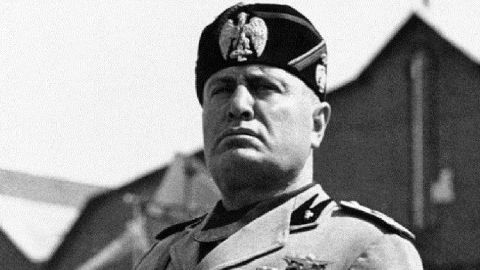
Mussolini: The Father of Fascism • 2015 • episode "7/10" Evolution of Evil

Category: History

This is the story of the rise and fall of the man who became a role model to Hitler and some of history's worst dictators of the twentieth century and beyond - Benito Mussolini.

Make a donation

Buy a brother a hot coffee? Or a cold beer?

Hope you're finding these documentaries fascinating and eye-opening. It's just me, working hard behind the scenes to bring you this enriching content.

Running and maintaining a website like this takes time and resources. That's why I'm reaching out to you. If you appreciate what I do and would like to support my efforts, would you consider "buying me a coffee"?

Donation addresses

Buy Me a Coffee at ko-fi.com

patreon.com

BTC: bc1q8ldskxh4x9qnddhcrgcun8rtvddeldm2a07r2v

ETH: 0x5CCAAA1afc5c5D814129d99277dDb5A979672116

With your donation through , you can show your appreciation and help me keep this project going. Every contribution, no matter how small, makes a significant impact. It goes directly towards covering server costs.
Evolution of Evil • 2015 • 10 episodes •

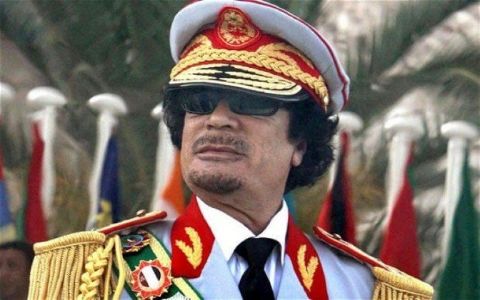
Gaddafi: Mad Dog of the Middle East

The story of the world's longest serving dictator, Muammar Gaddafi, and his 42 year reign of terror at home in Libya and around the world. His actions are so increasingly insane that President Reagan dubs him The Mad Dog of the Middle East

2015 • History

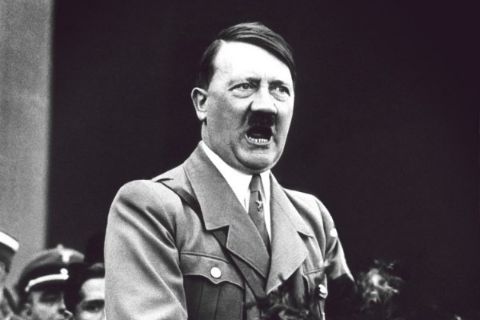
Hitler: The Benchmark of Terror

Adolf Hitler murders six million Jews and invades peaceful countries brutally killing anyone in his way. But what terrible forces turns a high school dropout into the most evil dictator the world has ever seen?

2015 • History

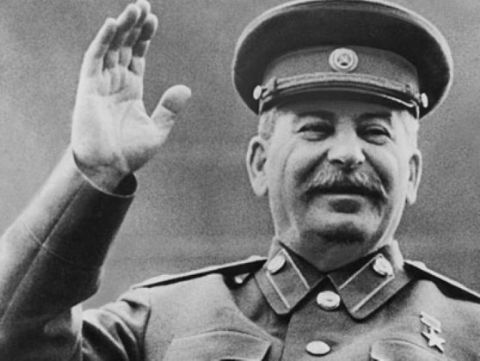
Stalin: Russia's Steel Tyrant

For 30 years Joseph Stalin rules the Soviet Union with an iron fist. Anyone who stands in his way will be destroyed.

2015 • History

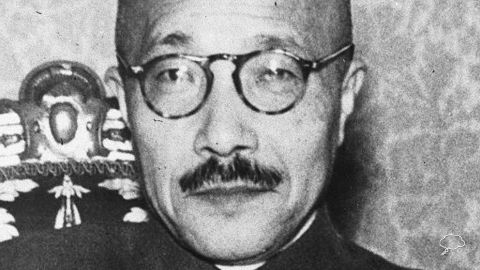
Tojo: Japan's Razor of Fear

Japanese General, Hideki Tojo is a cold blooded control freak, who takes millions to their deaths in the dirtiest war ever known. This is the story of the dictator responsible for Pearl Harbor, an Asian Holocaust and the torture of thousands of POWs.

2015 • History

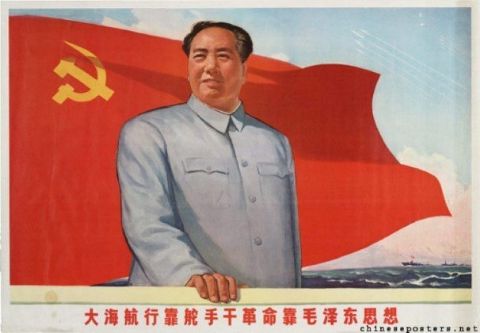
Mao: China's Chairman of Death

Mao Zedong, Supreme Leader of Communist China for 30 years, is one of the 20th Century's most ruthless tyrants. His reign of cruelty and revenge, transforms him to a position of authority so great, his personality cult remains to this day.

2015 • History

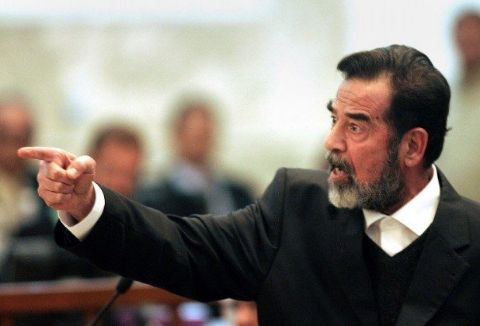
Saddam: The Butcher of Baghdad

The story of Saddam Hussein the sadistic tyrant who rules Iraq with an utter contempt for humanity for 23 years - a man whose cruelty knows no limits and who'll stop at nothing to achieve the power of life and death over millions of people.

2015 • History

Mussolini: The Father of Fascism

This is the story of the rise and fall of the man who became a role model to Hitler and some of history's worst dictators of the twentieth century and beyond - Benito Mussolini.

2015 • History

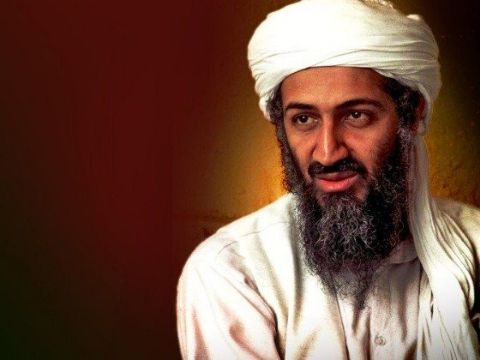
Bin Laden: A Terrorist Mastermind

See how Osama bin Laden's journey unfolds; from his roots as a privileged young Saudi boy to becoming the formidable leader of al-Qaeda, and his lifetime commitment to violent jihad against the West, which results in the horrific attacks in 2001.

2015 • History

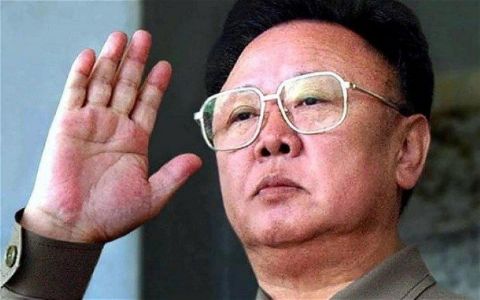
Kim: North Korea's Evil Dynasty

North Korea's evil dictator, Kim Jong-il, ruled his country for 17 years without mercy. While personally enriching himself, he let his people starve to death and threatened to bring the world to the brink of a third world war.

2015 • History

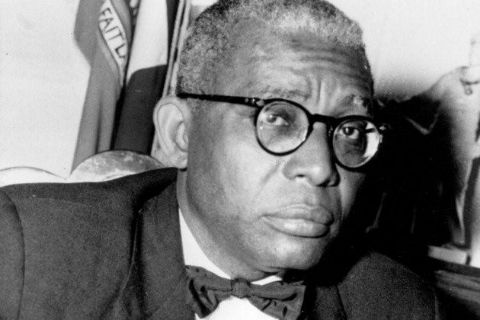
Papa Doc: Haiti's President for Life

Francois Duvalier trained as a medical doctor, but his healing touch was lost as he became the ruthless dictator "Papa Doc". The tools of his tyranny were violence and Voodoo. He killed 30,000 people, and kept a nation in fear of his mystical powers.

2015 • History

You might also like

Inside World War II

Day by day. Hour by hour. Second by second. This is the story of last century's bloodiest conflict told in a concise and compelling 3 hour special. Including personal accounts, strategic analysis and rare footage, Inside WWII provides a new and intimate perspective on the experience of war. A soldier's duty is not to reason why; a soldier's duty is to do or die. Inside World War II is the story of the doing and the dying … in the defining conflict of the 20th century. From the producers of the critically acclaimed specials Inside 9/11 and Inside the Vietnam War comes a three-hour television event that provides a detailed visual timeline of this complex war, with personal, in-depth stories from veterans who fought in one of the deadliest conflicts in human history. Inside World War II combines archival footage with more than 50 testimonies from American, British, German and Soviet servicemen; a former member of the Hitler Youth; and Jewish and black Germans who endured persecution under Hitler's reign. Viewers hear from America's first Japanese American senator, Daniel Inouye, in one of his final interviews before passing away, as he describes with haunting candor what it was like to kill someone during battle. "He had on this German hat, so I told the men, 'That's mine.' He was not only my first, but when I think back, I think back with horror because I was proud." Inouye, a Medal of Honor recipient for his service in World War II, goes on to say, "You don't forget the horrors of the war." The explosive first hour of Inside World War II begins in pre-war Germany at the 1936 Olympics, with American distance runner Louis Zamperini describing in an original, never-before-seen interview what it was like to meet Adolf Hitler. "His face, his mustache, the way he combed his hair. I mean he looked like somebody purposely did cosmetics on him for a comedy. He was, to us, a dangerous comedian." The second hour explores the attitudes of soldiers fresh from battle, including Harold Brown, an original Tuskegee Airman who recalls what it was like to fly next to and protect long-range bombers, and Paratrooper Earl McClung, who shares a harrowing tale of being stranded behind enemy lines. Author Benjamin Patton also explains how his grandfather General Patton commanded a ghost army to mislead the enemy, "He was commanding a fictitious Army group that was made up of inflatable tanks and cardboard vehicles, and tents," while General Eisenhower stormed the beaches of Normandy. Inside World War II culminates with the dramatic events of 1945, from Hitler's suicide to the revelation of Nazi concentration camps. And we'll hear Col. Paul Tibbets address the media after dropping the world's first wartime atomic bomb: "We saw this cloud of boiling dust and debris below us with this tremendous mushroom on top. Beneath that was hidden the ruins of the city of Hiroshima." As Lt. Lynn "Buck" Compton, 101st Airborne, US Army (Ret.), in the last interview he gave before his death last year, concludes, "I'm glad I did it. I wouldn't trade it for anything. Not that it was fun, but I think of it as it's a part of my life. And just lucky that I lived through it."

2012 • History

The Worlds Biggest Murder Trial: Nuremberg

On the 19 November 1945, the International Military Tribunal was opened in the Palace of Justice in Nuremberg, Germany. The city, which had seen the rise of the Nazi Party was, in the eyes of the allies, the perfect location to host its demise. The first of the Nuremberg trials was to be the biggest murder trial in human history, with 21 Nazi leaders appearing before the court charged with the deaths of millions of innocent people during the Holocaust of WWII. These were no ordinary criminals; they represented the very foundation of Nazi ideology that had instigated the most ferocious genocide the world had ever seen. With judges and prosecutors from the US, the UK, the USSR and France, the trials were the allies' collective condemnation of Nazi Germany and the atrocities committed in pursuit of their ideology. The decisions made at Nuremberg had implications not only for the accused, but for the very foundation of modern international criminal law. Now, 75 years on, audiences are provided with an immersive look at the event that has become synonymous with the birth of contemporary human rights in the 2020 documentary, The World’s Biggest Murder Trial: Nuremberg. This feature-length documentary provides a detailed account of the events and implications of the trials, featuring more than 1000 archive clips, including recently digitised film footage from the courtroom itself. Whilst 90 minutes seems incredibly brief considering the enormity of the trials, the documentary's constant and unwavering focus on the courtroom, and the horrors it uncovered, suggest any longer might be too harrowing to bear. It is a decision that serves to amplify the inhumanity of the accusations, the apparent indifference of the accused, and the desperate desire for justice in the aftermath of such a dehumanising period of history. The sheer enormity of the task that faced the judges and prosecutors is evident from the moment each of the accused ascends from deep beneath the palace and enters the dock. Convicting a single alleged murderer is one thing, but a murder trial with an estimated 12 million victims is a an almost incomprehensible undertaking, even in a modern context. The cinematic quality of the footage captures every moment in extraordinary detail, from the disturbing cold-bloodedness of the Third Reich leaders as they openly snigger at translation errors throughout the trial, to the accounts of survivors, who witnessed the terror of their actions first hand. With the benefit of hindsight, their crimes seem indisputable; however the documentary proves that there is no conviction without proof, and the trials themselves were not without controversy. The convictions were based on concepts barely understood, laws not yet formalised, and many believed the process served as a political judgement rather than a transformative moment in international law. Despite the criticisms surrounding them, there is no denying that the greatest legacy of the trials is the role they played in reiterating the need for an international body focused on the protection of the human person. Though the majority of Nazis never received a punishment that reflected the extent of their crime, Nuremberg will forever be remembered as the moment that much of the world heard of the atrocities of the Holocaust for the first time.

2020 • History

The King Who Tricked Hitler

This is one of the last and greatest untold stories of the Second World War, revealed by the last surviving Chief of State, King Michael I of Romania. “We took the train to Berlin to see the other side of the coin and we had lunch with Hitler. It wasn’t an enjoyable meeting.” It is the story of a King’s decision who, in a critical moment of the Second World War, relinquished Germany’s support, guiding Romania towards the Allies, thus bringing about a quicker end to the war. It is a story of palatial intrigues. And a story of deceptions. From Buckingham Palace to Bucharest. From Moscow to Washington. Lost diplomatic signals, aristocrat spies and blackmail at gun point. And the courage of a young king who dared. Romania, at the outbreak of the Second World War, was a very young nation, with an age of only 20 years.

2017 • History

Master of the WOrld

1944: The Soviets continue on the path towards liberation. On the road to Berlin, they discover the horror of Hitler's extermination camps. Stalin's people have sacrificed the most: 9 million soldiers dead and 20 million civilians killed. Has he become Master of the World?

S1E3Apocalypse Stalin • 2015 • History

The Emperor's Lost Harbour

In the heart of a metropolitan city of 15 million people and among the construction of a new billion-dollar transportation network, an archaeological sensation has been discovered: the ancient harbour of Theodosious. Theodosious was the last ruler over both Eastern and Western portions of a unified Roman Empire; the harbour has been buried and shrouded in mystery for over 800 years…until now. Istanbul, Turkey, is situated exactly between Europe and Asia. It has, since prehistoric times, bridged the gap between these continents, their cultures and its people. Engineers are working to connect East to West through a spectacular 1.4 kilometer railway tunnel, 60 meters below the surface, but they've been stalled by the discovery of the Emperor's Lost Harbor.

S51E05The Nature of Things • 2011 • History

Empires

In the city of Jerusalem, a man is crucified - Jesus of Nazareth. His death gives birth to a global religion. But Christianity may never have happened without the Roman Empire. A vast network of roads and shipping lanes, it allows goods and ideas to flow across three continents. Jesus’ message transforms Mankind. Today one in three people on the planet are Christians.

3/12Mankind: The Story of All of Us • 2012 • History