The Sky Above
Starts in NASA's gravity research aircraft to illustrate the effect of weightlessness. There are surprisingly many plants whose seeds are, in effect…
Starts in NASA's gravity research aircraft to illustrate the effect of weightlessness. There are surprisingly many plants whose seeds are, in effect…
Starts in the Sahara, where the highest land temperatures have been recorded. Rock paintings depict creatures such as giraffes and antelopes…
Explores the grasses which are present all over the world. Grass sustains huge numbers of creatures the world over, particularly in the African…
Ascends a kapok in the South American tropical rainforest to observe "the greatest proliferation of life that you can find anywhere on the surface of…
Begins in northern Norway, 500 kilometres north of the Arctic Circle. Here, there is only just enough light for the pine trees to survive, but it is…
Describes the inhospitable habitats of snow and ice. Mount Rainier in America is an example of such a place: there is no vegetation, therefore no…
The personalities behind the creation of the world's first atomic bomb were as extraordinary, and often as explosive, as the science they were…
This special, narrated by Andrew Scott, celebrates spring on planet Earth, and the extraordinary tricks that animals and plants find to rise to the…
Andrew Scott narrates a special programme which celebrates winter and explores how animals and plants rise to the challenges it brings. With their…
This special, narrated by Andrew Scott, celebrates the drama of Autumn and how animals and plants deal with the new challenges it brings. This is the…
This programme, narrated by Andrew Scott, celebrates the glorious nature of summer on Earth and the extraordinary ways animals and plants rise to the…
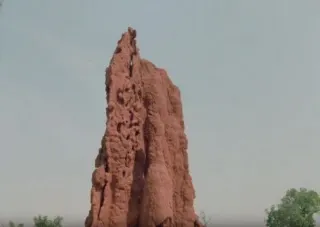
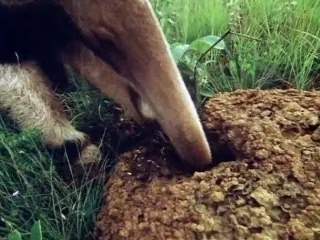
The inside of a termite mound proved especially challenging for Attenborough: it was so cramped that he could only face in one direction. He…
A look at the many and varied ways in which animals procreate in order to ensure that their genes are passed on to the next generation.
This edition looks at the various methods employed by species to attract a mate, including whales that sing "songs", hamsters that emit an odour, and…
From the love songs of fish to the flashes of millions of tiny beetles, Sir David Attenborough examines methods of communication used by animals.
From vampire bats to baboons, Sir David Attenborough investigates the importance of recognising friends and respecting the power of rivals throughout…
How many animals - including zebras, moose and stalk-eyes flies - assess their opponents' fighting prowess before making an attack that risks injury…
Examining some of the weird relationships that develop between species, from birds that relieve clients of hangers-on to hermit crabs that enlist…
How all animal architects aim to keep both the elements and intruders at bay through features that include defensive moats.
How animals ranging from albatrosses to ants can navigate themselves over long distances.
Life-and-death duels are fought daily in the wild: an orchid turns out to be a predator, killer whales ambush sea lions and chimps pursue colobus…
The search for food in the animal world. With leaves defended by poisons and seeds clad in thorns, animals fight back in very innovative ways.
For animals, there is no greater challenge than surviving the vulnerable first years of life. This episode demonstrates that nature's solutions are…
An examination of the diverse techniques employed by animals to disperse and protect offspring.
Chris Packham explores a childhood fantasy - discovering the true animal behind centuries of Hollywood misrepresentation. Using knowledge from…
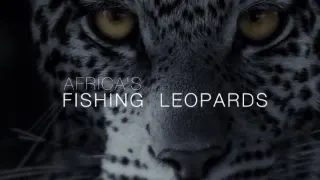
David Attenborough narrates the intimate story of a leopard mother and her two cubs. This very special family must survive in the wilds of Botswana…
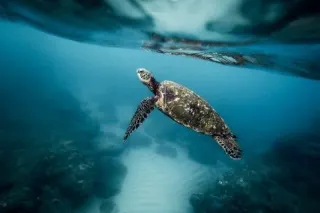
Blue Planet II explores parts of the ocean that nobody has ever visited, encountered extraordinary animals, and discovered new insights into life…
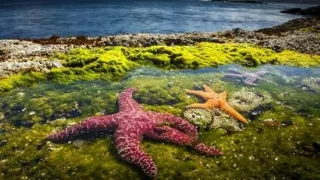
At the coast, two worlds collide. Coasts is the story of how our Blue Planet’s wildlife survives in this ever changing world. It’s a roller-coaster…
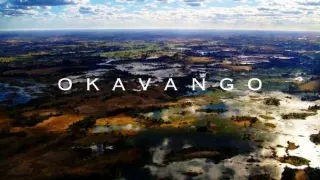
The Okavango Delta is one of the world's largest inland deltas - and supports a variety of life as rich as any you will see in Africa. Yet this lush…
Svalbard in the Arctic spends many months of the year in complete darkness, an unrelenting frozen winter with temperatures down to -40 Celsius. But…
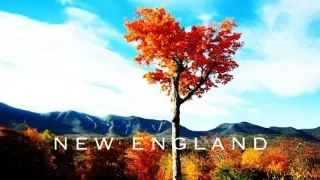
New England is the stage for the most incredible colour change on earth, when the vivid greens of summer give way to the gold’s and reds of autumn…
The final episode deals with the evolution of the most widespread and dominant species on Earth: humans. The story begins in Africa, where, some 10…
The penultimate instalment investigates the primates, whose defining characteristics are forward-facing eyes for judging distance, and gripping hands…
This programme surveys mammal herbivores and their predators. The herbivores began to populate the forests when the dinosaurs disappeared, and many…
This episode continues the study of mammals, and particularly those whose young gestate inside their bodies. Attenborough asks why these have become…
This instalment is the first of several to concentrate on mammals. The platypus and the echidna are the only mammals that lay eggs (in much the same…
This programme focuses on birds. The feather is key to everything that is crucial about a bird: it is both its aerofoil and its insulator. The…
This episode is devoted to the evolution of reptiles. They are not as restricted as their amphibian ancestors, since they can survive in the hottest…
The next instalment describes the move from water to land. The fish that did so may have been forced to because of drought, or chose to in search of…
This episode details the relationship between flowers and insects. There are some one million classified species of insect, and two or three times as…
This instalment examines the earliest land vegetation and insects. The first plants, being devoid of stems, mainly comprised mosses and liverworts…
The next programme explores the various sea-living invertebrates. In Morocco, the limestones are 600 million years old, and contain many invertebrate…
The episode begins in the South American rainforest whose rich variety of life forms is used to illustrate the sheer number of different species…
"I have a friend who is an artist, and sometimes taken a view which I don't agree with very well."
The Sun created our Solar System and in a fit of cosmic cannibalism will engulf and destroy it. However, our Solar System will see many changes…
For millennia humans have seen our star, the Sun, through the Earth’s atmosphere. But the Space Age has given us a new perspective that has revealed…
Earth has a companion in space so large that it rules our nights, our months, our ocean tides. Why Earth should have such a moon is one of the…
For centuries the giant planets floated on the fringes of the solar system as distant objects in the eyepieces of astronomers. But in December 1973…