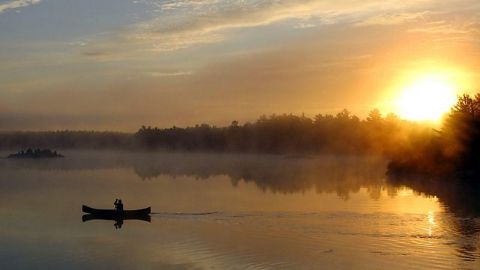
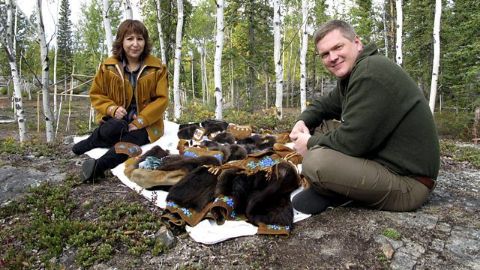
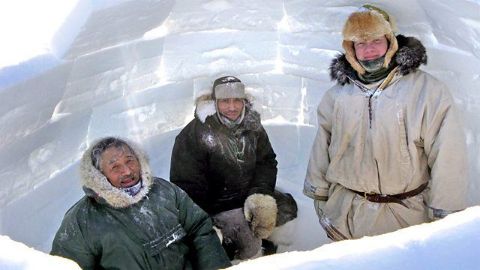
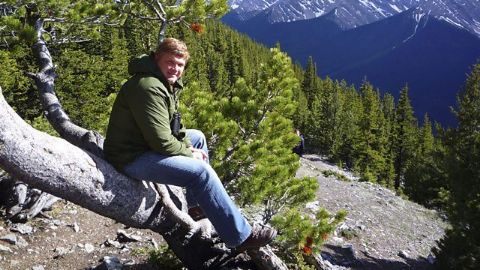
His journey begins in the vast Boreal Forest at the heart of Canada. This is a place where knowledge and experience are still far more important than the equipment you carry, a place left alone for centuries before Europeans arrived. Ray explores the wonder of this special forest, learns about the people who called it home and unlocks the secrets of this forgotten world. This is a land where knowledge of bushcraft is not just desirable, it is essential.
Hope you're finding these documentaries fascinating and eye-opening. It's just me, working hard behind the scenes to bring you this enriching content.
Running and maintaining a website like this takes time and resources. That's why I'm reaching out to you. If you appreciate what I do and would like to support my efforts, would you consider "buying me a coffee"?
BTC: bc1q8ldskxh4x9qnddhcrgcun8rtvddeldm2a07r2v
ETH: 0x5CCAAA1afc5c5D814129d99277dDb5A979672116
With your donation through , you can show your appreciation and help me keep this project going. Every contribution, no matter how small, makes a significant impact. It goes directly towards covering server costs.
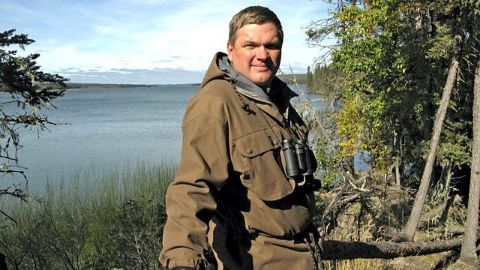
His journey begins in the vast Boreal Forest at the heart of Canada. This is a place where knowledge and experience are still far more important than the equipment you carry, a place left alone for centuries before Europeans arrived. Ray explores the wonder of this special forest, learns about the people who called it home and unlocks the secrets of this forgotten world. This is a land where knowledge of bushcraft is not just desirable, it is essential.
2009 • Travel
As Ray travels across land and by canoe, he tells the story of one of the greatest companies the world has ever known - the Hudson's Bay Company that opened up Canada. Ray discovers how those early traders were pioneers who laid the foundations of the modern Canadian state. He also demonstrates local crafts and bushcraft skills that bring the landscape to life.
2009 • Travel
For Ray Mears there is one British pioneer who stands above all others in the exploration of Canada. That man is Samuel Hearne. In learning to travel using First Nations skills, he set the template for successful travel into Canada's wilderness. Hearne's story is defined by hardship and adventure, an inspiring tale made more powerful by the journal he left as a legacy. In a celebration of one of Earth's last great wilderness
2009 • Travel
Ray follows in the footsteps of an unsung British hero who helped put modern Canada on the map. John Rae from Scotland was the first great Arctic explorer and came to be regarded as the foremost authority on First Nation methods of Arctic survival and travel. Ray Mears follows the story of how John Rae found the Northwest Passage - the Holy Grail of 19th-century exploration. Yet this man, who should have been a hero of his day, was vilified by the British establishment. Ray believes it's time to put the record straight.
2009 • Travel
David Thompson was a Briton who helped change the face of Canada. He mapped nearly four million square miles of North America. This would be an impressive feat today - in the 1800s it was, quite simply, staggering. Thompson effectively paved the way for trade from coast to coast in Canada, strengthening the status of the country and defining the borders that kept Canada independent from the US. Ray explores Thompson's footsteps across the Rocky Mountains to the Pacific Coast. He draws on a new set of bushcraft skills and local knowledge, and explores the mapping techniques used by Thompson.
2009 • Travel
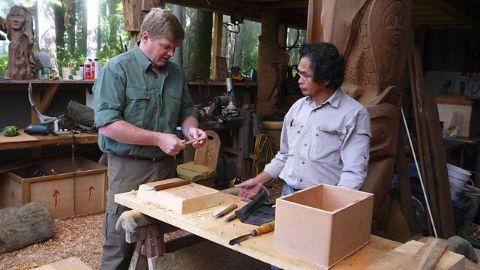
Until David Thompson found a route through the Rockies, the west coast was effectively cut off from the rest of Canada. Combined with the unique terrain of the Pacific coast, the result was a different land. The unique cultures, skills and landscape of Canada's far west make it a rich and diverse place - a land of cedar boxes, steam-bent fish hooks and dugout canoes, and a place where totem poles once dominated the landscape and people relied on the sea. Ray Mears explores the area's bushcraft, nature and traditions as he completes his journey across Canada.
2009 • Travel
James journeys through Japan's mountainous forests, marvels at its zen gardens and admires centuries-old bonsai, to explore the connections between Japanese culture and the natural environment. Travelling around Japan's stunning island geography, he examines how the country's two great religions, Shinto and Buddhism, helped shape a creative response to nature often very different to the West. But he also considers modern Japan's changing relationship to the natural world and travels to Naoshima Art Island to see how contemporary artists are finding new ways to engage with nature.
S1E1 • The Art of Japanese Life • 2017 • Travel
The final leg of Ade's tour of Africa sees him travelling from the beaches of Mozambique, through South Africa, before ending his entire trip in Zimbabwe. He begins on the golden sand beaches of Mozambique's Bazaruto Archipelago, one of Africa's highlights. At Paradise Island, he finds an abandoned hotel, a visual reminder of Mozambique's recent history - this place was once a high-end tourist destination, but 25 years of colonial and then civil war put a stop to development. But the local wildlife has benefited from the fact that so few tourists now come here, and Ade is able to snorkel with one of the world's most elusive sea creatures - a dugong. Since the wars, Mozambique has struggled to develop, and Ade meets someone for whom life is especially hard – a wheelchair user like himself. In a country where disability is viewed with fear and superstition – and believed by many to be contagious – even catching a bus proves impossible for Castigo. The best thing in his life is exactly the same thing that turned Ade's life around - wheelchair basketball - and Ade can't help getting carried away in a game. Along the coast, at one of Mozambique's largest ports, Ade finds out that China is investing a huge amount in Mozambique – and elsewhere across Africa. The money often comes with strings attached, but a poor country like Mozambique needs financial help, which has to come from somewhere. Ade's next stop is South Africa. The country is famous for its wildlife but Ade hears how Chinese influence is having a dramatic impact here – the country's rhino population has been decimated by poachers, driven by a demand for rhino horn in Chinese medicine. Ade follows rangers with a surprising way of tackling the problem - by cutting off the rhino horn themselves, they hope to deter poachers. Ade travels to Johannesburg to see how the country is faring 25 years after apartheid ended. On a tour of the city, he is upset to discover that although the black population now have voting rights, they are living in an economic form of apartheid, with 25% unemployed and many squatting on whatever land they can find. In an emotional scene, Ade visits a squatted piece of land, moments after the police have destroyed people's houses, to hear claims that Mandela's legacy has been forgotten. Land reform is the big political issue here today, with many calling for a redistribution of land from rich white farmers to the black population. The final stop on Ade's African adventure is Zimbabwe – where land reform has already happened, with disastrous results. Ade finds a country still struggling economically. His first stop is the Kariba dam, and a hair-raising boat ride on the vast and stunning Lake Kariba. Ade finds that locals are worried about the stability of the Kariba dam and work has begun to stabilize undermined foundations. The worrying decay of this crucial dam is a sign of how much this country suffered under the rule of Robert Mugabe. As Ade has seen so often on his trip around Africa, Zimbabwe is a country that should be rich. It has huge quantities of gold – enough, in theory, for the entire population to be a millionaire. But there isn't the infrastructure of investment to get at it - in a country dogged by poverty and corruption. But the departure of dictator Robert Mugabe brought a new optimism, and Ade meets gold miners who are willing to risk daily exposure to toxic mercury for every scrap of gold they can get and an entrepreneur who believes the industry can be transformed. Despite the return of violence and repression in Zimbabwe, Ade ends his journey on a high, visiting a remote hut that has been turned into the set of a music video. He joins UK indie musician Shingai Shoniwa as she shoots the video for her forthcoming debut single, Coming Home, in a country that she believes is on the up, and deserves a fresh chance.
S1E4 • Africa with Ade Adepitan • 2019 • Travel
The seasoned traveller explores the South American country, beginning in the north-east - where Europeans first landed and grew rich on the profits from sugar and tobacco plantations run with slave labour. In Sao Luis, Michael finds out about a ceremony based on a 200-year-old tale before heading to the coastal lagoons of the Lencois Maranhenses National Park. Journeying inland, he gets a glimpse of the fast-disappearing world of old-style cowboys known as vaqueiros, has his fortune read by a Candomble priest and learns to drum with the Olodum cultural collective.
S1E1 • Brazil with Michael Palin • 2012 • Travel
This week, Julia visits the lush Ionian island of Corfu, often called the least Greek of all the Greek islands. Her trip begins in the capital Corfu Town where she discovers a surprising, cosmopolitan city more like a little slice of Italy than Greece.
S1E2 • The Greek Islands with Julia Bradbury • 2020 • Travel
In Dagestan - which the Foreign Office warns against visiting - Levison experiences warrior clans' hospitality, stunning beauty and ancient cities. Then it's on to country-of-contrasts Azerbaijan.
S1E2 • From Russia to Iran: Crossing the Wild Frontier with Levison Wood • 2017 • Travel
Episode 3 takes us to Northern Romania and the Maramures - one of the most picturesque regions in Romania. Here we experience festivals and weddings and learn about the evolution of traditional folk music with renowned singer Grigore Lese and pop idol Loredana Groza. We visit historic wooden churches and villages, which have been preserved, despite the march to modernise. Charlie Ottley explores the wilderness by steam train and on foot through Caliman National Park and the mysterious Twelve Apostles. Further east we drop in on a scheme to rewild Buffalo and visit the incredible painted monasteries of Bucovina before heading south to see what's being done to protect the ancient forests of Transylvania. En route Charlie meets a number of local and internationally acclaimed characters and looks at ways tourism is helping to preserve natural habitats. Wild Carpathia 3 finishes with some enlightened words from HRH The Prince of Wales who once again describes his passion for Romania and the urgent need to protect its rural heritage.
S1E3 • Wild Carpathia • 2013 • Travel