You exist. You shouldn’t. Stars and galaxies and planets exist. They shouldn’t. The nascent universe contained equal parts matter and antimatter that should have instantly obliterated each other, turning the Big Bang into the Big Fizzle. And yet, here we are: flesh, blood, stars, moons, sky. Why? Come join us as we dive deep down the rabbit hole of solving the mystery of the missing antimatter.
Hope you're finding these documentaries fascinating and eye-opening. It's just me, working hard behind the scenes to bring you this enriching content.
Running and maintaining a website like this takes time and resources. That's why I'm reaching out to you. If you appreciate what I do and would like to support my efforts, would you consider "buying me a coffee"?
BTC: bc1q8ldskxh4x9qnddhcrgcun8rtvddeldm2a07r2v
ETH: 0x5CCAAA1afc5c5D814129d99277dDb5A979672116
With your donation through , you can show your appreciation and help me keep this project going. Every contribution, no matter how small, makes a significant impact. It goes directly towards covering server costs.
The multiverse hypothesis, suggesting that our universe is but one of perhaps infinitely many, speaks to the very nature of reality. Join physicist Brian Greene, cosmologists Alan Guth and Andrei Linde, and philosopher Nick Bostrom as they discuss and debate this controversial implication of forefront research and explore its potential for redefining the cosmic order. Moderated by Robert Krulwich and featuring an original musical interlude, inspired by parallel worlds, by DJ Spooky.
2015 • Astronomy
Ninety years after the historic double-slit experiment, the quantum revolution shows no sign of slowing. Join a vibrant conversation with renowned leaders in theoretical physics, quantum computation, and philosophical foundations, focused on how quantum physics continues to impact understanding on issues profound and practical, from the edge of black holes and the fibers of spacetime to teleportation and the future of computers.
What we touch. What we smell. What we feel. They’re all part of our reality. But what if life as we know it reflects only one side of the full story? Some of the world’s leading physicists think that this may be the case. They believe that our reality is a projection—sort of like a hologram—of laws and processes that exist on a thin surface surrounding us at the edge of the universe.
2014 • Physics
From a bee’s hexagonal honeycomb to the elliptical paths of planets, symmetry has long been recognized as a vital quality of nature. Einstein saw symmetry hidden in the fabric of space and time. The brilliant Emmy Noether proved that symmetry is the mathematical flower of deeply rooted physical law. And today’s theorists are pursuing an even more exotic symmetry that, mathematically speaking, could be nature’s final fundamental symmetry: supersymmetry.
2016 • Math
A new generation of technology is revolutionizing neuroscience, allowing a closer study of the brain than had ever seemed possible. The techniques are hybrids of optics, genetics, and synthetic biology with the ability to manipulate brain activity, often in real time. Through direct stimulation of neural connections, some of these techniques hold the promise for the treatment of diseases like depression or schizophrenia.
2019 • Brain
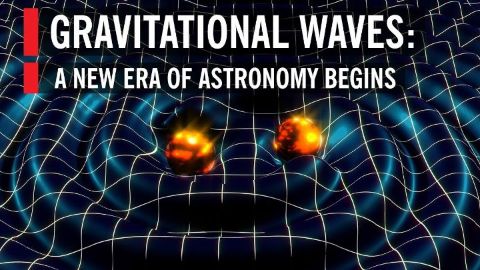
On September 14th, 2015, a ripple in the fabric of space, created by the violent collision of two distant black holes over a billion years ago, washed across the Earth. As it did, two laser-based detectors, 50 years in the making – one in Louisiana and the other in Washington State – momentarily twitched, confirming a century-old prediction by Albert Einstein and marking the opening of a new era in astronomy. Join some of the very scientists responsible for this most anticipated discovery of our age and see how gravitational waves will be used to explore the universe like never before.
2016 • Astronomy
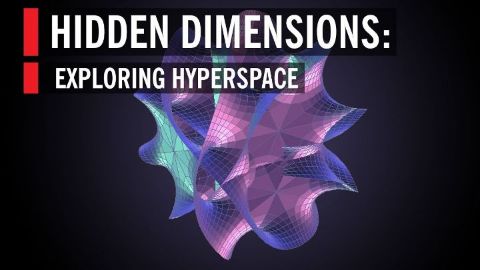
Extra dimensions of space — the idea that we are immersed in hyperspace — may be key to explaining the fundamental nature of the universe. Relativity introduced time as the fourth dimension, and Einstein’s subsequent work envisioned more dimensions still — but ultimately hit a dead end. Modern research has advanced the subject in ways he couldn’t have imagined. John Hockenberry joins Brian Greene, Lawrence Krauss, and other leading thinkers on a visual tour through wondrous spatial realms that may lie beyond the ones we experience.
2015 • Physics
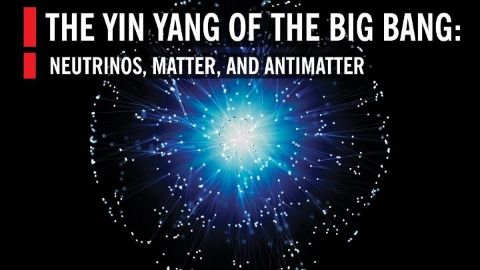
What happened to all of the universe's antimatter? Can a particle be its own anti-particle? And how do you build an experiment to find out? In this program, particle physicists reveal their hunt for a neutrino event so rare, it happens to a single atom at most once every 10,000,000,000,000,000,000,000,000 years: far longer than the current age of the universe. If they find it, it could explain no less than the existence of our matter-filled universe.
2019 • Physics
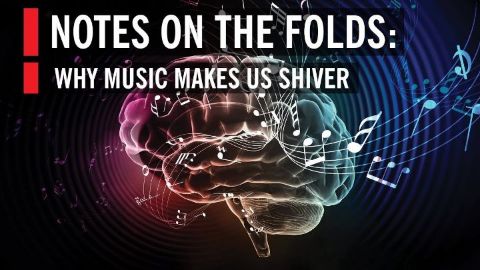
Scientists are now finally discovering what thinkers, musicians, or even any of us with a Spotify account and a set of headphones could have told you on instinct: music lights up multiple corners of the brain, strengthening our neural networks, firing up memory and emotion, and showing us what it means to be human. In fact, music is as essential to being human as language and may even predate it. Can music also repair broken networks, restore memory, and strengthen the brain?
2019 • Music
When no one is looking, a particle has near limitless potential: it can be nearly anywhere. But measure it, and the particle snaps to one position. How do subatomic objects shed their quantum weirdness? Experts in the field of physics, including David Z. Albert, Sean Carroll, Sheldon Goldstein, Ruediger Schack, and moderator Brian Greene, discuss the history of quantum mechanics, current theories in the field, and possibilities for the future.
2014 • Physics
Stuff happens. The weather forecast says it’s sunny, but you just got drenched. You got a flu shot—but you’re sick in bed with the flu. Your best friend from Boston met your other best friend from San Francisco. Coincidentally. What are the odds? Risk, probability, chance, coincidence—they play a significant role in the way we make decisions about health, education, relationships, and money. But where does this data come from and what does it really mean?
2015 • Math
You exist. You shouldn’t. Stars and galaxies and planets exist. They shouldn’t. The nascent universe contained equal parts matter and antimatter that should have instantly obliterated each other, turning the Big Bang into the Big Fizzle. And yet, here we are: flesh, blood, stars, moons, sky. Why? Come join us as we dive deep down the rabbit hole of solving the mystery of the missing antimatter.
2018 • Physics
A unique and captivating documentary on the story of humanity's quest to measure time. Who invented time, who invented the clock? Why 1 hour, why 60 minutes, why 60 seconds? Since prehistoric times, man has sought to measure time, to organize social and religious life, to plan food supply... Today we can surf the Internet, geolocate, pay by credit card ... All our daily lives depend on time and the synchronization of clocks. The history of the invention of time and of the ways and instruments to measure it is a long story... Controlling Time, one of Humanity's biggest obsessions. First, man began to calculate the observable phenomena of time using incredible astronomical measuring instruments. Calendars were born. Then, he sought to quantify ever more precise durations, with ever more sophisticated machines, in order to establish a social, conventional time, the same for all. Today, this time, inscribed on our smartphones, is established by atomic clocks which have become the keystone of our digital world. Not without enormous industrial and economic challenges at stake. Through what major technological breakthroughs have we succeeded in controlling time, to the point of being able to make its ultra-precise factory the foundation of our interconnected society? From France to Greece, through Italy, England, and Switzerland, a group of experts —astrophysicists, engineers and historians — follows in the footsteps of genius inventors who forged our perception of time and our relationship to the world. For better and for worse. This film delves into the invention of time & ways to measure it. Don't waste time and be sure to make time to watch this fascinating film!
2021 • Physics
Track the evolution of the space suit, from the first pressure suit of the 1930s to outfits that will take man to Mars.
S1E1 • Survival in the Skies • 2019 • Physics
In the first episode, Helen seeks out the colours that turned planet Earth multicoloured. To investigate the essence of sunlight Helen travels to California to visit the largest solar telescope in the world. She discovers how the most vivid blue is formed from sulfur atoms deep within the Earth's crust and why the presence of red ochre is a key sign of life. In gold, she discovers why this most precious of metals shouldn't even exist on the surface of the planet and in white, Helen travels to one of the hottest places on Earth to explore the role salt and water played in shaping planet Earth.
S1E1 • Colour: The Spectrum of Science • 2015 • Physics
Atoms are very weird. Wrapping your head around exactly how weird, is close to impossible – how can you describe something that is SO removed from humans experience? But then again, they kind of make up everything, so let us try anyways.
In a Nutshell • 2015 • Physics
Scientists investigate the way the Sun builds its power -- through fusion -- hoping to find a way to use fusion as a less dangerous and less radioactive waste-producing path to energy than fission. But there are some major difficulties along the way...
2017 • Physics
What does quantum mechanics tell us about our world -- or are there many worlds due to probability waves? How does the general theory of relativity mesh with quantum mechanics? If you've wished you understood quantum mechanics (or at least grasped the basics) physicist Brian Greene can help!
S1E1 • Curiosity Retreats: 2015 Lectures • 2015 • Physics