Cyprus to Gaza • 2018 • episode "S1E2" • Mediterranean with Simon Reeve

Category: Technology | Torrent: | Subtitle:

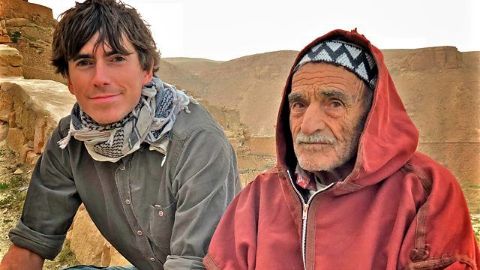
Setting off from a snowy mountain ski resort in Cyprus, Simon finds an island and a capital city still deeply divided between Turkish Cypriots in the north and Greek Cypriots in the south. Simon joins the UN troops who patrol the line that separates the two sides, one of the world's longest-running peacekeeping missions. From Cyprus, Simon heads to the Middle East, a region of the Mediterranean that's also no stranger to conflict and division. In Lebanon, Simon explores a country of breathtaking landscapes, with spectacular coastline, soaring mountains and a sacred valley known as the Qadisha, a holy site for Lebanese Christians. Staying overnight in an abandoned monastery carved into the rock face, Simon learns that in a Muslim-dominated Middle East, Christians are facing persecution and numbers are collapsing. Travelling south, Simon's next stop is Israel, a country that perhaps more than any other depends on the Mediterranean for its survival. With few friends in the region, Israel has to transport most of its goods by sea. Simon joins the Israeli Navy who patrol the coast and protect the country's offshore oil reserves using the latest military weaponry and technology, including unmanned, combat-ready drone boats. From Israel Simon crosses one of the world's most heavily fortified borders to reach the Gaza Strip. Palestinians and Israelis have endured a seemingly endless cycle of violence and in Gaza the result has been devastating destruction. Many building materials are restricted by an Israeli blockade on Gaza, but Simon meets an inspiring young woman who has helped reconstruction efforts by inventing an ingenious method of making bricks from ash. It's a rare ray of hope in one of the most troubled regions of the Mediterranean.

Make a donation

Buy a brother a hot coffee? Or a cold beer?

Hope you're finding these documentaries fascinating and eye-opening. It's just me, working hard behind the scenes to bring you this enriching content.

Running and maintaining a website like this takes time and resources. That's why I'm reaching out to you. If you appreciate what I do and would like to support my efforts, would you consider "buying me a coffee"?

Donation addresses

Buy Me a Coffee at ko-fi.com

patreon.com

BTC: bc1q8ldskxh4x9qnddhcrgcun8rtvddeldm2a07r2v

ETH: 0x5CCAAA1afc5c5D814129d99277dDb5A979672116

With your donation through , you can show your appreciation and help me keep this project going. Every contribution, no matter how small, makes a significant impact. It goes directly towards covering server costs.
Mediterranean with Simon Reeve • 2018 • 4 episodes •

Malta to Albania

At the centre of this great sea, and surrounded by crystal clear waters, is Simon's first stop, the beautiful island of Malta. Driven by a surge of tourists, modern-day Malta is booming. But beneath the picture-postcard image lies a country accused of being a haven for money laundering and organised crime, where journalists can be murdered by car bombs. When Simon takes a ferry to his next destination, Calabria in southern Italy, he discovers a region in the grip of Europe's most powerful mafia, the 'Ndrangheta. With rare access to police and customs investigators, Simon follows an armed convoy carrying a ton of seized cocaine, joins a stakeout of a high-level suspect, and crawls through a huge underground warren of tunnels and bunkers built by fugitive mafia bosses. Travelling east along the southern tip of mainland Italy, Simon visits a turtle conservation centre, meeting Raoul, a loggerhead turtle rescued after swallowing huge quantities of plastic, a massive and increasing threat to Mediterranean wildlife. Simon helps release him back into the sea. Taking the overnight ferry from the heel of Italy, Simon arrives in one of the least-known but most beautiful corners of the Mediterranean, Albania. Under communist rule, Albania was isolated and shut off from most of the world. In a country now hoping for EU membership, Simon discovers an ancient culture of vendetta, where if an adult commits a crime, a child can be killed in revenge. Simon ends the first leg of his journey at a spectacular wildlife reserve where bird life is now recovering following the country's groundbreaking ban on hunting.

2018 • Travel

Cyprus to Gaza

Setting off from a snowy mountain ski resort in Cyprus, Simon finds an island and a capital city still deeply divided between Turkish Cypriots in the north and Greek Cypriots in the south. Simon joins the UN troops who patrol the line that separates the two sides, one of the world's longest-running peacekeeping missions. From Cyprus, Simon heads to the Middle East, a region of the Mediterranean that's also no stranger to conflict and division. In Lebanon, Simon explores a country of breathtaking landscapes, with spectacular coastline, soaring mountains and a sacred valley known as the Qadisha, a holy site for Lebanese Christians. Staying overnight in an abandoned monastery carved into the rock face, Simon learns that in a Muslim-dominated Middle East, Christians are facing persecution and numbers are collapsing. Travelling south, Simon's next stop is Israel, a country that perhaps more than any other depends on the Mediterranean for its survival. With few friends in the region, Israel has to transport most of its goods by sea. Simon joins the Israeli Navy who patrol the coast and protect the country's offshore oil reserves using the latest military weaponry and technology, including unmanned, combat-ready drone boats. From Israel Simon crosses one of the world's most heavily fortified borders to reach the Gaza Strip. Palestinians and Israelis have endured a seemingly endless cycle of violence and in Gaza the result has been devastating destruction. Many building materials are restricted by an Israeli blockade on Gaza, but Simon meets an inspiring young woman who has helped reconstruction efforts by inventing an ingenious method of making bricks from ash. It's a rare ray of hope in one of the most troubled regions of the Mediterranean.

2018 • Technology

Libya to Sicily

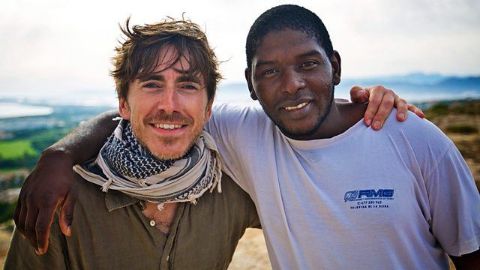
He begins in Libya - a country well off the tourist trail and torn apart by revolution, insurgents from the so-called Islamic State and western air strikes. Simon visits the Mediterranean city of Sirte, which has been the scene of heavy fighting. Here Simon witnesses some of the worst destruction he has ever seen, with entire neighbourhoods of the city completely flattened. He also visits the remains of Leptis Magna - one of the world's best-preserved Roman cities which many feared could fall into the hands of IS - and meets the young volunteers who risked their lives to protect it. Travelling west along north Africa's Mediterranean coast, Simon arrives in Tunisia, a country that - unlike its neighbour - has long been a tourist destination. He travels to the spectacular fortress village of Chenini, where houses were carved into the mountain by the Amazigh - better known as the Berbers. Today Berbers are a small minority in Tunisia, but Simon finds one man who is keeping the traditions alive by harnessing camel power to make olive oil and excavating rock by hand to build new Berber homes. From Tunisia, Simon boards the overnight ferry to the island famous as home to the mafia, Sicily. In recent years, a government crackdown and public rebellion has substantially weakened the mafia's grip on the island, but in the countryside there are worrying signs of a comeback. The mafia is trying to take advantage of rural Sicily's population decline, but Simon soon discovers that migrants and refugees who have traveled across the Mediterranean to Europe are finding new homes in Italy's emptying villages. Simon meets three inspiring sisters who - despite constant intimidation, including the skinning of their much-loved dog - are making a defiant stand against the mafia.

2018 • Travel

Morocco to the French Riviera

Taking a ferry across the Strait of Gibraltar, Simon's first stop is Ceuta, a Spanish exclave surrounded by Morocco. This is one of the few land borders between Africa and the European Union. Simon joins the Spanish border police who check engines and even dashboards for stowaways trying to reach Europe. Migrant and refugees attempting to cross Ceuta's fortress border have quadrupled in the last year. Undaunted by Morocco's failure to issue a filming permit, Simon crosses the border as a tourist, tracking down a group of young migrants hiding out in a forest close to Ceuta. They have travelled thousands of miles, crossing the Sahara to get this far, and now they are just a 20-foot, razor wire fence away from their European dream. Crossing the Med to Spain, one the busiest shipping lanes in the world, Simon discovers huge numbers of dolphins and even giant whales surviving by dodging the ferries, container ships and oil tankers. Travelling along the arid southern Spanish coast, Simon takes to air to witness the sea of plastic that form over a hundred square miles of greenhouses. It is where much of our supermarket fruit and veg are grown, but as Simon discovers it is a massive industry built on the back of a low paid, migrant workforce. Following in the footsteps of four million Brits who make the journey every year, Simon travels to the Costa Blanca and its most famous resort, Benidorm. Derided by many, Simon is surprised to learn that high-rise Benidorm is now being hailed by experts as a model of sustainable tourism. The Mediterranean region attracts a third of world tourism and visitor numbers are predicted to rise to half a billion a year by the end of the next decade. Simon travels to a western corner of Corsica, a nature reserve that must be one of the most heavily protected bits of sea on earth, and one of the few places where tourists are actively discouraged from visiting. Lying on the beach, hiking in the mountains and watersport activities are all banned. The park's manager shows Simon the results, taking him for a dive in the fishiest place in the Med. In a sea where over ninety percent of fish stocks are over exploited, it is a beacon of hope in what is otherwise an uncertain future for the Mediterranean.

2018 • Travel

You might also like

Electric Car

Hannah Fry discovers why innovations in meat packing almost derailed the electric car revolution and how a breakthrough in camcorder batteries led to Elon Musk’s electric empire, as well as demonstrating how not to drive a multimillion dollar prototype car of the future.

S1E4 • The Secret Genius of Modern Life • 2022 • Technology

Virtual Assistant

Hannah Fry delves into the inner workings of virtual assistants, such as Amazon’s Alexa, Google Assistant and Siri, which are now found in almost half of all UK homes.

S1E3 • The Secret Genius of Modern Life • 2022 • Technology

Humanoid Robots

They look like us. They move like us. And very soon they will live among us. They are humanoid robots. Meet an astonishing group of humanoids, among them: iCub, the world's first baby robot, and REEM, the Service Robot, ready to be launched as a guide in public spaces. Get to know humanoids!

S1E1 • The Age of Robots • 2016 • Technology

Look Who's Driving

After years of anticipation, autonomous vehicles are now being tested on public roads around the world. As ambitious innovators race to develop what they see as the next high-tech pot of gold, some experts warn there are still daunting challenges ahead, including how to train artificial intelligence to be better than humans at making life-and-death decisions. How do self-driving cars work? How close are we to large-scale deployment of them? And will we ever be able to trust AI with our lives?

NOVA PBS • 2019 • Technology

V2 the Nazi Rocket

The Nazis knew it was their last chance. The British knew it was the deadliest threat they'd ever face. And the Americans knew it could fall into the wrong hands. The V2 rocket quickly became Hitler's greatest deadly weapon and beacon of hope to turn the course of World War II in his favor. Watch Nazi Germany's desperate attempt at victory as the Allies race to stop them and see how the V2 miraculously went from deadly weapon to amazing feat of space technology.

2015 • Technology

Time

What if we could travel not just through space, but through time itself? If you could travel through time, would you change the past or the future? What if you found it couldn’t be changed? What price does the time traveller — and the people they are closest to — pay? This is a journey from H. G. Wells’ The Time Machine through ideas like The Grandfather Paradox and The Butterfly Effect to the professional time traveller that is the ever popular Doctor Who. Steven Moffat, David Tennant, Karen Gillan, and Neil Gaiman offer a unique perspective on the Doctor. Edward James Olmos reveals the hidden meaning of the language he created for the vision of the future that is Blade Runner. Bob Gale and Christopher Lloyd take us behind the scenes of Back to the Future, while Ed Solomon describes the joy of solving a time travel conundrum for Bill & Ted’s Excellent Adventure. But what would be the physical and emotional cost to the time traveller? Audrey Niffenegger explains what inspired her novel The Time Traveller’s Wife. And what if someone from the future tried to travel back in time to warn us? Would we believe them? From the apocalyptic tones of 12 Monkeys to the drama of Quantum Leap and the comedy of Groundhog Day, time travel is a subject that has been irresistible to the creators of every type of science fiction.

Part 4 • The Real History of Science Fiction • 2014 • Technology