Henry VIII - The Tyrant King • 2016 • episode "S1E2" The Private Lives of the Tudors

Category: History | Torrent: | Subtitle:

Tracy Borman examines the reign of Henry VIII, revealing his interests, clothing, taste in food and the accidents he survived during his life.Intricate details about the man, Henry VIII are revealed.

Make a donation

Buy a brother a hot coffee? Or a cold beer?

Hope you're finding these documentaries fascinating and eye-opening. It's just me, working hard behind the scenes to bring you this enriching content.

Running and maintaining a website like this takes time and resources. That's why I'm reaching out to you. If you appreciate what I do and would like to support my efforts, would you consider "buying me a coffee"?

Donation addresses

Buy Me a Coffee at ko-fi.com

patreon.com

BTC: bc1q8ldskxh4x9qnddhcrgcun8rtvddeldm2a07r2v

ETH: 0x5CCAAA1afc5c5D814129d99277dDb5A979672116

With your donation through , you can show your appreciation and help me keep this project going. Every contribution, no matter how small, makes a significant impact. It goes directly towards covering server costs.
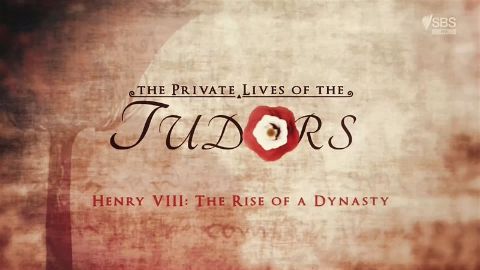
The Private Lives of the Tudors • 2016 • 3 episodes •

Henry VIII - Rise of a Dynasty

Armed with fresh research, historian Tracy Borman reveals the truth about everything from the Tudor bedding ceremony to Henry VIII's affairs.

2016 • History

Henry VIII - The Tyrant King

Tracy Borman examines the reign of Henry VIII, revealing his interests, clothing, taste in food and the accidents he survived during his life.Intricate details about the man, Henry VIII are revealed.

2016 • History

Elizabeth I - The Golden Age

A detailed look at the life of Elizabeth I, the 'Virgin Queen'. Exploring the close relationships with her intimate attendants and the attitudes to and treatment of women at the time, this episode about Elizabeth focuses on her affairs, her diet and her power.

2016 • History

You might also like

Warts 'n' All

The Romans were brilliant engineers and soldiers, but what isn't as well known is that they also gave us wonderful artistic treasures. In this three-part series, Alastair Sooke argues that the old-fashioned view that the Romans didn't do art is nonsense. He traces how the Romans during the Republic went from being art thieves and copycats to pioneering a new artistic style - warts 'n' all realism. Roman portraits reveal what the great names from history, men like Julius Caesar and Cicero, actually looked like. Modern-day artists demonstrate the ingenious techniques used to create these true to life masterpieces in marble, bronze and paint. We can step back into the Roman world thanks to their invention of the documentary-style marble relief and to a volcano called Vesuvius. Sooke explores the remarkable artistic legacy of Pompeii before showing how Rome's first emperor, Augustus, used the power of art to help forge an empire.

S1E1Treasures of Ancient Rome • 2012 • History

The Conquest (1953-1955)

March 1953. Stalin is dead. Following many long hours of agony in his dacha, the Little Father of Peoples is now no more than an embalmed corpse. His potential successors eagerly flock to pay their respects. In East Berlin, a wave of hope swept through the German workers who rise up against the Party. This hope is swiftly crushed by Soviet tanks... In Asia, the hot conflicts are coming to an end. After the Panmunjom truce, the US ingloriously leaves Korea. The few remaining troops impatiently await a visit from Marilyn Monroe. In the meantime, in Indochina, another army prepares for a far less exciting event. The French hope to stop the Vietminh in Dien Bien Phu, a village surrounded by mountains 300 km from Hanoi... But the French generals do not suspect that at the same time, General Giap of Vietminh and his Chinese advisers, are developing a plan battle that will take the form of a trap: let the French forces settle in the basin of Dien Bien Phu, then surround and destroy them. The French army soon evacuated the country, terribly bruised and humiliated, but Ho Chi Minh only partially triumphed: during the Geneva negotiations, his Chinese and Soviet comrades disappointed his expectations, for fear of an escalation of the conflict. Ho Chi Minh got North Vietnam, but the South is still in Western hands. What will Ho Chi Minh do?

S1E4Apocalypse: War of Worlds 1945-1991 • 2019 • History

My Human Earth

In the subsequent 65 million years, mammals are part of Europe’s history. Sea mammals conquered the oceans while herds of herbivores crisscrossed the land. It was 600,000 years ago that Homo Heidelbergensis first began hunting. Seen from a geological perspective, human beings have been on the earth for only a few short moments, but within this brief time we have already fundamentally transformed the planet. Rivers have been straightened, forests cleared and roads laid down across the natural habitats of nearly all the earth’s animals.

S1E2300 Million Years: Where Life Began • 2015 • History

Easter Island: Mysteries of a Lost World

The contrast between the majestic statues of Easter Island and the desolation of their surroundings is stark. For decades Easter Island, or Rapa Nui as the islanders call it, has been seen as a warning from history for the planet as a whole - wilfully expend natural resources and the collapse of civilisation is inevitable. But archaeologist Dr Jago Cooper believes this is a disastrous misreading of what happened on Easter Island. He believes that its culture was a success story not a failure, and the real reasons for its ultimate demise were far more shocking. Cooper argues that there is an important lesson that the experience of Easter Island can teach the rest of the world, but it doesn't begin by blaming its inhabitants for their own downfall. This film examines the latest scientific and archaeological evidence to reveal a compelling new narrative, one that sees the famous statues as only part of a complex culture that thrived in isolation. Cooper finds a path between competing theories about what happened to Easter Island to make us see this unique place in a fresh light.

2014 • History

The History and Future of Everything -- Time

Time makes sense in small pieces. But when you look at huge stretches of time, it's almost impossible to wrap your head around things.

In a Nutshell • 2015 • History

Part 2

We explore the legacies of the Ancient Greeks, what they have given us today, and asks why these legacies have lasted through time. Democracy, art, architecture, philosophy, science, sport, theatre - all can be traced back to ancient Greece. Travelling across the ancient Greek world, from Athens to Olympia, Macedon, Turkey and Sicily, Michael discovers why the ancient Greeks were so successful, why their culture and way of life spread across continents and through time and why they still have such a powerful hold over our imaginations today.

S1E2Who Were the Greeks? • 2013 • History