Rise of the Machines
Tools and machines have allowed us to overcome our physical limitations, and become the most successful species on Earth. But tools are also…
Tools and machines have allowed us to overcome our physical limitations, and become the most successful species on Earth. But tools are also…
For all of human history, the Sun, our home star, has measured our days and our seasons while fueling all life on Earth. Yet it remains an enigma…
Life in the sea rebounded with a vengeance in the Devonian. Dozens of monstrous predators emerged, like the 40-foot long Dunkleosteus. Nearly…
For nearly 4 billion years, the continents of Earth were a lifeless wasteland. But beneath the sea, our planet was teeming with life. Many strange…
The Hayabusa2 spacecraft has just completed one of the most intricate procedures in space exploration. The first mission to deliver rovers onto an…
Why are vultures bald? Why do some orangutans have big cheeks? And if giraffes have long necks to help them reach the highest leaves, why do they…
Our universe is prone to increasing disorder and chaos. So how did it generate the extreme complexity we see in life? Actually, the laws of physics…
This episode focuses on the Jurassic period, a time when the first giant killers stalked the Earth and lurked in the seas; a time when the slightest…
Commander Stephen Hawking and his space ship the SS Hawking encounter an alien A.I., then race to the edge of the universe, and plunge into an…
Lunar days are about 14 Earth days long, and when night comes, temperatures plummet. But there are other issues to deal with as well. For instance…
Is there a border we will never cross? Are there places we will never be able to reach, no matter what? It turns out there are. Far, far more than…
The birth of our Solar System was both violent and chaotic. As planets formed around our Sun, gravity and luck determined their fate: some are tossed…
Second Genesis follows planetary scientist Carolyn Porco as she explores what it takes to look for life beyond Earth, and what conditions are…
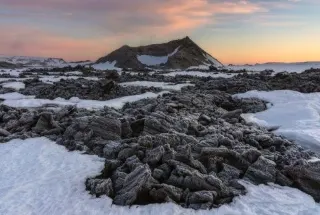
Steamy underworlds hiding mysterious treasures, extreme waters teeming with unique life, and jarring rock formations made of frozen lava.
It's hard to get to space.But there is a concept that might make it possible: the space elevator. How exactly does it work.
"When a scientist gazes silently up at the sky..."
"I have a friend who is an artist, and sometimes taken a view which I don't agree with very well."
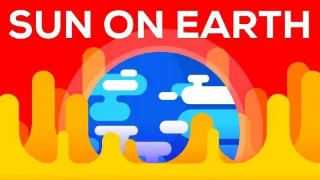
What would happen if we bring a sample (the size of a house) of the Sun to Earth?
Our Sun could erupt at any moment, spewing a vast wave of charged particles toward Earth that could leave millions of people without power for up to…
Dr Helen Czerski peers into the heart of the storm to find out how advances in technology are giving new insight into tornadoes - the fastest winds…
Helen looks at the latest scientific insight into the aurora - dancing lights in the night sky that have fascinated cultures throughout our history…
Dr Helen Czerski examines the hottest natural phenomena on the planet - lightning. Bolts of lightning five times hotter than the surface of the sun…
Helen looks at volcanoes. With shocking eyewitness footage of eruptions, and new thermal imagery and ultra-high speed photography, we can now capture…
Dr Helen Czerski looks at the anatomy of an avalanche. From shocking eyewitness footage from within an avalanche, to detailed CT scans showing the…
Set to the words of Carl Sagan, Pale Blue Dot is an animation that situates human history against the tapestry of the cosmos. Using a eclectic…
No, it is not a planet :)
Suppose you placed a camera at a fixed position, took a picture of the sky at the same time every day for an entire year, and overlaid all of the…
What is something? On the most fundamental level thinkable, what are things? Why are things? And why do things behave the way they do?
We are so used to some things that we stopped wondering about them. Like light. What is light? Some kind of wavy thing, right? Kind of.
Have you ever wondered what would happen to life on earth if a doomsday event killed every human on the planet?
How can global warming of less than 1 degree Celsius drive extreme weather? You might need to look beneath the surface (of the ocean) for the answer.
We begin our story about 13.7 billion years ago, when all the space, matter, and energy of the known Universe was locked up in a volume less than one…
James May asks the big questions about the weather, including what is a cloud?
Hank Green talks about the issues of rising global population.
Being creative means to let it go...
In this Vsauce video, Michael asks himself what is the value of Earth.