Growing Up
For animals, there is no greater challenge than surviving the vulnerable first years of life. This episode demonstrates that nature's solutions are…
For animals, there is no greater challenge than surviving the vulnerable first years of life. This episode demonstrates that nature's solutions are…
An examination of the diverse techniques employed by animals to disperse and protect offspring.
At the coast, two worlds collide. Coasts is the story of how our Blue Planet’s wildlife survives in this ever changing world. It’s a roller-coaster…
Take a journey through majestic primeval forests of the Urals. These protected sites are known for their extremes, where the fine side by side, and…
The Arctic region of Russia is considered the most inhospitable places to live. But polar bears, lemmings, Arctic foxes, and seals - Arctic - simply…
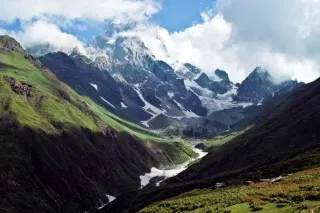
From the snow-white peaks to scorching sun of deserts - all the Caucasus. Caucasus Mountains - not just a mountain ridge. This is a rich habitat for…
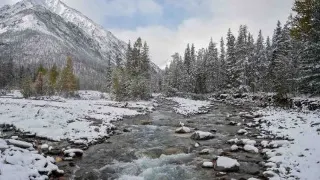
Siberia - It accounts for 10% of the land on our planet. Siberia is known for its frost and is known worldwide as one of the coldest places on earth…
There is no uncommon sight hanging on the trees of Asian black bears, chipmunks, scurrying about in search of food, as well as the sika deer…
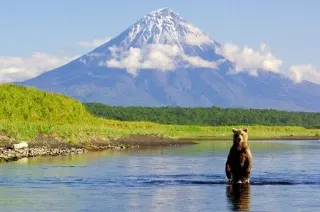
The volcanic Kamchatka peninsula is located on the far east of Russia. Because of the frequent volcanic eruptions and landslides, the terrain is…
David Attenborough narrates this astonishing story of a wild cheetah family. Known for being fast, captivating and extremely elusive, a new insight…
The final episode deals with the evolution of the most widespread and dominant species on Earth: humans. The story begins in Africa, where, some 10…
The penultimate instalment investigates the primates, whose defining characteristics are forward-facing eyes for judging distance, and gripping hands…
This programme surveys mammal herbivores and their predators. The herbivores began to populate the forests when the dinosaurs disappeared, and many…
This episode continues the study of mammals, and particularly those whose young gestate inside their bodies. Attenborough asks why these have become…
This instalment is the first of several to concentrate on mammals. The platypus and the echidna are the only mammals that lay eggs (in much the same…
This programme focuses on birds. The feather is key to everything that is crucial about a bird: it is both its aerofoil and its insulator. The…
This episode is devoted to the evolution of reptiles. They are not as restricted as their amphibian ancestors, since they can survive in the hottest…
The next instalment describes the move from water to land. The fish that did so may have been forced to because of drought, or chose to in search of…
This episode details the relationship between flowers and insects. There are some one million classified species of insect, and two or three times as…
This instalment examines the earliest land vegetation and insects. The first plants, being devoid of stems, mainly comprised mosses and liverworts…
The next programme explores the various sea-living invertebrates. In Morocco, the limestones are 600 million years old, and contain many invertebrate…
The episode begins in the South American rainforest whose rich variety of life forms is used to illustrate the sheer number of different species…
Just as Africa constantly throws-up mountains which intercept moisture-laden clouds from the oceans, so the changing landscape also creates grooves…
Once a rich wilderness teeming with lions, tigers and cheetahs, the Gangetic plains of northern India have been transformed into the most densely…
A journey to the source of the Ganges in the Himalayas unearths deep gorges, lush forests and flower-filled valleys, and brings encounters with…
During the rainy season, the Blue Nile tributary is more powerful than the main river. Follow it from the Ethiopian highlands to the delta.
The Nile has many sources. This episode looks at the headwaters in the Great East African Rift Valley and the Rwenzori Mountains' melting snow.
It really is a big bad world out there. So what happens if you are the little guy? This film tells the epic survival stories of the world's smallest…
This documentary follows a spectacular pioneering story of nature preservation. Engadin was created 100 years ago and the wildlife left without human…
Part two of two. Explorer Benedict Allen is determined to get disabled journalist Frank Gardner into the wilds of Papua New Guinea, despite having to…
Part one of two. Thirty years ago explorer Benedict Allen lived in Papua New Guinea with the Niowra, a remote people. Broadcast journalist Frank…