The Misfit • 2015 • episode "S1E4" Africa's Hunters

Category: Nature

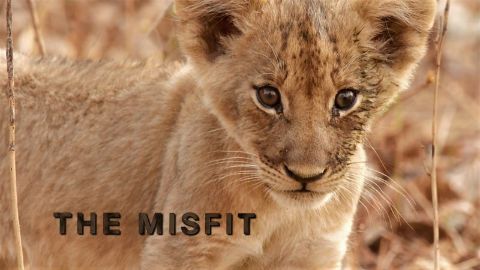
A six-week-old lion cub gets separated from his pride and has to face the nighttime terrors of the African bush. Cub-hungry predators, dehydration, and rival lions instinctively primed to kill are just some of the threats ahead. Can this intrepid little misfit find his way back to safety, or will the harsh rules of the wild prevail?

Make a donation

Buy a brother a hot coffee? Or a cold beer?

Hope you're finding these documentaries fascinating and eye-opening. It's just me, working hard behind the scenes to bring you this enriching content.

Running and maintaining a website like this takes time and resources. That's why I'm reaching out to you. If you appreciate what I do and would like to support my efforts, would you consider "buying me a coffee"?

Donation addresses

Buy Me a Coffee at ko-fi.com

patreon.com

BTC: bc1q8ldskxh4x9qnddhcrgcun8rtvddeldm2a07r2v

ETH: 0x5CCAAA1afc5c5D814129d99277dDb5A979672116

With your donation through , you can show your appreciation and help me keep this project going. Every contribution, no matter how small, makes a significant impact. It goes directly towards covering server costs.
Africa's Hunters • 2015 - 2018 • 6 episodes •

The Hungry Leopard

At 13, Kamuti is one of the oldest leopards in the Luangwa region of Zambia. Old age brings many challenges, from hunting antelope to keeping a watchful eye on the lion pride nearby. Using a military-grade thermal camera, we lift the veil on the secret world of this enigmatic nocturnal predator for the first time.

2015 • Nature

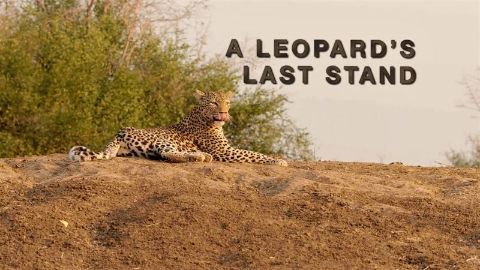
A Leopard's Last Stand

Kamuti the leopard has reigned supreme over her corner of the Luangwa Valley for 10 years. She's defended her territory, hunted antelope for food, and even kept the nearby pride of lions at bay. But a younger leopard is determined to replace her. Can she survive one more challenge, or will this be her last stand?

2015 • Nature

Bound by Blood

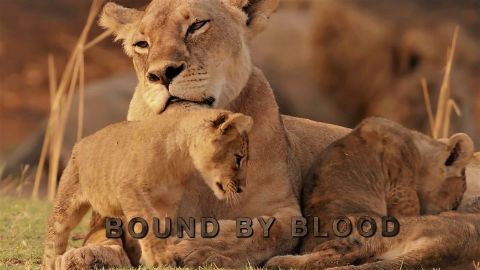
At the height of the Zambian dry season, three lionesses in the Nsefu pride are pregnant. Even with protection from fellow lions, the stakes couldn't be higher, from cub-hungry predators like leopards and hyenas to the hunting duties necessary to sustain the group. Can the pride meet the demands of their growing population?

2015 • Nature

The Misfit

A six-week-old lion cub gets separated from his pride and has to face the nighttime terrors of the African bush. Cub-hungry predators, dehydration, and rival lions instinctively primed to kill are just some of the threats ahead. Can this intrepid little misfit find his way back to safety, or will the harsh rules of the wild prevail?

2015 • Nature

Teenage Pride

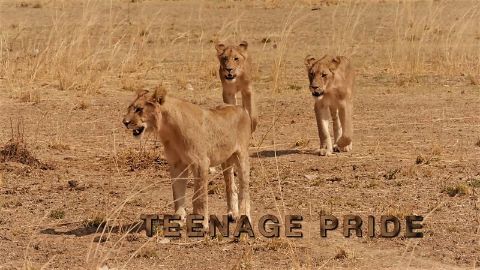
The Nsefu lion pride of Zambia are in an enviable position, with a litter of new cubs, control of the best territory on the Luangwa River, and strong males to protect them. But as the cubs grow older, pressure mounts as they begin to understand their roles and how every misstep can threaten the very existence of their family.

2015 • Nature

Survivors of the Plains

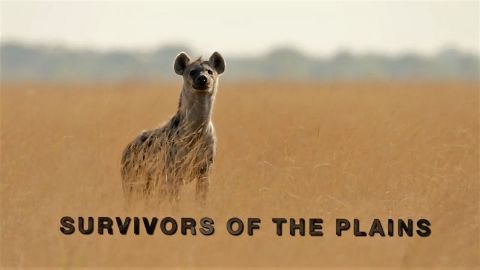
In hyena society, the females call the shots--but they're also charged with making difficult decisions. So when drought pushes a spotted hyena clan to the brink of starvation, the matriarch has a call to make: wait in the Liuwa Plains for rain that will bring wildebeest, or set out in search of a nourishing kill?

2015 • Nature

You might also like

Rainforest

Revealing the secrets of the world's most elusive elephant species and how they have adapted to life in their rainforest home.

S1E3Secrets of the Elephants • 2023 • Nature

The Secret to Their Success

Totalling an estimated 10 million species, the insects and their close relatives are the most abundant and diverse group of animals in the world, so what is the secret of their success? Their hard external skeleton provides strength and protection and their small size allows them to exploit many microhabitats. In Yellowstone, Steve Backshall reveals how teamwork allows a colony of bees to scare off a hungry bear, and in Australia this same teamwork allows a colony of ants to beat the rising tide. But to unlock the real secret of their success Steve visits the Swiss Alps, where an incredible relationship exists between the ant, the wasp and the butterfly.

Insect Worlds • 2013 • Nature

Walking with Dinosaurs

This BBC documentary brings the prehistoric world vividly to life using cutting-edge CGI and expert science. Walking with Dinosaurs (2025) recreates the Mesozoic era in stunning detail, showcasing the lives of dinosaurs as never before. From towering sauropods to ferocious predators, the series follows these ancient creatures through their habitats, revealing how they hunted, survived, and ultimately disappeared. A groundbreaking blend of visual effects and paleontological insight, it immerses viewers in Earth’s distant past.

2025 • Nature

South America

The documentary series gives a bird's-eye view of South America, as condors soar along the Andes, scarlet macaws explore the heart of the Amazon and hummingbirds and vultures see the continent's greatest sights. It is a journey that includes Machu Picchu, the Nasca Lines and the cities of Rio de Janeiro and Santiago. In Patagonia, giant petrels shadow killer whales as they hunt seals by stranding their huge bodies on the beach. At Iguassu Falls, dusky swifts dive through the cascades to huddle in communal roosts while hummingbirds bathe below. In a secret Andean location, condors soar in flocks over 40-strong and scavenge on casualties from herds of fighting guanacos. Elsewhere, a mother condor gently pushes her youngster to the edge of a 200-metre cliff, as flight school begins. Deep in the Amazon, macaws seek medicinal clay. They are joined by a host of secretive jungle animals, including spider monkeys and tapirs, all after the same remedy. In Peru, condors soar over fighting sealions waiting for casualities and on a mass exodus north, birds converge on the Panama Canal. In Costa Rica, black vultures descend on turtles as they lay their eggs in the sand and pick off the eggs that ping-pong through the air.

S1E4Earthflight • 2012 • Nature

The Last Frontier

The documentary series reveals the extraordinary riches and wonders of the Polar Regions that have kept people visiting them for thousands of years. Today, their survival relies on a combination of ancient wisdom and cutting-edge science. Most Arctic people live in Siberia, either in cities like Norilsk - the coldest city on earth - or out on the tundra, where tribes like the Dogan survive by herding reindeer, using them to drag their homes behind them. On the coast, traditional people still hunt walrus from open boats - it is dangerous work, but one big walrus will feed a family for weeks. Settlers are drawn to the Arctic by its abundant minerals; the Danish Armed Forces maintain their claim to Greenland's mineral wealth with an epic dog sled patrol, covering 2,000 miles through the winter. Above, the spectacular northern lights can disrupt power supplies so scientists monitor it constantly, firing rockets into it to release a cloud of glowing smoke 100 kilometres high. In contrast, Antarctica is so remote and cold that it was only a century ago that the first people explored the continent. Captain Scott's hut still stands as a memorial to these men. Science is now the only significant human activity allowed; robot submarines are sent deep beneath the ice in search of new life-forms, which may also be found in a labyrinth of ice caves high up on an active volcano. Above, colossal balloons are launched into the purest air on earth to detect cosmic rays. At the South Pole there is a research base designed to withstand the world's most extreme winters. Cut off from the outside world for six months, the base is totally self-sufficient, even boasting a greenhouse.

S1E6Frozen Planet • 2011 • Nature

Expanding Universe

Prof Brian Cox visits the USA retelling evolutionary history and the origin of the senses.

S1E2Wonders of LifeNature