At 13, Kamuti is one of the oldest leopards in the Luangwa region of Zambia. Old age brings many challenges, from hunting antelope to keeping a watchful eye on the lion pride nearby. Using a military-grade thermal camera, we lift the veil on the secret world of this enigmatic nocturnal predator for the first time.
Hope you're finding these documentaries fascinating and eye-opening. It's just me, working hard behind the scenes to bring you this enriching content.
Running and maintaining a website like this takes time and resources. That's why I'm reaching out to you. If you appreciate what I do and would like to support my efforts, would you consider "buying me a coffee"?
BTC: bc1q8ldskxh4x9qnddhcrgcun8rtvddeldm2a07r2v
ETH: 0x5CCAAA1afc5c5D814129d99277dDb5A979672116
With your donation through , you can show your appreciation and help me keep this project going. Every contribution, no matter how small, makes a significant impact. It goes directly towards covering server costs.
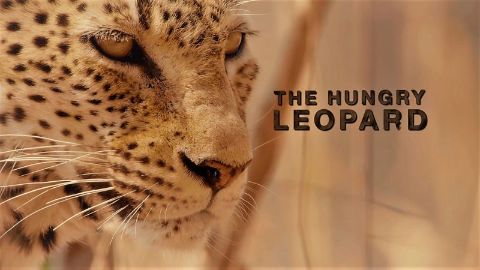
At 13, Kamuti is one of the oldest leopards in the Luangwa region of Zambia. Old age brings many challenges, from hunting antelope to keeping a watchful eye on the lion pride nearby. Using a military-grade thermal camera, we lift the veil on the secret world of this enigmatic nocturnal predator for the first time.
2015 • Nature
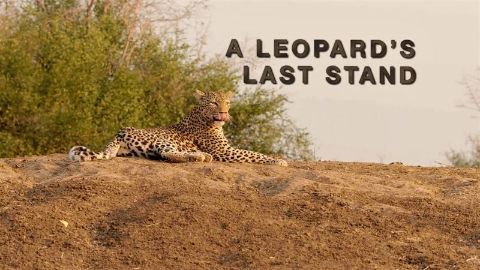
Kamuti the leopard has reigned supreme over her corner of the Luangwa Valley for 10 years. She's defended her territory, hunted antelope for food, and even kept the nearby pride of lions at bay. But a younger leopard is determined to replace her. Can she survive one more challenge, or will this be her last stand?
2015 • Nature
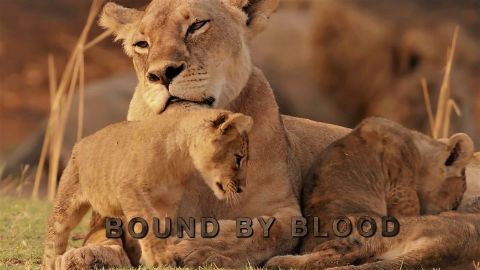
At the height of the Zambian dry season, three lionesses in the Nsefu pride are pregnant. Even with protection from fellow lions, the stakes couldn't be higher, from cub-hungry predators like leopards and hyenas to the hunting duties necessary to sustain the group. Can the pride meet the demands of their growing population?
2015 • Nature
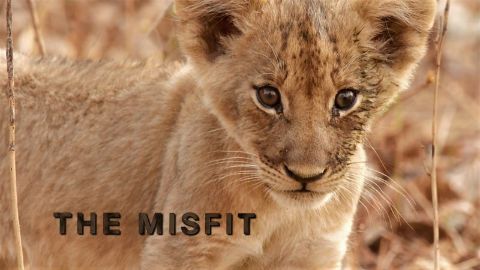
A six-week-old lion cub gets separated from his pride and has to face the nighttime terrors of the African bush. Cub-hungry predators, dehydration, and rival lions instinctively primed to kill are just some of the threats ahead. Can this intrepid little misfit find his way back to safety, or will the harsh rules of the wild prevail?
2015 • Nature
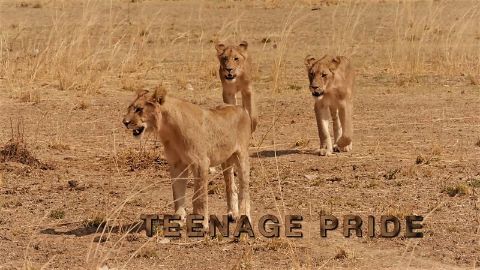
The Nsefu lion pride of Zambia are in an enviable position, with a litter of new cubs, control of the best territory on the Luangwa River, and strong males to protect them. But as the cubs grow older, pressure mounts as they begin to understand their roles and how every misstep can threaten the very existence of their family.
2015 • Nature
In hyena society, the females call the shots--but they're also charged with making difficult decisions. So when drought pushes a spotted hyena clan to the brink of starvation, the matriarch has a call to make: wait in the Liuwa Plains for rain that will bring wildebeest, or set out in search of a nourishing kill?
2015 • Nature
David Attenborough explores the courtship displays of flame bowerbirds and pufferfish.
S1E5 • Life Story • 2014 • Nature
A behind-the-scenes view of the extraordinary idea of deploying the Spy Creatures, showing how the concept evolved and became the inspiration for the animatronic animals of the series. This documentary reveals the painstaking work behind building the lifelike models, from first concept until they become `alive' for the first time.
S1E5 • Spy in the Wild • 2017 • Nature
David Attenborough has a passion for birds' eggs. These remarkable structures nurture new life, protecting it from the outside world at the same time as allowing it to breathe. They are strong enough to withstand the full weight of an incubating parent and weak enough to allow a chick to break free. But how is an egg made? Why are they the shape they are? And perhaps most importantly, why lay an egg at all? Piece by piece, from creation to hatching, David reveals the wonder behind these miracles of nature.
Natural World • 2018 • Nature
The air we breathe, and all the food we eat, is created from water, sunlight, carbon dioxide and a few minerals. It sounds simple, but this process is one of the most fascinating and complicated in all of science, and without it there could be no life on earth. For centuries people believed that plants grew by eating soil. In the 17th century, pioneer botanists began to make the connection between the growth of a plant and the energy from the sun. They discovered how plants use water, sunlight and carbon dioxide to produce sugars - how, in fact, a plant grows. The process of photosynthesis is still at the heart of scientific research today, with universities across the world working hard to replicate in the lab what plants do with ruthless efficiency. Their goal is to produce a clean, limitless fuel and if they get it right it will change all our lives.
S1E2 • Botany: A Blooming History • 2011 • Nature
Garden Route National Park is a patchwork of protected areas that safeguard a range of land and marine habitats in southern Africa. Take a tour of this conservationist paradise offering hope for creatures as varied as the humpback whale, the blue duiker antelope, and the Knysna seahorse--the only endangered seahorse in the world.
S1E7 • Great Parks of Africa • 2017 • Nature
The story of how more than 220 dinosaur bones were found in the Argentinean desert, which were found to have come from a previously undiscovered species, which is the largest land dwelling animal known to have existed. David Attenborough visits the archaeological dig and a laboratory where the remains are being cleaned and analysed with lead scientist Dr Diego Pol and evolutionary biologist Ben Garrod, and meets animators, model-makers, paleontologists and anatomy experts who are working to reconstruct what the 37 metre-long creature would have looked like.
2016 • Nature